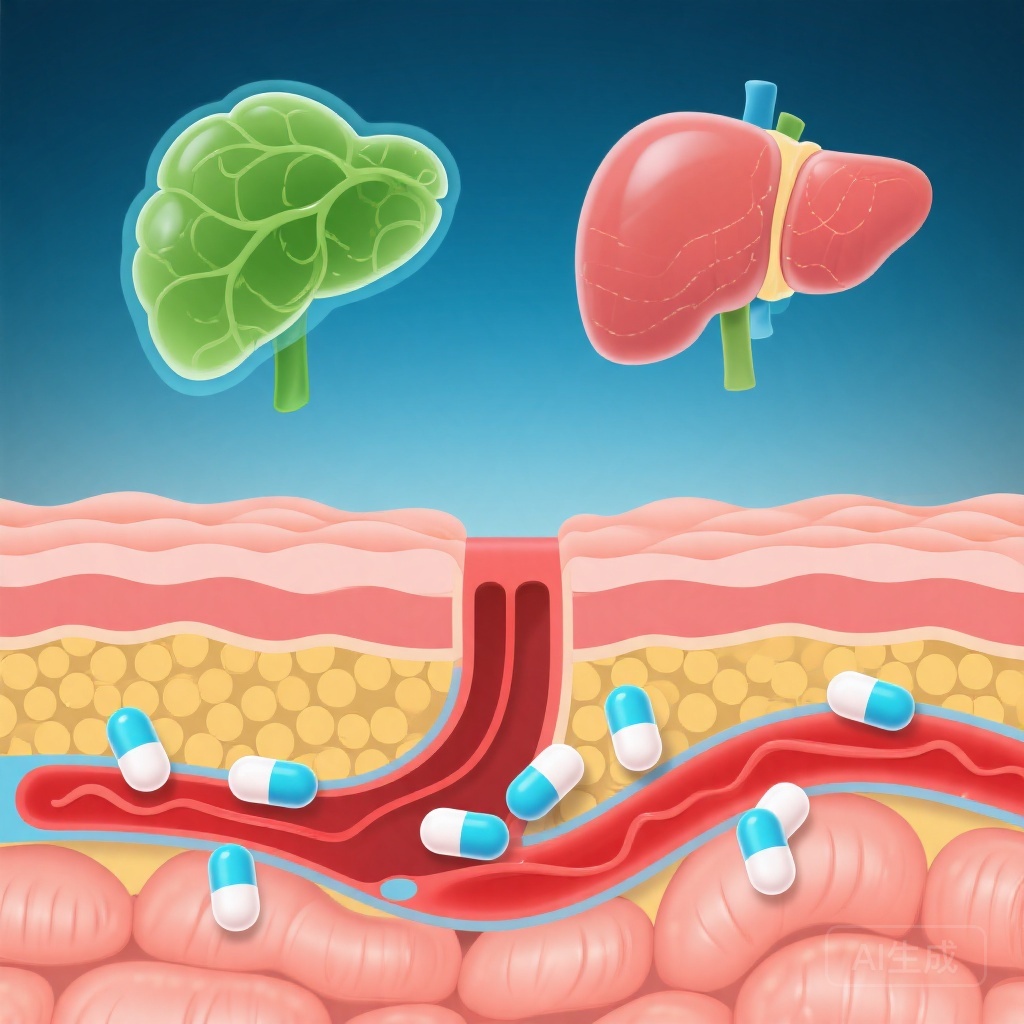
A new Hepatology study identifies an HSP72–PRDX6 pathway that restores PINK1/Parkin mitophagy, reduces hepatic steatosis, and worsens MASLD when disrupted in mice and hepatocytes.
New research reveals accelerated glucose absorption in early MASLD patients, independent of gastric emptying. This metabolic alteration may drive liver disease progression before hepatic insulin resistance develops.
Stable-isotope OGTT data suggest that early MASLD is linked to higher oral glucose absorption, independent of gastric emptying, with preserved hepatic insulin suppression but impaired peripheral glucose clearance.
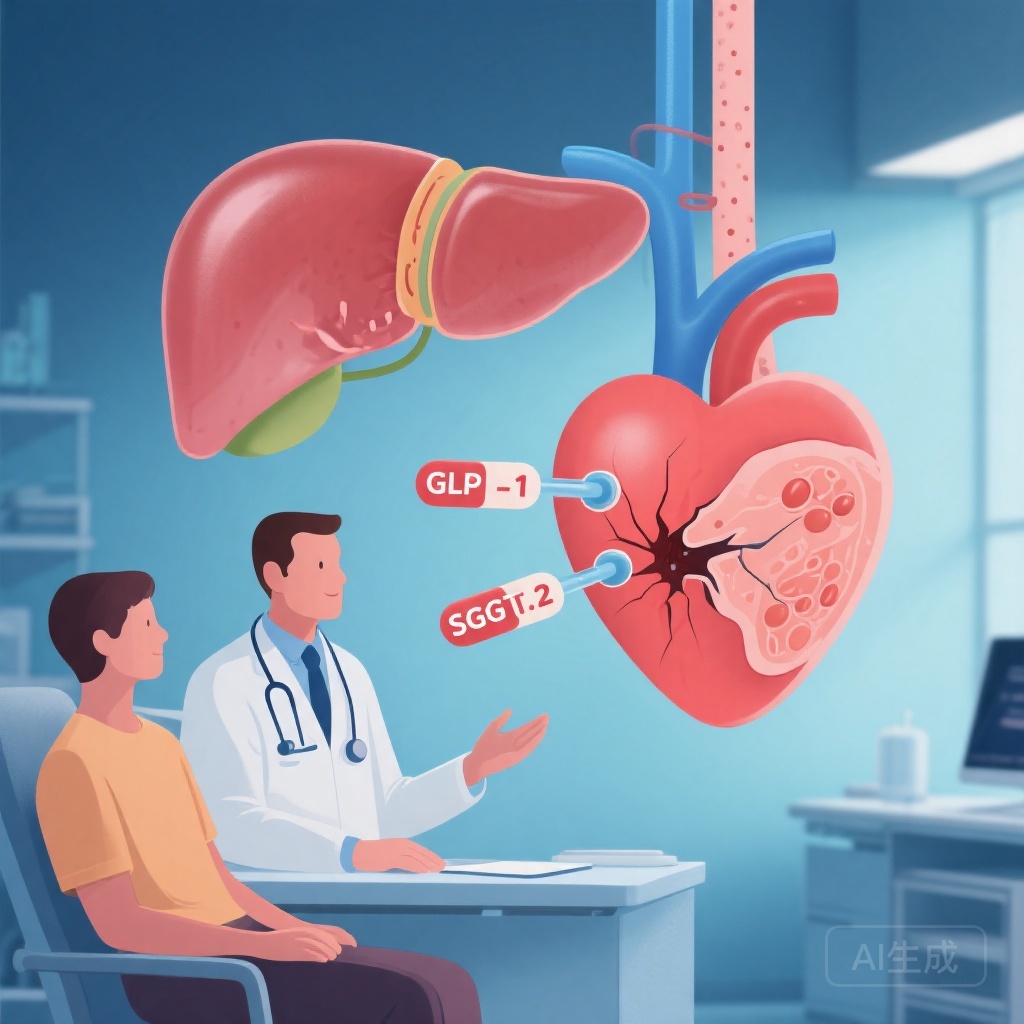
A study reveals that combining GLP-1 receptor agonists with SGLT-2 inhibitors significantly lowers the risk of major adverse liver and cardiovascular outcomes in patients with MASLD and type 2 diabetes compared to monotherapy.
This review synthesizes the evolving landscape of noninvasive tests (NITs) in MASH, detailing their role as surrogate endpoints for adverse outcomes and therapeutic response based on recent clinical trials and meta-analyses.
A large-scale retrospective study demonstrates that individualized carbohydrate reduction through remote care significantly reduces the incidence of MASH and advanced liver complications in patients with type 2 diabetes and obesity compared to usual care.
This article summarizes the updated clinical care pathway for Metabolic Dysfunction-Associated Steatotic Liver Disease (MASLD), highlighting new diagnostic nomenclature, risk stratification tools, and the integration of the first FDA-approved therapies for liver fibrosis.
The Phenome India study identifies a 38.9% age-adjusted prevalence
**Constructing the JSON Object**
Now, I'm carefully constructing the JSON object, which needs to be a valid, parseable string. I'm focusing on incorporating the main findings of the Phenome India cohort study, adding the detailed clinical context. I'm creating a comprehensive discussion on the implications of MASLD and liver fibrosis. I am making sure the summary is under 50 words, and double-checking that all the fields comply with the expected schema, and I'm prepared to handle the references and image prompt.
of MASLD and significant liver fibrosis in high-risk metabolic groups, underscoring a major public health challenge in the region.
The BRAVO randomized clinical trial demonstrates that while 1 g/d of berberine significantly lowers LDL-C and hs-CRP in individuals with obesity and MASLD, it does not impact visceral adipose tissue area or liver fat content over a six-month period.
A comprehensive study integrating global and individual data reveals that adherence to the Planetary Health Diet Index (PHDI) provides significant protection against metabolic dysfunction-associated steatotic liver disease (MASLD), highlighting a sustainable approach to managing the global liver disease epidemic.
This article explores the groundbreaking link between the Planetary Health Diet Index (PHDI) and reduced risks of metabolic dysfunction-associated steatotic liver disease (MASLD), offering evidence-based insights for personal health and environmental sustainability.
The NAFLDiet trial reveals that while both anti-lipogenic LCPUFA and Healthy Nordic Diets reduce liver fat, the Nordic diet offers superior benefits for weight loss, glycemic control, and systemic inflammation in patients with type 2 diabetes or prediabetes.
A nationwide target trial emulation reveals that SGLT2 inhibitors significantly reduce major adverse cardiovascular events and mortality compared to other oral antidiabetics in patients with concurrent T2DM and MASLD, with benefits partially mediated by liver disease regression.
Bài đánh giá này tổng hợp các bằng chứng về sự gia tăng tỷ lệ mắc xơ gan ở Thụy Điển, nhấn mạnh sự chênh lệch kinh tế xã hội rõ rệt, đặc biệt là trong xơ gan liên quan đến bệnh gan do rượu (ALD) và bệnh gan mỡ liên quan đến rối loạn chuyển hóa (MASLD), với những tác động rộng lớn hơn đối với các nước có thu nhập cao trong việc phòng ngừa và phát hiện sớm.
This review synthesizes evidence on rising cirrhosis incidence in Sweden, highlighting marked socioeconomic disparities particularly in ALD- and MASLD-related cirrhosis, with broader implications across high-income countries for targeted prevention and early detection.
A target-trial emulation of 4,476 matched T2DM patients with early MASLD found GLP-1RA use was associated with a 25% lower hazard of progression to high-risk FIB‑4 versus DPP‑4i (HR 0.75); no difference was seen for hard liver outcomes.
A multicenter target‑trial emulation found SGLT2 inhibitor initiation was associated with a 22% lower risk of progression to advanced fibrosis (confirmed FIB‑4 >2.67) versus DPP‑4 inhibitors in adults with MASLD and T2DM and low‑to‑intermediate baseline fibrosis.
Pemvidutide, a dual GLP‑1/glucagon receptor agonist, reduced liver fat markedly and produced small but statistically significant reductions in AI‑quantified fibrosis over 24 weeks in phase 2 studies, but longer trials with clinical endpoints are needed to establish meaningful benefit.
A large prospective cohort shows phosphatidylethanol (PEth) correlates with self-reported alcohol intake but identifies frequent under-reporting; adding PEth to diagnostic pathways could improve subclassification of steatotic liver disease and guide care.
A pooled analysis of three population cohorts shows lean MASLD carries higher risks of liver-related events and all-cause and liver-related mortality despite lower cardiovascular event risk compared with non-lean MASLD.