Continuous Intravenous Sedation Produces Novel EEG ‘Ups’ in Early Acute Hypoxemic Respiratory Failure — Implications for Monitoring and Outcomes

Continuous Intravenous Sedation Produces Novel EEG ‘Ups’ in Early Acute Hypoxemic Respiratory Failure — Implications for Monitoring and Outcomes

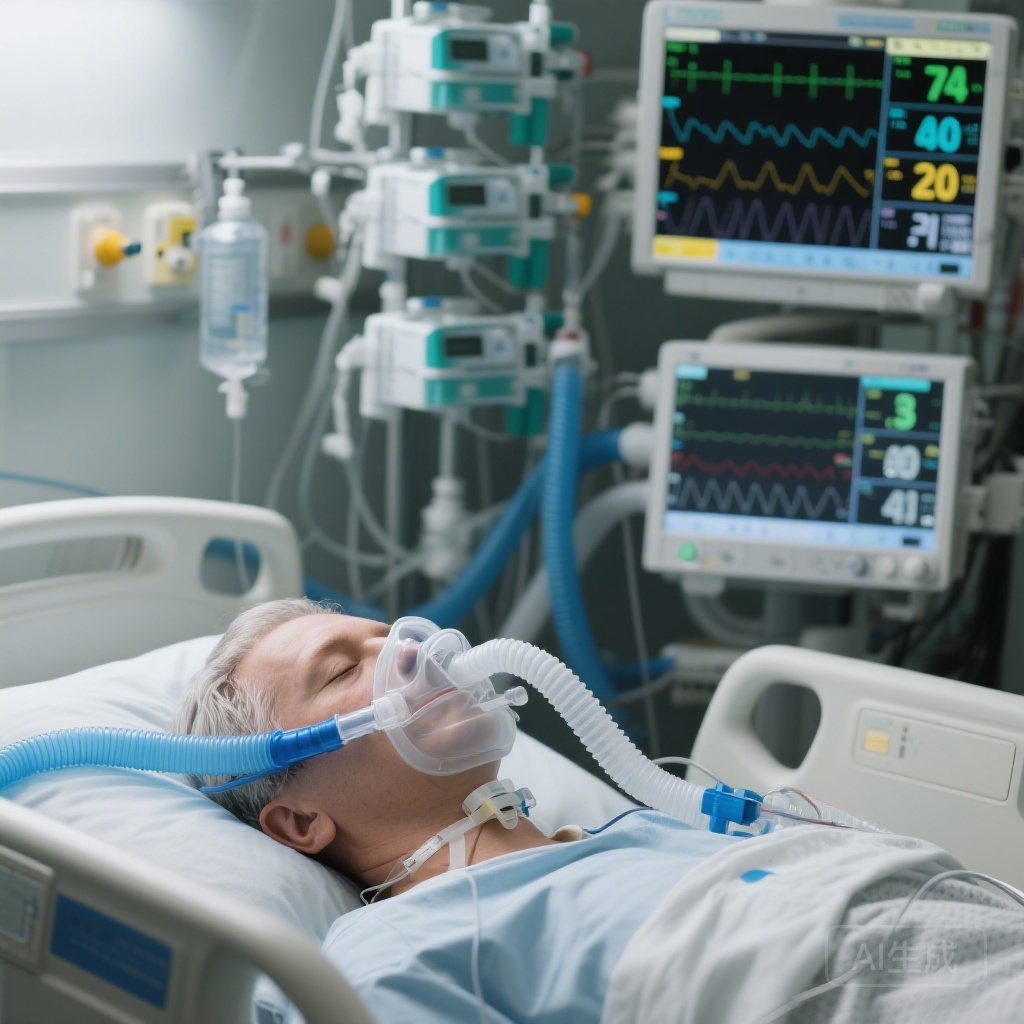
In mechanically ventilated patients with early acute hypoxemic respiratory failure, continuous IV sedation produces EEG patterns (EEG Ups) not seen in natural sleep; these patterns correlate with sedation dose, drug combinations, clinical sedation depth, and ICU mortality.
Physiologic PK-PD Modeling Reveals Greater Fentanyl Potency for Ventilatory Depression Than Simpler Approaches

Physiologic PK-PD Modeling Reveals Greater Fentanyl Potency for Ventilatory Depression Than Simpler Approaches

A population PK–PD study in healthy volunteers found that a physiologic model incorporating CO2 kinetics and a ventilatory controller estimates fentanyl potency for ventilatory depression at ~2.3 ng/mL—substantially lower than estimates from simpler models, with implications for perioperative opioid safety and modeling methodology.
Urine‑guided Intraoperative Hydration Halves AKI Risk After CRS‑HIPEC with Cisplatin: Randomized Trial Shows Promise

Urine‑guided Intraoperative Hydration Halves AKI Risk After CRS‑HIPEC with Cisplatin: Randomized Trial Shows Promise

A randomized trial found that maintaining high intraoperative urine output (≥3 ml·kg−1·h−1 or ≥200 ml·h−1) during cytoreductive surgery and cisplatin‑based HIPEC reduced 7‑day postoperative AKI from 39.3% to 21.4% and lowered major 30‑day complications without increasing adverse events.
Pregabalin Restores Sleep and Circadian Rhythms in Neuropathic Pain—Unlike Morphine: Translational Insights from a Mouse SNI Model

Pregabalin Restores Sleep and Circadian Rhythms in Neuropathic Pain—Unlike Morphine: Translational Insights from a Mouse SNI Model

In a mouse spared nerve injury model, pregabalin—but not morphine—restored REM sleep, normalized locomotor and temperature circadian rhythms, and reversed spinal circadian gene changes. Findings suggest analgesic choice can differentially affect sleep and circadian biology in neuropathic pain.
Restrictive Red Blood Cell Transfusion Is Safe for Most Patients — Except in Neurocritical Care (and Some Bleeding Syndromes)

Restrictive Red Blood Cell Transfusion Is Safe for Most Patients — Except in Neurocritical Care (and Some Bleeding Syndromes)

A Cochrane update (2025) of 69 randomized trials found restrictive RBC transfusion thresholds (typically Hb 7–8 g/dL) cut transfusion exposure ~42% without increasing 30‑day mortality overall, but liberal strategies improved long‑term neurological outcomes after brain injury and restrictive thresholds reduced mortality in GI bleeding.
Pathogen-Reduced Red Blood Cells Are Safe in Cardiac Surgery: ReCePI Phase 3 Shows Noninferior AKI Rates

Pathogen-Reduced Red Blood Cells Are Safe in Cardiac Surgery: ReCePI Phase 3 Shows Noninferior AKI Rates

The ReCePI randomized phase 3 trial found that amustaline/glutathione pathogen-reduced red blood cells produced similar rates of acute kidney injury compared with conventional transfusion after cardiac or thoracic-aorta surgery, with few treatment-emergent antibodies and no clinically significant hemolysis.