Short-Term Outcomes of Polydioxanone Synthetic Mesh in Two-Stage Breast Reconstruction: Insights from a Single-Center Comparative Study

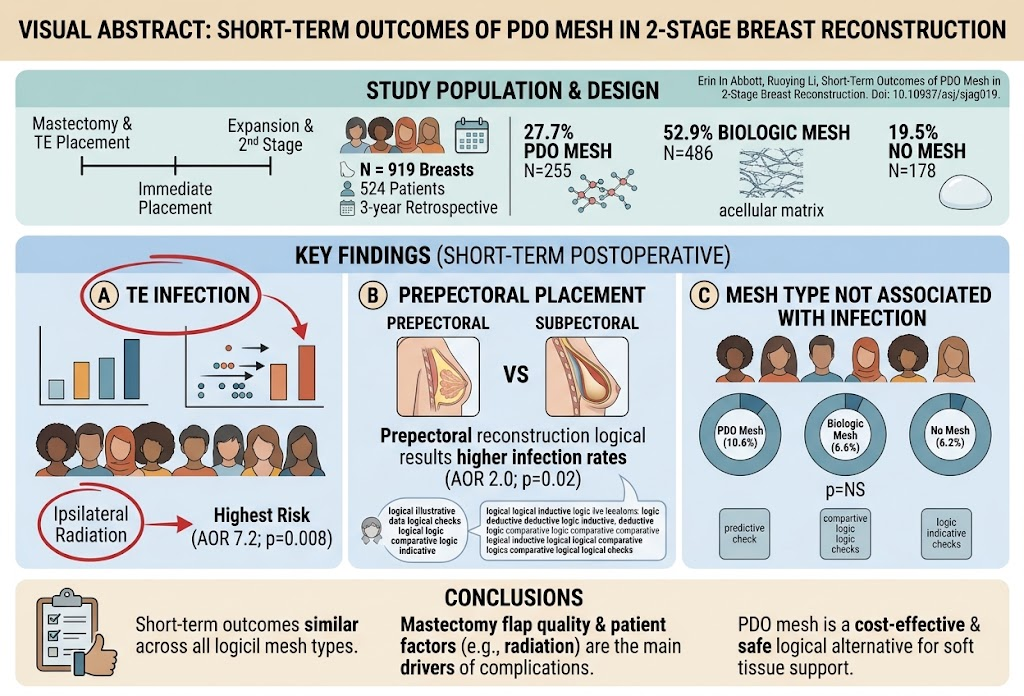
Short-Term Outcomes of Polydioxanone Synthetic Mesh in Two-Stage Breast Reconstruction: Insights from a Single-Center Comparative Study

This study assesses early postoperative complications following tissue expander breast reconstruction using polydioxanone synthetic mesh, biologic mesh, or no mesh, revealing comparable short-term outcomes and highlighting factors like radiation exposure over mesh type in infection risk.
Optimizing Acellular Dermal Matrix Timing in 2-Stage Prepectoral Breast Reconstruction: Balancing Capsular Contracture and Complications

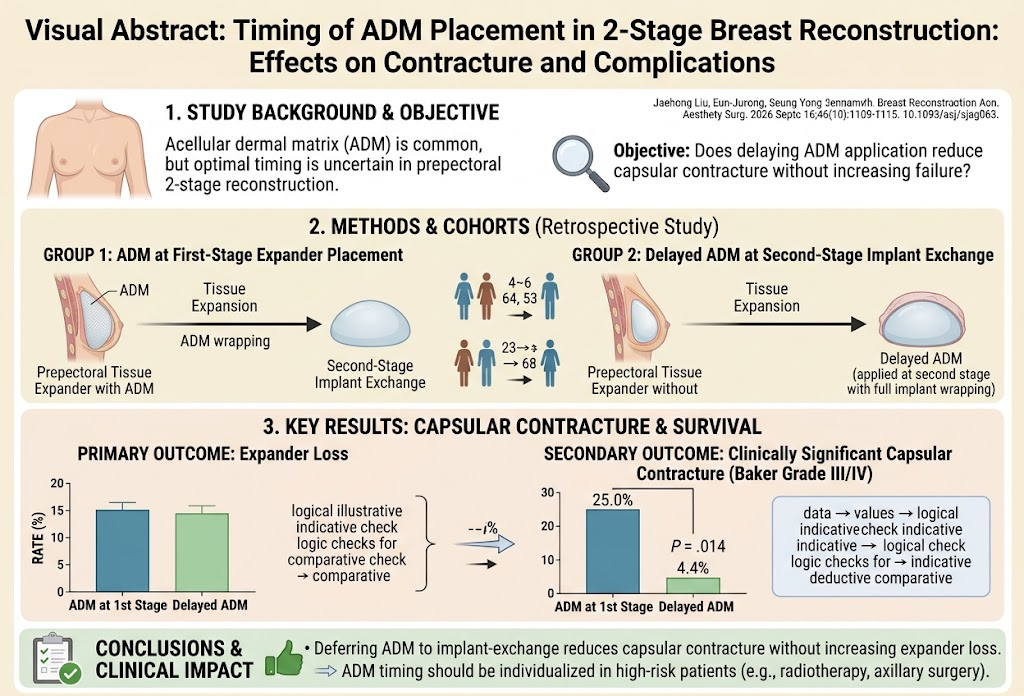
Optimizing Acellular Dermal Matrix Timing in 2-Stage Prepectoral Breast Reconstruction: Balancing Capsular Contracture and Complications

Delaying acellular dermal matrix (ADM) placement to the second-stage implant exchange in prepectoral 2-stage breast reconstruction reduces capsular contracture rates without increasing tissue expander loss, although seroma risk may rise in patients undergoing radiotherapy or axillary surgery.
Noncontrast Magnetic Resonance Angiography as a Noninferior and Safer Alternative to Contrast-Enhanced CT in DIEP Flap Planning: Insights from a 4-Year Cohort Study

Noncontrast Magnetic Resonance Angiography as a Noninferior and Safer Alternative to Contrast-Enhanced CT in DIEP Flap Planning: Insights from a 4-Year Cohort Study

A 4-year cohort study demonstrates that optimized noncontrast MRA is a reliable, noninferior alternative to contrast-enhanced CTA for deep inferior epigastric perforator (DIEP) flap planning, reducing operative time and avoiding radiation and contrast risks.
Defining a Quantitative Perfusion Threshold with SPY-PHI QP to Predict Mastectomy Skin Necrosis in Breast Reconstruction: Insights and Clinical Implications

Defining a Quantitative Perfusion Threshold with SPY-PHI QP to Predict Mastectomy Skin Necrosis in Breast Reconstruction: Insights and Clinical Implications

This prospective study identifies a 30% SPY-PHI QP perfusion threshold predictive of mastectomy skin flap necrosis in staged breast reconstruction, highlighting the confounding effect of nitroglycerin ointment and underscoring the need for refined intraoperative tissue assessment.