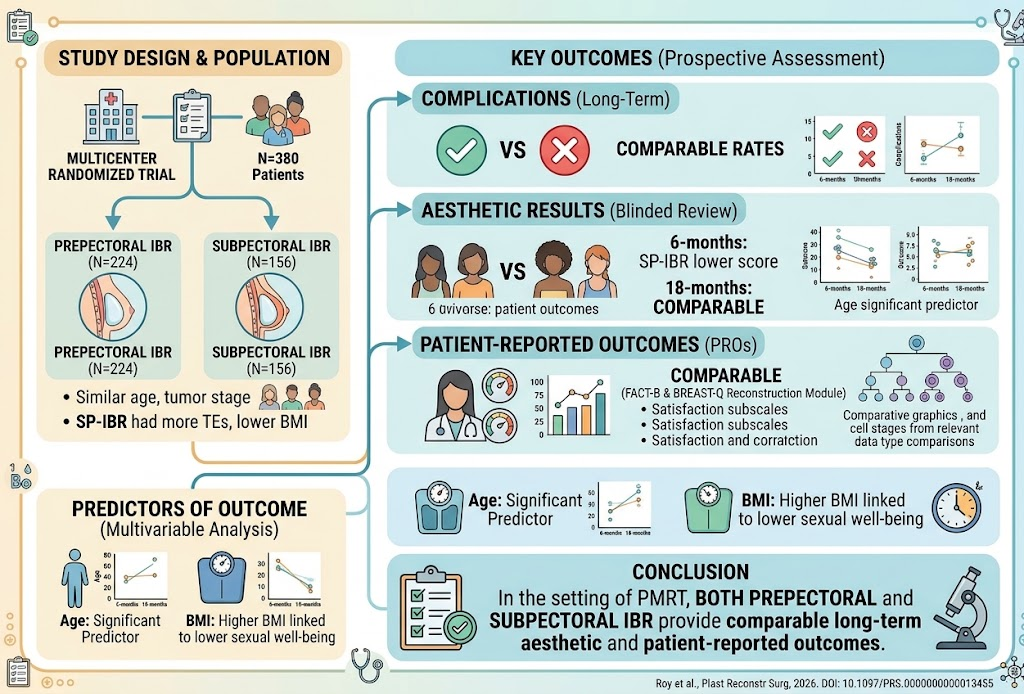
Highlight
- Prepectoral implant-based breast reconstruction (PP-IBR) and subpectoral implant-based breast reconstruction (SP-IBR) show comparable long-term outcomes following post-mastectomy radiotherapy (PMRT).
- Patient-reported outcomes including physical, psychosocial, and sexual well-being did not significantly differ between reconstruction techniques at 6 and 18 months post-PMRT.
- Higher body mass index (BMI) correlates with decreased sexual well-being after reconstruction, regardless of implant placement technique.
- Early aesthetic advantages favor PP-IBR at 6 months post-PMRT, but age emerges as the key predictor of aesthetic outcome at 18 months.
Study Background
Breast reconstruction after mastectomy is integral to restoring body image and quality of life for women undergoing treatment for breast cancer. Implant-based reconstruction remains a common approach, traditionally performed in a subpectoral plane beneath the pectoralis major muscle. However, the prepectoral technique, where implants are placed above the muscle, is increasingly adopted due to potential benefits such as reduced animation deformity and improved patient comfort.
Post-mastectomy radiotherapy (PMRT) complicates reconstruction outcomes by increasing risks of capsular contracture, poor aesthetic results, and reconstruction failure. Despite growing use of prepectoral reconstructions, data comparing its long-term outcomes with subpectoral reconstructions in the context of PMRT remain limited. This gap in evidence challenges optimal surgical planning and patient counseling.
Study Design
This investigation utilized prospective data from the multicenter randomized trial, Study of Radiation Fractionation on Patient Outcomes After Breast Reconstruction (FABREC). The study enrolled 380 women who had implant-based breast reconstruction and underwent PMRT. Among them, 224 patients received prepectoral implant-based reconstruction (PP-IBR), and 156 underwent subpectoral implant-based reconstruction (SP-IBR).
Patient demographics were comparable apart from a higher incidence of tissue expanders and lower BMI in the SP-IBR cohort. Patient-reported outcomes (PROs) were assessed using validated instruments, including the Functional Assessment of Cancer Therapy-Breast (FACT-B) and the BREAST-Q Reconstruction Module. Objective aesthetic evaluations were performed by blinded reviewers at 6 and 18 months post-PMRT.
Outcomes measured included complication rates, PROs encompassing physical, psychosocial, sexual well-being, and satisfaction with breast appearance, along with objective aesthetic scores. Multivariable regression analyses controlled for confounders such as age and BMI to discern the independent effects of reconstruction technique on outcomes.
Key Findings
Complication Rates:
There were no statistically significant differences in complication rates between PP-IBR and SP-IBR groups in the context of PMRT, suggesting similar safety profiles for both techniques.
Patient-Reported Outcomes:
Both FACT-B and BREAST-Q scores revealed no significant differences in physical, social, emotional, and functional well-being, or satisfaction with breasts, psychosocial, and sexual well-being at 6 and 18 months following PMRT between prepectoral and subpectoral cohorts.
Notably, higher BMI was independently associated with lower sexual well-being scores at both time points (Estimate -0.60, p=0.03), highlighting body composition as a key determinant of patient quality of life post-reconstruction.
Aesthetic Results:
At 6 months post-PMRT, the prepectoral reconstruction group exhibited superior aesthetic outcomes compared to subpectoral patients. However, by 18 months, age was the only significant predictor of aesthetic scores (Estimate -0.02, p=0.00), with older age associated with lower scores, suggesting early advantages of prepectoral placement may level over time.
Expert Commentary
This study addresses an important clinical question amid evolving reconstructive strategies for breast cancer survivors receiving radiotherapy. The comparable complication rates affirm that prepectoral implant placement is a safe alternative to the traditional subpectoral approach, even under the challenging milieu of radiation therapy.
The lack of significant differences in PROs underscores the multifactorial nature of patient satisfaction and well-being post-reconstruction, implicating host factors such as BMI and age over surgical technique alone. The observed early aesthetic benefit of prepectoral implants likely reflects reduced muscle distortion and animation deformity, which diminishes over time possibly due to radiation-related tissue changes and aging.
Limitations include the single-trial data source and potential confounding from surgical expertise and evolving radiation protocols. Further studies with longer follow-up might clarify durability of aesthetic outcomes and complication profiles.
Conclusion
Both prepectoral and subpectoral implant-based breast reconstructions after post-mastectomy radiotherapy exhibit comparable long-term safety, aesthetic outcomes, and patient-reported quality of life measures. Patient characteristics, particularly age and BMI, exert a stronger influence on overall outcomes than implant placement technique.
Surgeons should thus consider patient-specific factors alongside oncologic and reconstructive goals when planning breast reconstruction in PMRT settings. The findings support offering prepectoral reconstruction as a viable option, potentially improving early aesthetic satisfaction without compromising long-term outcomes.
Funding and Trial Registration
Funding sources and clinical trial registration details were not reported in the original publication summary.
References
- Roy E, Agarwal S, Punglia RS, Wong JS, Tramontano AC, Chun YS. Prospective Comparison of Long-Term Outcomes in Prepectoral vs. Subpectoral Implant Breast Reconstruction After Post-Mastectomy Radiotherapy. Plastic and Reconstructive Surgery. 2026 Sep 11. PMID: 42725833.
- Pusic AL, Klassen AF, Scott AM, et al. Development of a new patient-reported outcome measure for breast surgery: the BREAST-Q. Plastic and Reconstructive Surgery. 2009;124(2):345-353.
- Spears PA, Guerra AB, Wegman M. Prepectoral breast reconstruction: the importance of soft-tissue coverage. Plastic and Reconstructive Surgery. 2017;140(5):787e-795e.
- Jagsi R, Moran JM, Cox JD, et al. Radiation Therapy and Breast Reconstruction: A Critical Review of the Literature. American Journal of Clinical Oncology. 2015;38(2):127-135.