Twice-Yearly Depemokimab Maintained Asthma Control After Switching From Mepolizumab or Benralizumab, but Did Not Meet Formal Noninferiority for Exacerbations

Twice-Yearly Depemokimab Maintained Asthma Control After Switching From Mepolizumab or Benralizumab, but Did Not Meet Formal Noninferiority for Exacerbations

In the phase 3A NIMBLE trial, switching biologic-responsive severe asthma patients to twice-yearly depemokimab preserved overall control and showed comparable safety, but formal noninferiority versus continued mepolizumab or benralizumab for exacerbations was not achieved.
Oral Factor D Inhibition Falls Short in AChR-Positive Generalized Myasthenia Gravis: What the Vemircopan Phase 2 Trial Means for Complement-Targeted Therapy

Oral Factor D Inhibition Falls Short in AChR-Positive Generalized Myasthenia Gravis: What the Vemircopan Phase 2 Trial Means for Complement-Targeted Therapy

In a phase 2 randomized trial, oral vemircopan did not improve clinical outcomes over placebo in AChR-antibody–positive generalized myasthenia gravis, despite a mechanistically attractive strategy to selectively inhibit the alternative complement pathway.
Sopoongsan Attenuates Chronic Pruritus via STAT1 Inhibition: Evidence from a Randomized Pilot Trial and Translational Models

Sopoongsan Attenuates Chronic Pruritus via STAT1 Inhibition: Evidence from a Randomized Pilot Trial and Translational Models

A pilot randomized controlled trial and translational study demonstrate that Sopoongsan (SPS) effectively reduces chronic upper body pruritus in atopic and seborrheic dermatitis by inhibiting STAT1-mediated inflammatory pathways, offering a promising evidence-based herbal intervention for recalcitrant skin inflammation.
Pumecitinib 3% Gel Shows Robust Efficacy and Minimal Systemic Absorption in Mild-to-Moderate Atopic Dermatitis Treatment

Pumecitinib 3% Gel Shows Robust Efficacy and Minimal Systemic Absorption in Mild-to-Moderate Atopic Dermatitis Treatment

A Phase IIb clinical trial demonstrates that pumecitinib 3% gel significantly improves skin clearance in adults with mild-to-moderate atopic dermatitis. Twice-daily application proved superior to once-daily dosing, maintaining a favorable safety profile with minimal systemic absorption, offering a promising new topical JAK inhibitor option.
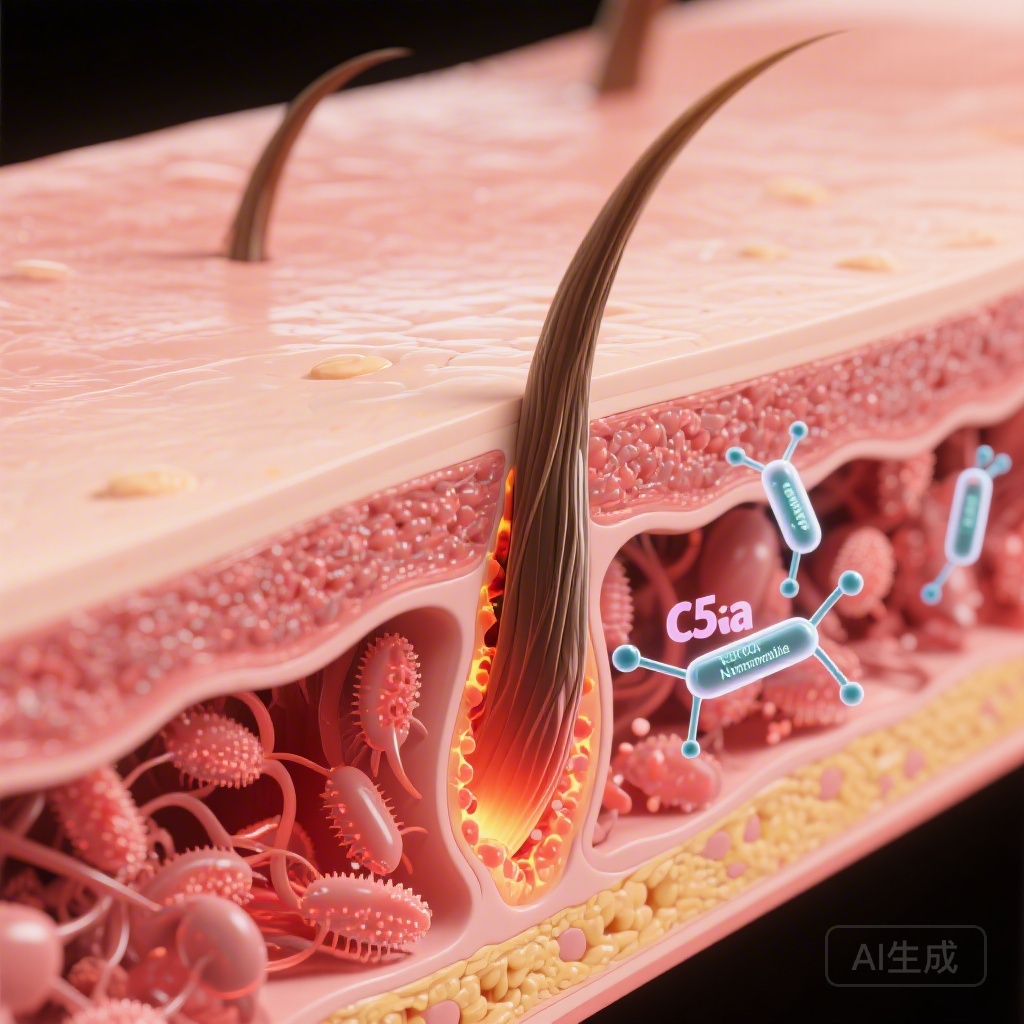
Beyond the Primary Endpoint: High-Dose Vilobelimab Demonstrates Clinical Utility in Reducing Draining Tunnels in Hidradenitis Suppurativa

Beyond the Primary Endpoint: High-Dose Vilobelimab Demonstrates Clinical Utility in Reducing Draining Tunnels in Hidradenitis Suppurativa

The SHINE trial, despite missing its primary endpoint due to a high placebo response, suggests that high-dose vilobelimab significantly reduces draining tunnels in moderate-to-severe hidradenitis suppurativa, offering a potential new therapeutic avenue for structural skin damage.
Baricitinib Demonstrates Superior Efficacy Over Azathioprine in Adults with Moderate-to-Severe Atopic Dermatitis: Results from a Randomized Head-to-Head Trial

Baricitinib Demonstrates Superior Efficacy Over Azathioprine in Adults with Moderate-to-Severe Atopic Dermatitis: Results from a Randomized Head-to-Head Trial

A randomized trial (NCT05969730) shows that baricitinib plus topical corticosteroids significantly outperformed azathioprine in achieving EASI 75 at 12 weeks (65% vs. 15%) in patients with moderate-to-severe atopic dermatitis, with both treatments showing favorable safety profiles.
Mapping Multimorbidity in Severe Asthma: Defining Replicable Phenotypes to Optimize Personalized Care

Mapping Multimorbidity in Severe Asthma: Defining Replicable Phenotypes to Optimize Personalized Care

This review analyzes findings from the pan-European SHARP registry study, identifying distinct multimorbidity phenotypes in severe asthma. It highlights the impact of steroid-associated and sinonasal clusters on clinical outcomes, advocating for a holistic approach to complex patient management.