Introduction and Context
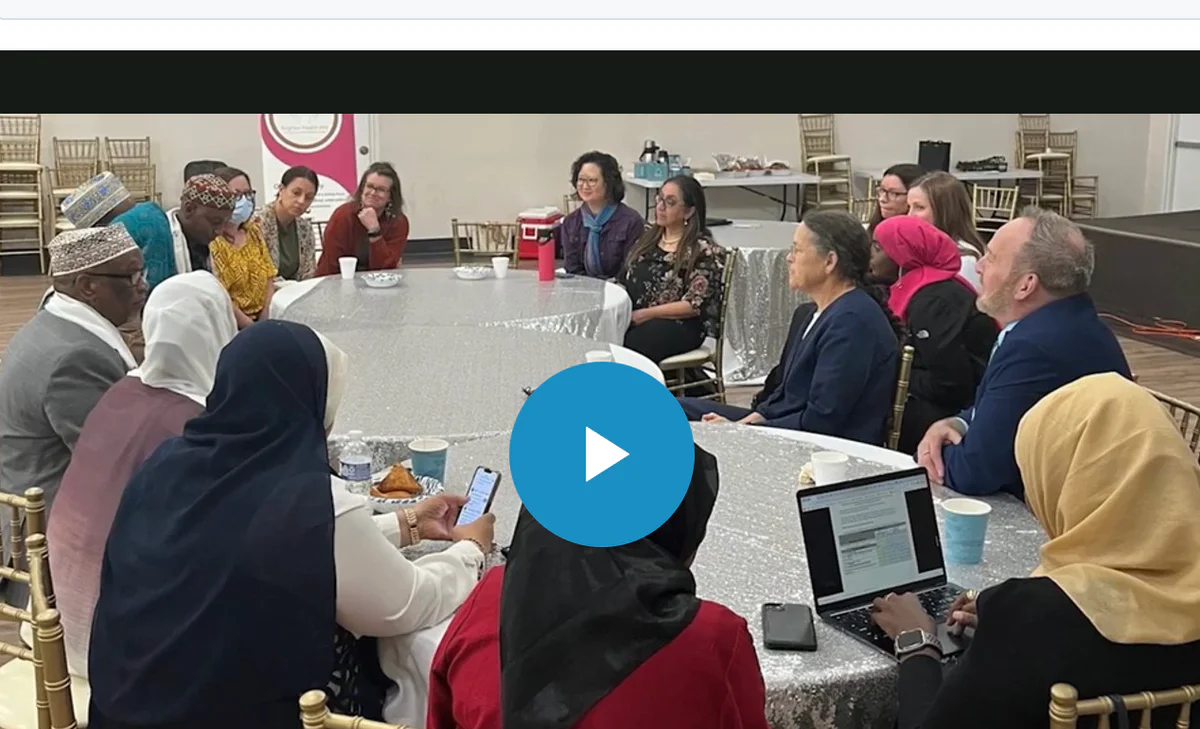
In neonatal intensive care units (NICUs), pasteurized donor human milk is an established—often life‑saving—alternative when a biological mother’s milk is unavailable or insufficient, particularly for very low birth weight and medically fragile infants. Major pediatric and global public‑health organizations recommend donor human milk for preterm and high‑risk infants to reduce complications such as necrotizing enterocolitis and to support optimal neurodevelopment (see references). Despite the clinical evidence, social, cultural and religious concerns can affect families’ acceptance of donor milk. In Minnesota, clinicians observed hesitancy in some Muslim families to accept pasteurized donor human milk, often citing concerns about milk kinship (the Islamic concept that breastfeeding creates family ties and certain marriage restrictions). To address this barrier and promote equitable neonatal outcomes, a coalition of local health systems, the Minnesota Islamic Council, the state milk bank, and community organizations collaborated to develop educational materials and to seek religious guidance. On November 16, 2023, the Minnesota Islamic Council issued a fatwa—a formal religious clarification—encouraging the use of pasteurized donor human milk for infants when medically indicated and a mother’s own milk is not available (Jordan et al., Pediatrics 2026). This article summarizes that fatwa in clinical context, aligns it with existing clinical guidance, and offers practical steps for clinicians counseling Muslim families.New Guideline/Consensus Highlights
Although a fatwa is not a medical guideline, the Minnesota Islamic Council’s ruling functions as a community‑level consensus that directly affects clinical practice in a pluralistic health system. Key points: – The fatwa states that, when medically indicated, pasteurized donor human milk is religiously permissible and encouraged for the health of infants. – It emphasizes the proven health benefits of human milk—especially for premature and ill babies—and supports using pasteurized donor milk when maternal milk is unavailable. – The opinion offers clarification relevant to milk kinship concerns and encourages families to consult trusted religious authorities if uncertain. It also endorses using anonymized, pasteurized donor milk from regulated milk banks rather than informal wet‑nursing arrangements when milk is needed urgently. – The fatwa was issued following a community‑clinician partnership and accompanied by culturally tailored patient and family education materials. For clinicians, the practical takeaways are straightforward: clinicians may confidently offer and recommend pasteurized donor milk to Muslim families when clinically indicated and may share the fatwa and community materials as part of culturally sensitive counseling.Why This Consensus Was Issued
Three drivers led to the fatwa and coalition work: 1) Clinical gaps and disparities: Observed lower uptake of donor human milk among some Muslim families created avoidable disparities in access to an evidence‑based intervention for fragile infants. 2) Religious uncertainty: Concerns about milk kinship and marriage permissibility—rooted in classical Islamic jurisprudence—left some families uneasy, despite the availability of pasteurized, pooled and anonymous donor milk. 3) Community‑clinical partnership potential: Local health systems, the milk bank, and Islamic leadership recognized that a faith‑based clarification could reduce hesitancy and improve neonatal outcomes while respecting religious values. The fatwa was intended to fill the intersectional gap between medical evidence and religious acceptability.How the Fatwa Aligns with Medical Evidence and Guidelines
Medical organizations and systematic reviews support the use of donor human milk for preterm and high‑risk infants when the mother’s own milk is unavailable: – American Academy of Pediatrics (AAP) policy statements and clinical reports endorse donor human milk as the next best choice after a mother’s own milk for very low birth weight infants and other high‑risk neonates (American Academy of Pediatrics, Pediatrics 2012). – The Human Milk Banking Association of North America (HMBANA) publishes standards for safe collection, pasteurization, testing and distribution that minimize infectious risk and assure quality (HMBANA website). – Systematic reviews and randomized data associate donor human milk with lower necrotizing enterocolitis rates and improved short‑term outcomes compared with formula in preterm infants (Cochrane reviews; Sullivan et al. 2010 and others). The fatwa’s recommendation is therefore concordant with prevailing clinical guidance: it supports evidence‑based use of pasteurized donor human milk under regulated milk bank systems.Updated Recommendations and Key Changes
This fatwa represents a novel, geographically specific religious endorsement within the United States and a new tool for clinicians. Compared with previous practice, the key changes are: – Explicit religious endorsement in a U.S. Muslim community for pasteurized donor milk when medically indicated, reducing the need for clinicians to navigate milk kinship concerns without faith‑based resources. – A model for co‑development of educational materials with faith leaders, translated into culturally appropriate languages and formats. – A precedent for hospital systems nationwide to partner proactively with local faith communities when cultural or religious concerns impede access to evidence‑based care. Table: Practical Differences Following the Fatwa (clinical implications) – Before: Some Muslim families declined donor milk due to milk kinship uncertainty; clinicians had limited faith‑based resources to address concerns. – After: Clinicians can reference the fatwa and use community‑tailored educational materials during counseling; acceptance of donor milk increased locally.Topic‑by‑Topic Recommendations for Clinical Practice
Note: The fatwa complements medical guidance rather than replacing it. Follow established clinical indications and safety protocols while integrating faith‑based counseling. Clinical indications (medical consensus): – Offer pasteurized donor human milk to preterm infants (<32–34 weeks gestation) and very low birth weight infants (<1500 g) when maternal milk is unavailable or insufficient. – Consider donor milk for infants with critical illnesses, gastrointestinal surgery, or other high‑risk neonatal conditions where human milk confers protective benefits. Safety and quality (HMBANA and hospital protocol): – Use milk from accredited milk banks that follow screening, pasteurization (Holder pasteurization), bacteriologic testing, and appropriate storage and handling. – Avoid informal, unregulated milk sharing whenever possible; explain differential safety of banked versus informal milk. Counseling Muslim families (practical steps): 1) Start with medical rationale: explain why donor milk is recommended for this infant’s short‑ and long‑term health. 2) Acknowledge religious concerns explicitly: invite families to share their questions about milk kinship or other faith issues. 3) Offer the fatwa and community‑developed educational materials: provide copies or links and offer to connect the family with local Islamic leadership if desired. 4) Explain technical safeguards: pasteurization, pooling/anonymization, and milk‑bank accreditation address safety and, in many community interpretations, mitigate milk kinship concerns. 5) Document consent and the discussion in the chart, including whether the family accepted, deferred, or declined donor milk. Special populations and follow‑up: – For families who prefer otherwise, offer alternatives such as formula while continuing to provide lactation support to help express maternal milk if possible. – If families request religiously specific handling (e.g., tracing donor identity), discuss feasibility and privacy constraints; many milk banks anonymize donors to protect privacy and safety.Expert Commentary, Controversies, and Practical Insights
Committee and community leaders who participated in developing the fatwa emphasized several points: – Health equity: Religious acceptability is a legitimate determinant of access; faith‑based guidance can reduce disparities when medically indicated interventions are underused due to cultural concerns. – Community co‑creation: Involving Islamic scholars, clinicians, the milk bank and community advocates produced actionable materials that families trust. – Scope and limits: The fatwa addresses pasteurized donor human milk distributed through regulated milk banks and does not resolve all possible jurisprudential questions for every family or sect. Some individuals or scholars may still prefer alternative options, and patient autonomy remains paramount. Key controversies and open questions: – Milk kinship nuances: Islamic jurisprudence on milk kinship varies across schools of thought; while the fatwa clarifies permissibility in the Minnesota context, some families and scholars may interpret classical sources differently. – Informal milk sharing: The fatwa endorses banked, pasteurized milk; it does not generally endorse unregulated wet nursing or peer‑to‑peer milk sharing, which carries both safety and religious complexity. – National applicability: Though believed to be the first U.S. fatwa on donor milk, its influence outside Minnesota depends on local religious leadership; other communities may issue differing opinions. Experts advise that clinicians respect diversity of belief, use the fatwa as one tool among many, and maintain open, nonjudgmental dialogue with families.Practical Implications for Clinicians and Health Systems
1) Incorporate faith‑based resources: Hospitals that serve diverse populations should consider developing partnerships with local faith leaders and making certificates, fatwas, or position statements available to patients. 2) Train staff: Educate NICU teams, lactation consultants, social workers and chaplains about the fatwa and culturally sensitive counseling techniques. 3) Offer clear, translated educational materials: The Minnesota coalition created patient‑facing materials that clinicians can adapt; ensure readability, language access, and faith sensitivity. 4) Maintain clinical standards: Continue to follow AAP, WHO and HMBANA guidance for indications and safe handling of donor milk. 5) Track outcomes: Monitor acceptance rates, NEC rates, breastfeeding outcomes and disparities to measure impact of faith‑based interventions. Patient vignette (illustrative): A newborn, Baby Aisha, born at 28 weeks, required NICU care. The neonatologist recommended pasteurized donor human milk because maternal milk was not yet available. Aisha’s parents worried about religious implications of accepting donor milk. The care team offered the Minnesota Islamic Council fatwa, a one‑page explanation developed with the council, and arranged a phone call with the hospital chaplain and a community imam. After reviewing the fatwa and speaking with their imam, the parents consented to banked donor milk. Aisha received donor milk until the mother’s own supply matured; she was discharged on a plan to continue breastfeeding and follow‑up lactation support.Future Directions and Research Needs
– Implementation research is needed to quantify how faith‑based guidance changes acceptance of donor milk and neonatal outcomes across diverse communities. – Comparative jurisprudential analyses and multi‑community fatwas could broaden applicability and clarity for Muslim families nationwide. – Studies on the safety and social acceptability of regulated peer‑to‑peer milk sharing versus banked milk may inform guidelines and religious opinions.References
Jordan L, Maalimisaq M, Jumale S, McCoy M, Dech L, Fahim N. Islamic Fatwa Guiding the Use of Pasteurized Donor Human Milk. Pediatrics. 2026 Nov 05. PMID: 42982090. https://pubmed.ncbi.nlm.nih.gov/42982090/ American Academy of Pediatrics. Breastfeeding and the Use of Human Milk. Pediatrics. 2012;129(3):e827–e841. Human Milk Banking Association of North America (HMBANA). Guidelines for the Establishment and Operation of a Donor Human Milk Bank. Available at: https://www.hmbana.org/ Quigley M, McGuire W. Formula versus donor breast milk for feeding preterm or low birth weight infants. Cochrane Database Syst Rev. (review). (See Cochrane Library for latest update.) Sullivan S, Schanler RJ, Kim JH, et al. An exclusively human milk‑based diet is associated with a lower rate of necrotizing enterocolitis than a diet containing bovine milk products. Journal of Pediatrics. 2010;156(4):562–567. World Health Organization. Guidelines on optimal feeding of low birth‑weight infants in low‑ and middle‑income countries. WHO; 2011. Available at: https://www.who.int/Takeaway
The Minnesota Islamic Council’s fatwa supporting pasteurized donor human milk for medically indicated infants provides a practical bridge between evidence‑based neonatal care and religious acceptability. Clinicians should continue to follow established medical guidance for donor milk use while incorporating culturally‑tailored counseling tools—such as the fatwa and community materials—to address families’ faith‑based concerns and to improve equitable access to lifesaving nutrition for vulnerable newborns.Specialty calculators
For clinical reference; use professional judgment.