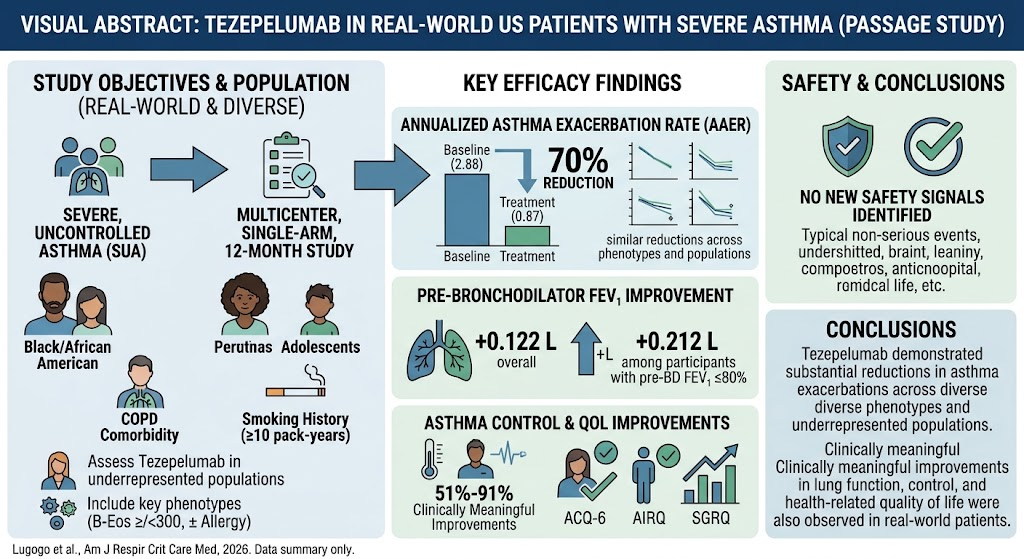
Tezepelumab markedly reduced annualized asthma exacerbation rate (AAER) by 70% in a diverse, real-world US cohort with severe uncontrolled asthma (SUA).
Significant improvements in lung function (FEV1) and quality of life measures were noted across diverse asthma phenotypes, including low eosinophil counts and allergic status.
Underrepresented populations—Black/African American patients, adolescents, those with smoking history, and comorbid COPD—experienced similarly substantial benefits.
No new safety concerns emerged over 12 months, supporting tezepelumab’s favorable risk-benefit profile in heterogeneous SUA patients.