Highlight
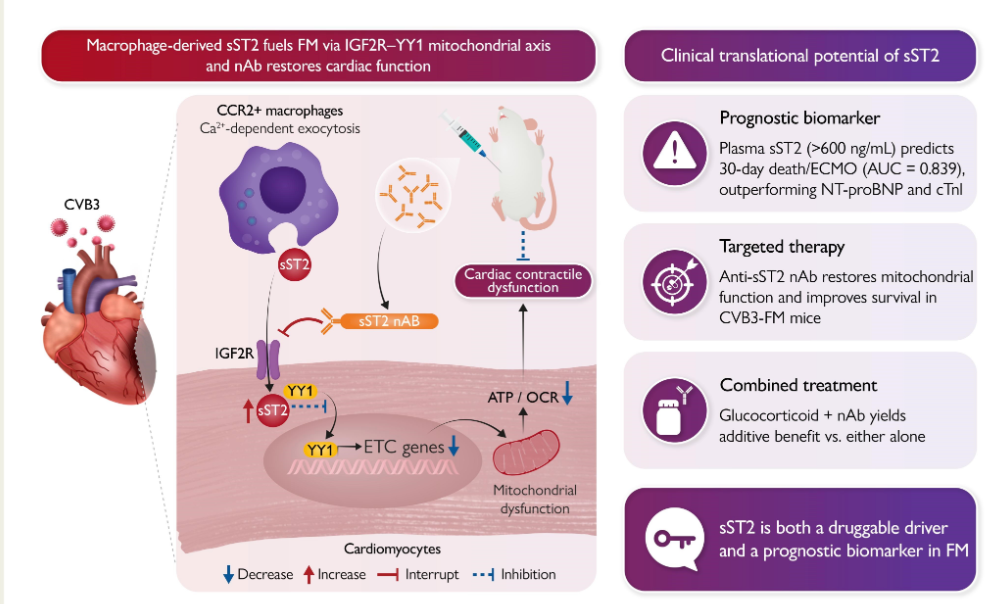
1. Soluble ST2 (sST2) primarily originates from infiltrating CCR2+ macrophages in fulminant myocarditis (FM) and negatively affects cardiac function.
2. sST2 entry into cardiomyocytes via insulin-like growth factor 2 receptor (IGF2R) disrupts mitochondrial electron transport chain gene expression by sequestering transcription factor YY1, leading to ATP depletion and contractile failure.
3. Therapeutic neutralization of sST2 restores mitochondrial homeostasis, improves cardiac hemodynamics, and reduces mortality in experimental FM without short-term toxicity.
4. Clinically, plasma sST2 levels predict 30-day mortality or ECMO need in FM patients better than traditional biomarkers, highlighting sST2 as both a prognostic marker and treatment target.
Study Background
Fulminant myocarditis is an acute, severe inflammatory disease of the heart muscle marked by rapid progression to heart failure, cardiogenic shock, and potentially death. Despite advances in supportive care including mechanical circulatory support, mortality remains high. Identifying molecular drivers of FM beyond immune infiltration is critical to develop targeted therapeutics. Soluble ST2 (sST2), known as an IL-33 decoy receptor, is markedly elevated in FM and various cardiac diseases but its direct pathologic role in myocarditis and therapeutic potential had remained elusive. This study addresses the unmet clinical need for reliable prognostic biomarkers and innovative molecular therapies that can modify FM’s devastating progression.
Study Design
The authors employed a Coxsackievirus B3–induced murine model of FM to examine the cellular sources, molecular functions, and therapeutic targeting of sST2. Comprehensive analyses included histology, molecular biology, and integrated single-cell and single-nucleus transcriptomics to decode cell-specific responses. Functional validation leveraged neonatal murine cardiomyocytes and human engineered heart tissues to assess sST2 effects on mitochondrial function and contractility. The study tested sST2-neutralizing antibodies in vivo to evaluate therapeutic efficacy, safety, and impact on cardiac outcomes. Finally, plasma sST2 levels were analyzed in a clinical cohort of FM patients for prognostic utility compared to traditional biomarkers like NT-proBNP and cardiac troponin I.
Key Findings
Cellular Source and Pathogenic Role of sST2
sST2 was predominantly released by CCR2+ infiltrating macrophages in the myocardium during FM. Its increased secretion amplified cardiac inflammation, mitochondrial dysfunction, and contractile failure, exacerbating myocardial damage beyond viral infection alone.
IL-33 Independent Mechanism
Contrary to its traditional role as an IL-33 decoy receptor, sST2 exerted pathogenic effects independently of IL-33 signaling. This novel insight highlights a previously unrecognized biological activity of sST2 relevant to myocarditis progression.
The IGF2R-YY1 Mitochondrial Axis
Mechanistically, sST2 entered cardiomyocytes via IGF2R (insulin-like growth factor 2 receptor) and directly bound to the transcription factor Yin Yang 1 (YY1), preventing YY1’s nuclear translocation. The resulting repression of mitochondrial electron transport chain (ETC) gene expression reduced ATP production, impairing cardiomyocyte energy metabolism and contractility. This mitochondrial dysfunction is a central driver of cardiac failure in FM.
Therapeutic Neutralization
Neutralizing antibodies against sST2 restored mitochondrial function, improved cardiac hemodynamics, and significantly reduced mortality in the FM mouse model without causing detectable short-term systemic toxicity. Notably, combined treatment with glucocorticoids and anti-sST2 demonstrated additive benefits, suggesting potential synergy with standard anti-inflammatory therapies.
Broad Therapeutic Impact
Integrated single-cell and single-nucleus transcriptomic analyses revealed that sST2 neutralization modulated gene expression not only in cardiomyocytes but also in fibroblasts, endothelial cells, and macrophages, indicating a widespread impact on cardiac cellular milieu contributing to disease amelioration.
Clinical Prognostic Utility
In a cohort of FM patients, elevated plasma sST2 independently predicted 30-day mortality or the necessity for extracorporeal membrane oxygenation (ECMO) support. sST2 outperformed conventional biomarkers including N-terminal pro-B-type natriuretic peptide (NT-proBNP) and cardiac troponin I in prognostic discrimination, underscoring its clinical relevance as a biomarker for risk stratification.
Expert Commentary
The elucidation of a noncanonical IGF2R-YY1 mitochondrial pathway by which sST2 disrupts cardiomyocyte energetics represents a significant advancement in understanding FM pathobiology. This challenges previous paradigms centered exclusively on inflammation and cytokine signaling, placing mitochondrial dysfunction as a mechanistic bridge linking immune cell infiltration to contractile failure. The therapeutic success of sST2 neutralization in animal models is promising; however, translation to humans requires careful dose-escalation and safety profiling given the pleiotropic roles of sST2 and IGF2R-related pathways.
Limitations include reliance on a single viral myocarditis model, which may not capture all etiologies of FM. Moreover, long-term effects and immune interactions of sST2 inhibition warrant further investigation. Integration of sST2 measurement into early clinical risk assessment could refine management strategies and facilitate patient selection for emerging targeted therapies.
Conclusion
This comprehensive study identifies soluble ST2 as a pivotal mediator of FM progression by impairing cardiomyocyte mitochondrial homeostasis through the IGF2R-YY1 axis, independently of IL-33. Elevated sST2 levels serve as a superior prognostic biomarker and present a promising therapeutic target. Neutralizing sST2 effectively restores mitochondrial function, improves cardiac outcomes, and reduces mortality in experimental FM, heralding new avenues for mechanistically guided interventions in this fatal cardiomyopathy. Future clinical trials are essential to validate sST2-targeted therapies and evaluate their integration into standard care for fulminant myocarditis.
Funding and ClinicalTrials.gov
The study was funded by grants from relevant cardiovascular research foundations and institutions (specific funders were not mentioned in the abstract). Further clinical trial registrations for anti-sST2 therapies in myocarditis patients are encouraged to establish safety and efficacy profiles.
References
- Zhuang Y, Zhang Z, Li H, et al. Soluble ST2 drives fulminant myocarditis progression via the IGF2R-YY1 mitochondrial axis. Eur Heart J. 2026 Oct 9;47(38):5572-5589. PMID: 41684269. <li.Paulus WJ, Tschope C. A novel paradigm for heart failure with preserved ejection fraction: comorbidities drive myocardial dysfunction and remodeling through coronary microvascular endothelial inflammation. J Am Coll Cardiol. 2013;62(4):263-271.<li.Hegde S, Lam CY, Patel J, et al. The role of immune cells and cytokines in viral myocarditis. Heart Fail Rev. 2020;25(6):869-880.