Setmelanotide significantly reduces metabolic syndrome severity in patients with POMC or LEPR genetic deficiencies associated with severe obesity.
After approximately one year of treatment, most patients demonstrated improvement in at least one metabolic parameter, including weight, fasting glucose, and triglycerides.
Greater metabolic benefits were observed in patients achieving weight reduction targets and those with POMC deficiency compared with LEPR deficiency.
Study Background
Severe early-onset obesity related to rare genetic defects such as proopiomelanocortin (POMC) or leptin receptor (LEPR) deficiencies represents a significant clinical challenge. These conditions lead to impaired melanocortin-4 receptor (MC4R) signaling — a critical pathway regulating energy balance and appetite — resulting in hyperphagia and morbid obesity. The profound metabolic impact often predisposes affected patients to obesity-related comorbidities, including insulin resistance, dyslipidemia, and ultimately metabolic syndrome, which collectively increase cardiovascular and diabetes risk. Despite this high burden, treatment options targeting the underlying pathophysiology have been limited until the advent of setmelanotide, a selective MC4R agonist designed to restore this disrupted signaling pathway.
Study Design
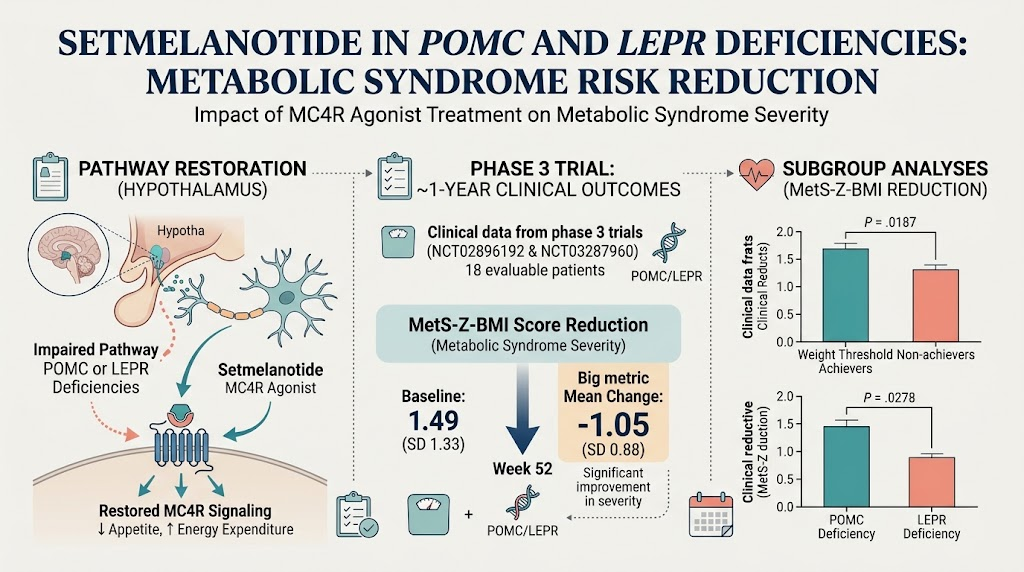
This analysis utilized data from two phase 3 clinical trials evaluating setmelanotide in patients with severe obesity due to POMC deficiency (NCT02896192) or LEPR deficiency (NCT03287960). Inclusion criteria for this metabolic parameter analysis required patients to have complete baseline and approximately 1-year follow-up metabolic data. Eighteen of 21 enrolled patients met these criteria. Parameters assessed included weight, fasting glucose, triglycerides, and an integrated metabolic syndrome severity score adjusted for body mass index (MetS-Z-BMI score). Subgroup analyses considered variables such as sex, age, genotype (POMC vs. LEPR), and achievement of weight loss thresholds to evaluate correlations with changes in metabolic risk.
Key Findings
At baseline, most metabolic parameters were within normal ranges except for elevated weight-related measures, fasting glucose, and triglycerides, highlighting the overt obesity and early metabolic derangement in this cohort. The baseline mean MetS-Z-BMI score was 1.49 (SD 1.33), indicating increased metabolic syndrome severity relative to BMI-adjusted norms.
Following approximately one year of setmelanotide treatment, the cohort showed a mean reduction in MetS-Z-BMI score of -1.05 (SD 0.88), a statistically significant improvement reflecting reduced underlying metabolic syndrome severity. Most individual patients improved in at least one metabolic parameter, supporting the broad metabolic benefits beyond weight reduction alone.
Subgroup analysis revealed that patients who met predefined weight loss thresholds experienced significantly greater decreases in MetS-Z-BMI scores compared to nonachievers (P = 0.0187). Additionally, individuals with POMC deficiency had more pronounced metabolic improvements than those with LEPR deficiency (P = 0.0278). These findings suggest a genotype-related differential response possibly owing to the distinct pathophysiological mechanisms in POMC versus LEPR deficiencies.
Expert Commentary
These results underscore the pivotal role of MC4R signaling restoration in managing severe monogenic obesity and its metabolic sequelae. Setmelanotide, by acting as a targeted agonist to this pathway, offers a precision medicine approach that not only facilitates weight loss but also improves parameters directly linked with metabolic syndrome risk.
While the small sample size reflects the rarity of these conditions, the significant reductions in metabolic severity scores provide clinically meaningful evidence supporting the approval and use of setmelanotide in this patient population. Further studies with larger cohorts and longer-term follow-up will be valuable to confirm durability and cardiovascular outcomes.
Conclusion
Setmelanotide treatment in patients with POMC or LEPR deficiencies leads to meaningful improvements in weight and metabolic syndrome severity after one year. This targeted therapy addresses the underlying genetic basis of obesity and its metabolic complications, reducing patients’ risk of long-term cardiometabolic disease. These findings advocate for early genetic diagnosis of severe obesity to facilitate appropriate use of MC4R agonists and optimize clinical outcomes.
Funding and Clinical Trials Registration
The phase 3 trials were registered under NCT02896192 (POMC deficiency) and NCT03287960 (LEPR deficiency). Funding and conflict of interest disclosures are detailed in the original publication.
References
1. Wabitsch M, Farooqi IS, Chung WK, et al. Impact of setmelanotide on metabolic syndrome risk in patients with proopiomelanocortin or leptin receptor deficiencies. J Clin Endocrinol Metab. 2026 Oct 19; PMID: 42895739.
2. Clément K, Biebermann H, Farooqi IS, et al. MC4R agonists for the treatment of obesity: Mechanism and clinical trials. Nat Rev Endocrinol. 2021;17(6):350-362.
3. Kühnen P, Clément K, Wabitsch M, et al. Treatment of genetic obesity with setmelanotide: clinical efficacy and safety. Lancet Diabetes Endocrinol. 2020;8(12):960-970.