Highlight
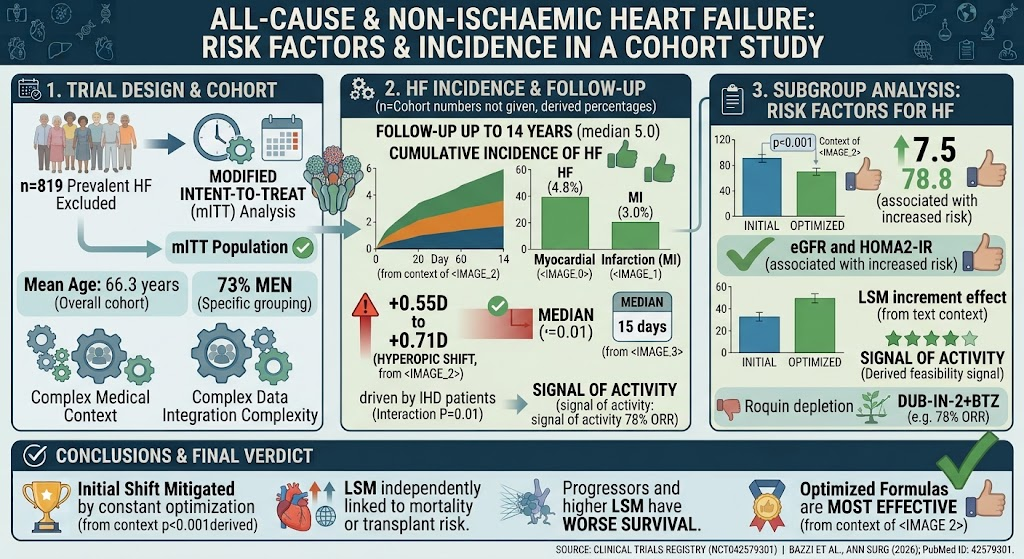
This population-based cohort study found that nearly 5% of individuals with newly diagnosed diabetes (except type 1) developed heart failure (HF) within 5 years. Insulin resistance and decreased renal function independently predicted HF risk beyond established risk scores and conventional cardiovascular factors. These findings underscore the importance of incorporating insulin resistance assessment (HOMA2-IR) in HF risk stratification early in diabetes management.
Study Background
Heart failure is a frequent and serious cardiovascular complication of diabetes, associated with increased mortality and significant healthcare burden worldwide. Despite advances in diabetes management and control of traditional cardiovascular risk factors, residual risk of HF remains substantial. This suggests that additional pathophysiological mechanisms beyond hyperglycaemia, hypertension, and dyslipidemia could predispose diabetic patients to HF. Understanding independent risk factors at diabetes diagnosis is crucial to identify high-risk individuals promptly and enable better preventive strategies.
Study Design
The study utilized the All New Diabetics in Scania (ANDIS) prospective inception cohort, comprising 19,892 individuals from southern Sweden newly diagnosed with diabetes between 2008 and 2021. Participants’ baseline clinical, biochemical, and questionnaire data were linked with comprehensive regional health registries including the Region Scania Care Database and the National Diabetes Registry for longitudinal follow-up on cardiovascular outcomes. The investigators excluded 819 participants with prevalent HF and focused on the incidence of first HF events. All-cause HF included all HF cases irrespective of etiology, whereas non-ischaemic HF was defined as occurring in patients with no prior acute myocardial infarction before HF diagnosis. Cardiovascular event rates were assessed with Kaplan-Meier estimates and risk associations evaluated using Cox proportional hazards models adjusted for conventional and emerging risk factors.
Key Findings
The median age of the cohort was 62.5 years; those developing HF were older (median 69.8 years). Over a median follow-up of 5 years (up to 14 years), 4.8% developed HF, surpassing the cumulative incidence of myocardial infarction (3.0%). Notably, no HF cases were observed among individuals with type 1 diabetes, whereas incidence rates were comparable across type 2 diabetes, latent autoimmune diabetes in adults (LADA), and secondary diabetes subtypes.
Reduced estimated glomerular filtration rate (eGFR) and higher insulin resistance measured by HOMA2-IR emerged as independent HF predictors. These associations persisted after adjusting for conventional cardiovascular risk factors such as age, hypertension, lipid profile, and glycaemic control. Importantly, insulin resistance predicted HF risk independently of the validated SCORE2-Diabetes risk score, a widely used cardiovascular risk estimator. The hazard ratio per one standard deviation increase in HOMA2-IR was strongest in the low-risk subgroup (HR 1.89; 95% CI 1.02–3.48; p=0.043), suggesting that insulin resistance markers may unmask hidden HF risk where traditional tools indicate low risk.
Contrary to expectations, neither hyperglycaemia severity nor diabetes autoantibody status (used to classify diabetes types) were independently linked to HF development, indicating that metabolic dysfunction and renal impairment play a more pivotal role early after diabetes onset in influencing HF risk.
Expert Commentary
These findings reinforce the multifactorial nature of HF in diabetes and highlight the role of insulin resistance and renal function beyond classical risk factors. Insulin resistance may contribute directly to myocardial dysfunction via mechanisms including altered myocardial metabolism, increased oxidative stress, and subclinical inflammation. Concurrently, renal impairment may reflect systemic microvascular disease impacting cardiac structure and function.
The study’s strengths include its large, unselected population-based design, long-term follow-up, and linkage to robust health registries ensuring comprehensive outcome ascertainment. The absence of HF cases in type 1 diabetes contrasts with other cohorts, potentially reflecting differences in age distributions or duration of follow-up. Limitations include reliance on administrative data for HF diagnosis without phenotyping subtypes such as HF with preserved or reduced ejection fraction.
Incorporating insulin resistance assessment with HOMA2-IR into clinical practice could refine early HF risk stratification in newly diagnosed diabetic patients, particularly when used alongside established risk calculators. This may prompt earlier interventions targeting insulin resistance, such as lifestyle modifications and pharmacotherapies (e.g., SGLT2 inhibitors), potentially mitigating progression to HF.
Conclusion
This extensive prospective study demonstrates a significant early incidence of heart failure in individuals with newly diagnosed diabetes, except type 1. Beyond conventional risk factors, elevated insulin resistance and decreased renal function independently increase HF risk, emphasizing their importance in risk prediction and potential as therapeutic targets. Measuring insulin resistance via HOMA2-IR adds prognostic value beyond established cardiovascular risk scores, supporting its use in clinical risk assessment. These insights demand heightened clinical vigilance and tailored management to reduce the burden of HF in diabetes.
Funding and ClinicalTrials.gov
The study was conducted with support from regional health authorities and diabetes research foundations in Sweden. There is no indication of an associated clinical trial registry number in the published data.
References
- Lejonberg C, et al. Incidence and independent risk factors for heart failure in a population-based cohort of 19,892 individuals with newly diagnosed diabetes. Diabetologia. 2026 Aug 3. PMID: 42547586.
- Docherty KF, et al. Heart failure in diabetes mellitus: prevalence, incidence and prognosis. Nat Rev Cardiol. 2020;17(6):287-299.
- Jia G, Hill MA, Sowers JR. Diabetic Cardiomyopathy: An Update of Mechanisms Contributing to This Clinical Entity. Circ Res. 2018 May 11;122(4):624-638.
- McMurray JJV, et al. SGLT2 inhibitors in heart failure: recent advances and clinical perspectives. Lancet. 2021 Feb 20;397(10293):1101-1113.