Highlight
• A multifaceted quality improvement (QI) intervention markedly increased chlamydia and gonorrhea (CT/GC) screening rates among sexually active adolescents across 33 pediatric primary care practices.
• Implementation of universal opt-out screening protocols, supported by electronic health record (EHR) tools and financial incentives, led to sustained monthly screening rates near 75% for both female and male adolescents.
• Enhanced screening was associated with a threefold increase in CT/GC case detection, identifying previously undiagnosed infections across diverse demographic groups.
• Systematic, EHR-enabled interventions demonstrated feasibility, equity, and clinical impact in a large, multisite pediatric care network.
Study Background
Chlamydia trachomatis and Neisseria gonorrhoeae are among the most common bacterial sexually transmitted infections (STIs) in adolescents and young adults, with significant implications for reproductive health including pelvic inflammatory disease, infertility, and increased HIV susceptibility. Despite recommendations from the Centers for Disease Control and Prevention (CDC) and the United States Preventive Services Task Force (USPSTF) advocating annual screening for sexually active females under 25 years, rates of screening in primary care remain suboptimal. Barriers such as inconsistent sexual history taking, provider discomfort, and lack of systematic protocols impede identification of asymptomatic infections, especially in male adolescents where screening is not universally emphasized. Addressing this gap is critical for timely diagnosis and treatment to reduce transmission and sequelae.
Study Design
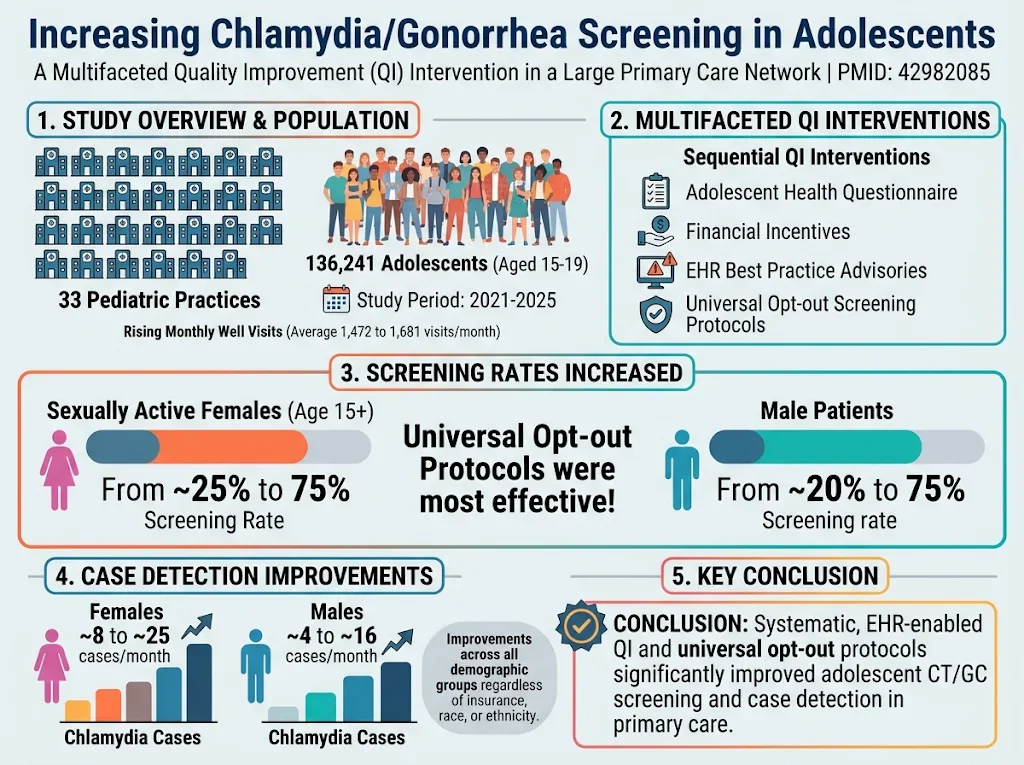
This large-scale quality improvement initiative, conducted from 2021 through 2025, involved 33 pediatric primary care practices within a single network providing care to adolescents aged 15–19 years. The intervention utilized a sequential, multifaceted approach comprised of:
1. Implementation of an Adolescent Health Questionnaire (AHQ) to streamline sexual history assessment.
2. Incorporation of electronic health record (EHR) best practice advisories (BPAs) to prompt providers during visits.
3. Financial incentives to encourage provider adherence to screening protocols.
4. Adoption of universal opt-out CT/GC screening protocols for adolescent patients at well visits.
Primary outcome measure was CT/GC screening rates among sexually active female adolescents aged ≥15 years at preventive visits. Secondary outcomes included screening rates among male adolescents and monthly case detection rates for both sexes. Outcomes were analyzed using statistical process control methods and run charts to monitor changes over time and sustainability of improvements.
Key Findings
During the study period, 136,241 adolescents (15–19 years) received care across the network with an increasing volume of monthly well visits (from an average of 1,472 to 1,681). Key findings include:
Screening Rates: Female adolescent CT/GC screening rose from approximately 25% at baseline to about 75% post-intervention, with the greatest gains observed after implementation of universal opt-out screening protocols. Male adolescent screening similarly increased from roughly 20% to 75%, reflecting the extension of systematic screening efforts beyond females.
Case Detection: The increase in screening was linked to a notable rise in identified infections. Monthly chlamydia cases among female adolescents increased from ~8 to a peak of 25, while male cases rose from ~4 to 16 during peak screening periods, underscoring improved detection of previously unrecognized infections.
Equity in Improvement: Enhanced screening and case detection were consistent across diverse demographic groups, including variations in race, ethnicity, and insurance status, suggesting that the QI intervention reduced disparities in STI health delivery.
Process Sustainability: The integration of EHR prompts, structured questionnaires, and protocol standardization contributed to sustained screening rates over multiple years, demonstrating feasibility in routine primary care settings.
Expert Commentary
This study compellingly demonstrates how comprehensive, system-level interventions can overcome persistent barriers to STI screening in adolescent populations. The use of universal opt-out protocols aligns with growing evidence favoring reduced reliance on risk-based, provider-dependent screening, which is limited by underreporting or omission of sexual activity status. EHR best practice advisories and embedded questionnaires optimize provider workflow without significant added burden, enhancing adherence. The observed increase in male screening rates addresses a critical gap in male adolescent STI prevention and aligns with evolving public health priorities.
Notably, financial incentives likely played a motivating role, though sustainability beyond the incentive period warrants further evaluation. While the findings reflect a single pediatric primary care network, the multisite design across varied practice settings enhances generalizability. Limitations include potential variability in sexual activity disclosure and follow-up of identified cases. Future work should assess long-term clinical outcomes and cost-effectiveness of such QI initiatives.
Conclusion
The implementation of a systematic, EHR-enabled, multifaceted quality improvement program significantly increased CT/GC screening coverage and case identification among adolescents in a large pediatric primary care network. Universal opt-out screening protocols were particularly impactful in normalizing STI screening and overcoming reliance on sexual history disclosure. Such interventions can improve early identification and treatment of STIs, reduce transmission, and advance adolescent sexual health equity. These findings support broader adoption of integrated QI strategies to optimize STI prevention in pediatric primary care.
Funding and ClinicalTrials.gov
The study was supported by institutional quality improvement grants; specific funding details were not reported. The study is a quality improvement initiative and was not registered in ClinicalTrials.gov.
References
- Workowski KA, Bolan GA. Sexually transmitted diseases treatment guidelines, 2021. MMWR Recomm Rep. 2021;70(4):1-187. doi:10.15585/mmwr.rr7004a1
- US Preventive Services Task Force. Screening for Chlamydia and Gonorrhea: US Preventive Services Task Force Recommendation Statement. JAMA. 2021;325(14):1478-1486. doi:10.1001/jama.2021.4109
- Owusu-Edusei K Jr, Chesson HW, Gift TL, et al. The estimated direct medical cost of selected sexually transmitted infections in the United States, 2008. Sex Transm Dis. 2013;40(3):197-201. doi:10.1097/OLQ.0b013e318285c31f
- Greenblatt C, Friedland B, Chandrasekaran S, et al. Implementing routine, comprehensive sexually transmitted infection screening with electronic health record tools in a primary care setting: a quality improvement project. J Adolesc Health. 2022;70(5):828-834. doi:10.1016/j.jadohealth.2021.11.004
Specialty calculators
For clinical reference; use professional judgment.