Introduction: The Challenge of Understanding Usher Syndrome
Usher syndrome (USH) is a genetically heterogeneous disorder characterized by the dual sensory impairment of progressive hearing loss and retinitis pigmentosa, leading to visual impairment. As the leading cause of combined deafness and blindness in humans, USH presents significant clinical challenges in early diagnosis, management, and genetic counseling. However, the molecular genetics underlying many cases remain incompletely understood, particularly as not all causative genes have been identified. This gap impedes precise diagnosis and hampers development of targeted therapies. Therefore, identifying novel genes associated with USH could provide essential insights into its pathogenesis and improve clinical care.
Research Objective
This study aimed to discover putative new candidate genes contributing to USH by leveraging comprehensive phenotypic data derived from thousands of single-gene knockout (KO) mouse lines. The primary focus was to identify genes whose deletion induced concurrent retinal and hearing abnormalities, mirroring the core clinical features of USH.
Methods: Large-Scale Phenotypic Screening in Mouse Models
The International Mouse Phenotyping Consortium (IMPC) has generated an extensive library of 9,139 single-gene KO mouse lines, systematically characterized for a wide range of phenotypes. In this study, phenotypic data were scrutinized for evidence of concurrent retinopathy and hearing deficits.
Each gene’s associated phenotype was first reviewed to confirm abnormalities detected via otologic examination or histopathology showing cochlear dysfunction, alongside ophthalmic evaluations indicating retinal degeneration. Subsequent bioinformatic analyses were performed on the human orthologues of those genes to predict molecular functions, protein interaction networks, and their involvement in relevant signaling pathways.
The researchers also examined existing literature and genetic databases to assess whether any of these genes were previously implicated in human retinopathies or hearing loss. Moreover, genomic localization was analyzed to explore proximity to known USH-linked loci whose causative genes remain unidentified.
Key Findings
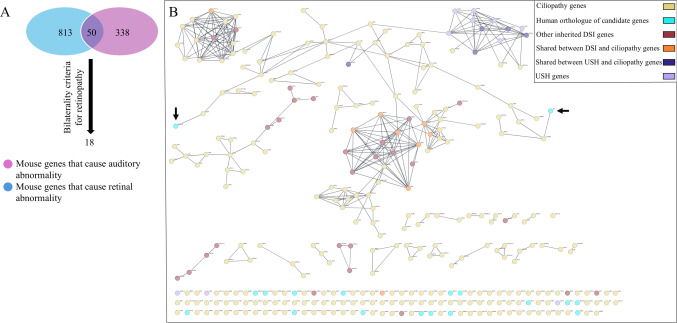
The screen identified 18 candidate genes whose knockout mouse models demonstrated combined auditory and visual impairments consistent with USH pathology. Notable findings include:
– Functional and Pathway Overlap: The human counterparts of these genes share molecular functions and signaling pathways partially overlapping with those known in established USH genes, suggesting biological plausibility for their involvement.
– Interaction with Ciliopathy Proteins: FER and DYRK1B proteins were predicted to interact with proteins encoded by known ciliopathy genes. Since ciliary dysfunction is implicated in USH pathogenesis, these interactions strongly support a potential causal role.
– Established Human Associations: Genes such as ADIPOR1, ATP8B1, and MPDZ have prior associations with retinal degeneration in humans, reinforcing their candidacy.
– Potential Links to Hearing Loss: CHSY1 and IDUA have been implicated in human hearing impairment, further validating their relevance.
– Close Proximity to Unscrambled USH Loci: CHSY1, CSTB, and SPRED1 were located near unsolved genetic loci linked to USH, making them high-priority targets for future genetic mapping and sequencing in affected patients.
Clinical and Biological Interpretation
The concurrent presence of retinal and auditory abnormalities in mice lacking these genes underscores their likely impact on sensory function. The involvement of ciliary-related proteins aligns with the recognized role of cilia in photoreceptor cells and inner ear hair cells, which are essential for vision and hearing, respectively.
These findings suggest an expansion of the genetic landscape of USH, inviting further investigation into these genes’ mutations or variants in human cohorts. Confirming pathogenicity in humans could improve diagnostic yield in genetic testing and open avenues for novel therapeutic strategies targeting implicated molecular pathways.
Limitations and Future Directions
While phenotypic observations in mouse KO models provide strong preliminary evidence, causation in humans remains to be established through patient genetic studies and functional assays. The complexity of USH genetics, including possible modifier genes and interactions, necessitates comprehensive investigations incorporating sequencing of candidate genes in diverse patient populations.
Additionally, the study did not address potential genotype-phenotype correlations, penetrance, or expressivity variations, which are vital for clinical translation. Future research should also explore the molecular mechanisms by which these genes affect sensory cells and their potential as therapeutic targets.
Conclusions
By systematically analyzing over 9,000 KO mouse lines, this research identified 18 promising candidate genes linked to combined retinal and hearing dysfunction, paralleling the cardinal features of Usher syndrome. Some of these genes have prior links to sensory degeneration, while others present novel biological insights, particularly in relation to ciliary function.
These discoveries offer a valuable genetic framework for expanding USH diagnostics and reinforce the power of large-scale animal model phenotyping for uncovering disease genes. Ultimately, validating these candidates in human studies could enhance molecular diagnosis, inform prognosis, and stimulate development of targeted interventions for this debilitating sensory disorder.
Funding and Disclosures
The study was conducted under the auspices of the International Mouse Phenotyping Consortium with contributions from numerous research institutions. Detailed funding sources and disclosures are available in the original publication.
References
1. Moshiri A et al. Searching for New Genes That Cause Usher Syndrome. Am J Ophthalmol. 2026 Jun 18;290:258-276. PMID: 42309414.
2. Yan D, Liu XZ. Genetics and pathogenesis of Usher syndrome. J Hum Genet. 2010;55(6):327-335.
3. Bujakowska KM, Bernal S, Comander J, et al. Mutations in ciliary gene TTC8 cause Usher syndrome type 3. Am J Hum Genet. 2015;97(1):26-39.
4. International Mouse Phenotyping Consortium (IMPC). Available at: https://www.mousephenotype.org/

 By
No Comments