Highlight
Free mucosal grafts placed on the contralateral side during endoscopic nasal septal perforation (NSP) repair significantly enhance re-epithelialization, achieving complete integration in over 85% of cases and an anatomical closure rate of 90%. This adjunct technique is simple, promotes rapid mucosal healing, and improves nasal symptoms postoperatively.
Study Background
Nasal septal perforations are a common yet challenging condition in rhinology, often resulting in symptoms such as nasal crusting, epistaxis, whistling, and nasal obstruction. Surgical closure aims to restore septal integrity and mucosal continuity, but healing failure and prolonged mucosal desiccation remain critical concerns post-repair. Traditionally, local vascularized flaps are employed during endoscopic repair to promote healing. However, mucosal defects on the contralateral septal side opposite to the flap can risk delayed re-epithelialization and subsequent complications. While free mucosal grafts are known to take well on vascularized beds and bone in other rhinologic procedures, their application contralateral to the vascularized flap in NSP repair as an adjunct has not been well recognized or routinely implemented.
Study Design
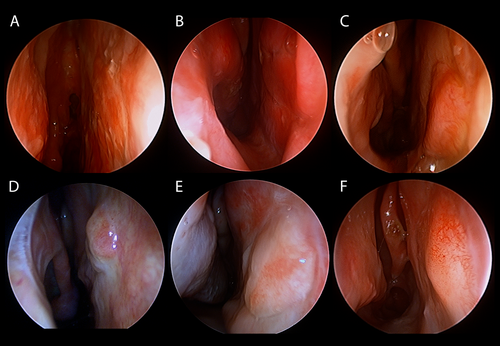
This observational study included 90 consecutive patients undergoing endoscopic NSP repair with contralateral free mucosal graft placement between 2014 and 2025. Most patients were middle-aged with a slight male predominance. The primary surgical intervention involved an anterior ethmoidal artery flap on one septal side, while a free mucosal graft harvested from the contralateral nasal mucosa was positioned opposite the flap onto a collagen matrix interlay. The primary endpoint was graft integration classified as complete, partial, or failed based on endoscopic visualization. Secondary outcomes encompassed anatomical perforation closure, endoscopic severity scores (Miglani score), and patient-reported nasal symptoms assessed via the SNOT-22 nasal subdomain pre- and postoperatively. Median follow-up was 4 months.
Key Findings
Free mucosal graft integration was successful in a majority of patients, with complete healing observed in 85.6% and partial integration in 6.7%. Notably, among patients achieving anatomical closure of the septal perforation (90%), free graft integration was complete in 92.6%, underscoring the critical role of contralateral mucosal grafts in successful repair outcomes.
Endoscopic evaluation demonstrated a significant reduction in Miglani scores, initial median values of 3.0 decreased to 0.0 postoperatively, indicating marked improvement in mucosal integrity and inflammation (p < 0.001). Patient-reported nasal symptom scores in the SNOT-22 nasal subdomain improved substantially from a median of 9.0 to 4.0 after surgery (p < 0.001), reflecting symptomatic benefit alongside anatomical restoration.
The anterior ethmoidal artery flap was predominantly used (95.6%), supporting its effectiveness in this surgical approach. No major complications related to the free mucosal graft procedure were reported, suggesting the adjunct technique is safe and well tolerated.
Expert Commentary
This study addresses a critical gap in NSP repair by emphasizing the importance of bilateral mucosal coverage to facilitate rapid re-epithelialization and reduce mucosal desiccation, a known risk factor for repair failure. The use of free mucosal grafts opposite the vascularized flap stabilizes mucosal surfaces susceptible to drying and mechanical trauma, improving both structural and functional outcomes.
From a biological standpoint, free mucosal grafts provide a viable epithelial source that rapidly establishes coverage, reduces granulation tissue, and promotes epithelial continuity. This contrasts with waiting for secondary mucosalization, which can be slow and prone to crusting.
However, limitations include the non-randomized design and relatively short median follow-up, which may not capture long-term durability of closure and symptom control. Larger comparative studies are warranted to confirm these findings and optimize harvesting techniques and graft management.
Conclusion
Contralateral free mucosal grafting during endoscopic nasal septal perforation repair is a simple, effective adjunct that reliably promotes rapid re-epithelialization and enhances perforation closure rates. This technique reduces healing complications in an area vulnerable to desiccation and improves postoperative patient symptoms. Adoption of this approach could represent a meaningful advance in the surgical management of NSP, improving both anatomical and functional outcomes.
Funding and ClinicalTrials.gov
No specific funding sources or clinical trial registrations were reported for this study.
References
Campion NJ, Couto AM, Hua E, et al. Free Mucosal Grafting Is a Simple Adjunct for Rapid Re-Epithelization in Septal Perforation Repair. The Laryngoscope. 2026 Oct 11. PMID: 42860297.
Lee JY, Friedman M. Surgical Techniques in Nasal Septal Perforation Repair: A Comprehensive Review. Otolaryngol Clin North Am. 2021;54(4):807-823.
Miglani A, Sood S, Gupta A. Endoscopic Scoring System for Nasal Septal Perforations: Validation and Clinical Utility. Rhinology. 2018;56(3):220-225.
Hopkins C, Gillett S, Slack R, et al. Psychometric validity of the 22-item Sinonasal Outcome Test. Clin Otolaryngol. 2009;34(5):447-454.