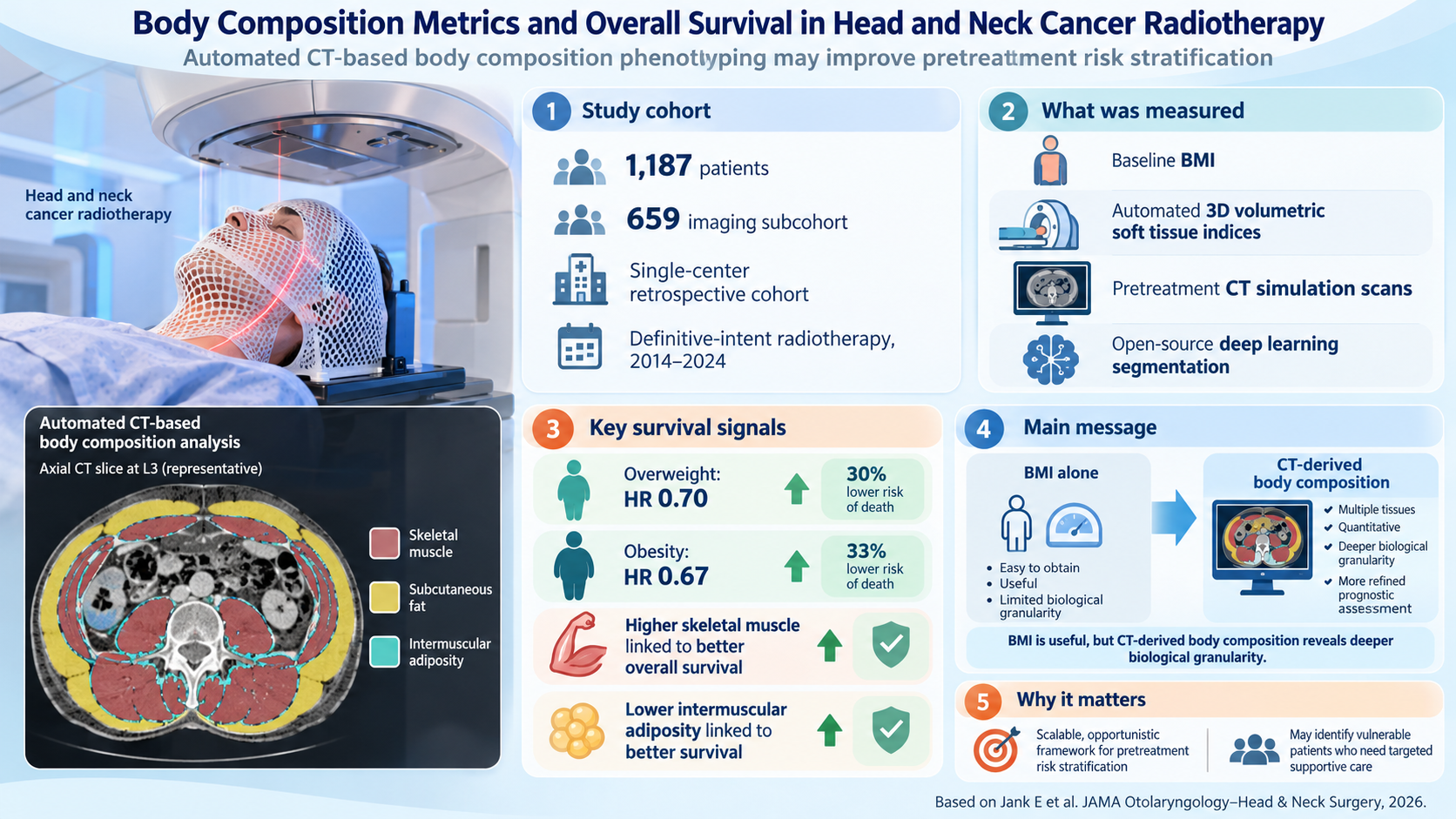
整合身体成分指标用于头颈癌放射治疗的预后评估:进展与临床意义

Integrating Body Composition Metrics for Prognostication in Head and Neck Cancer Radiotherapy: Advances and Clinical Implications

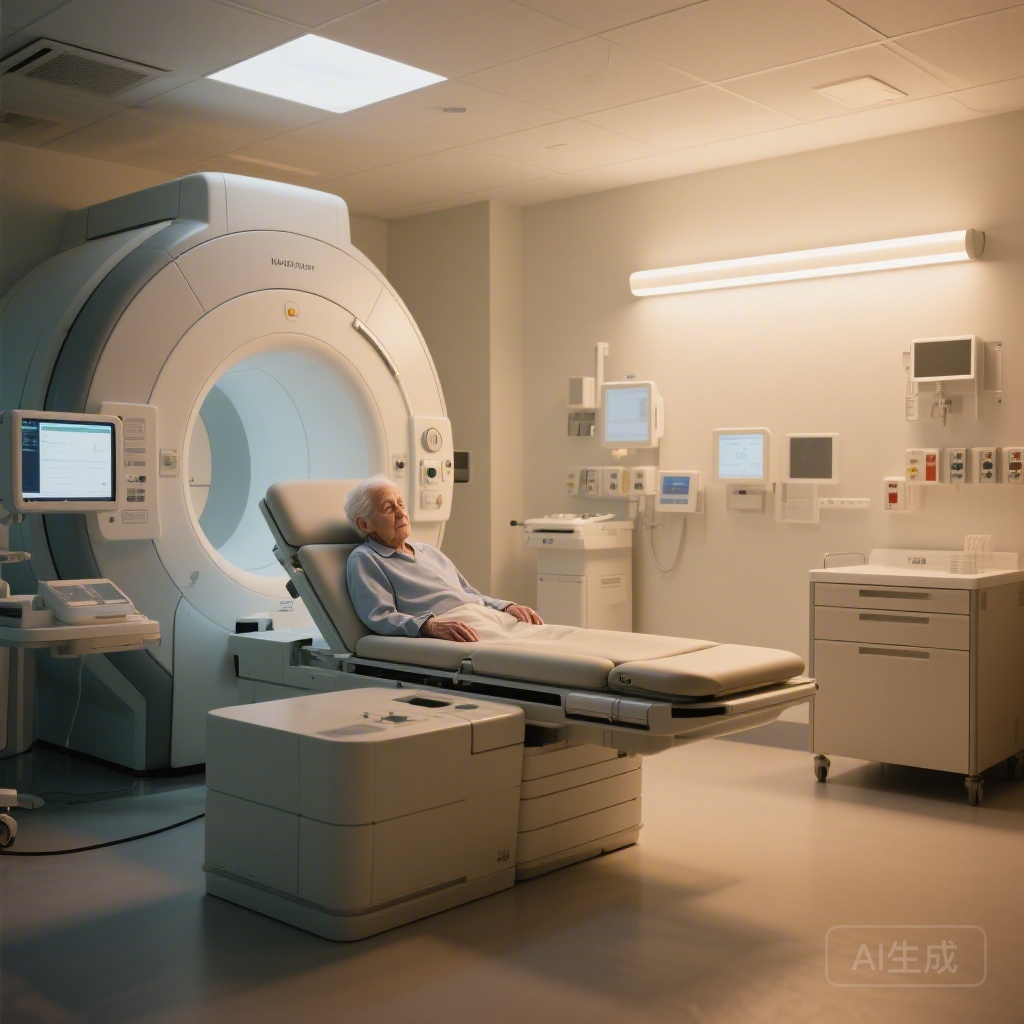
Recent evidence highlights the prognostic significance of body composition metrics, including BMI, skeletal muscle mass, and adiposity distribution, in head and neck cancer radiotherapy outcomes. Automated 3D CT phenotyping refines risk stratification to guide individualized supportive care.
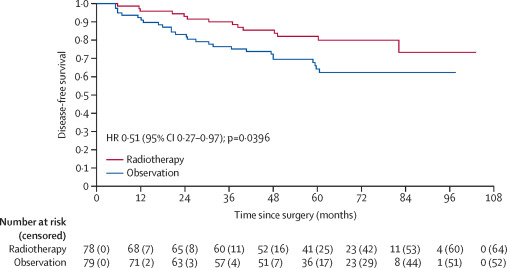
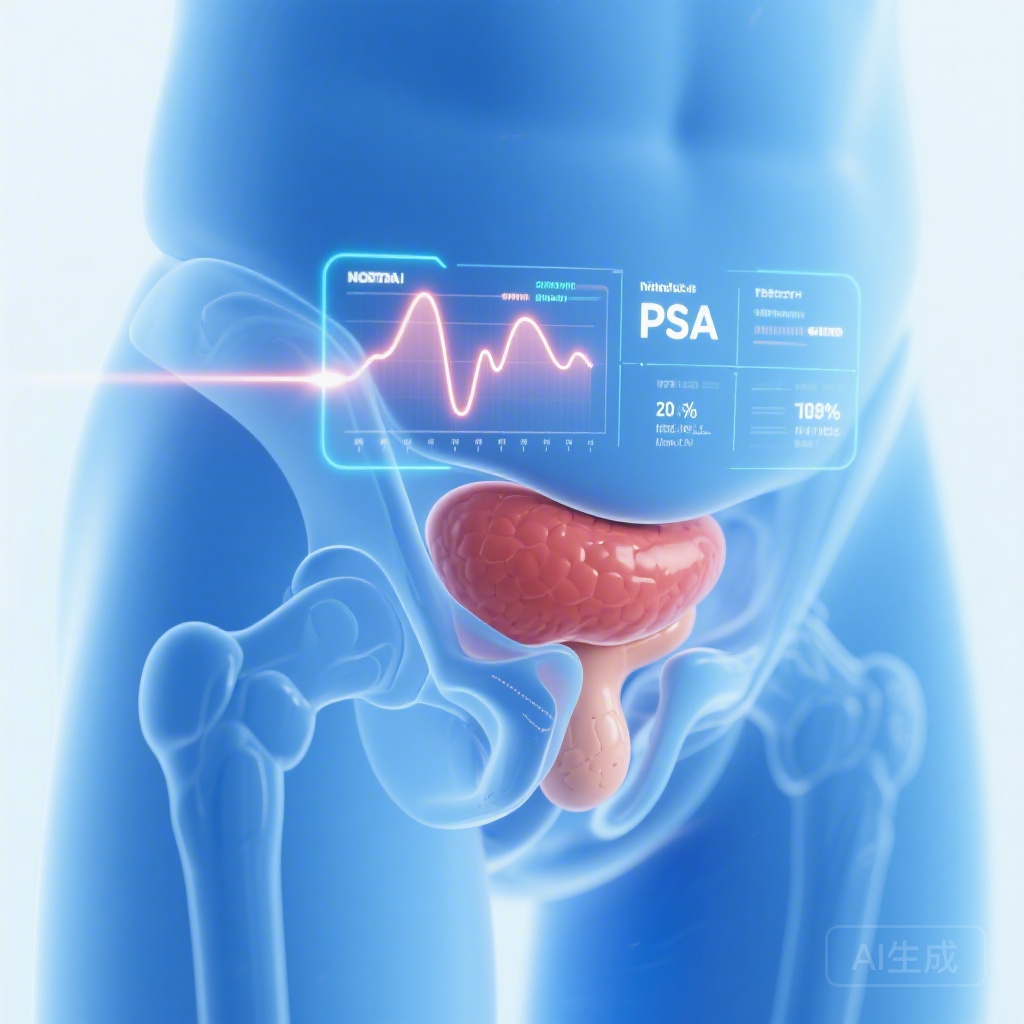
More Is Not Always Better: Long-term Data from the SAKK 09/10 Trial Refutes Dose-intensified Salvage Radiotherapy for Prostate Cancer

More Is Not Always Better: Long-term Data from the SAKK 09/10 Trial Refutes Dose-intensified Salvage Radiotherapy for Prostate Cancer

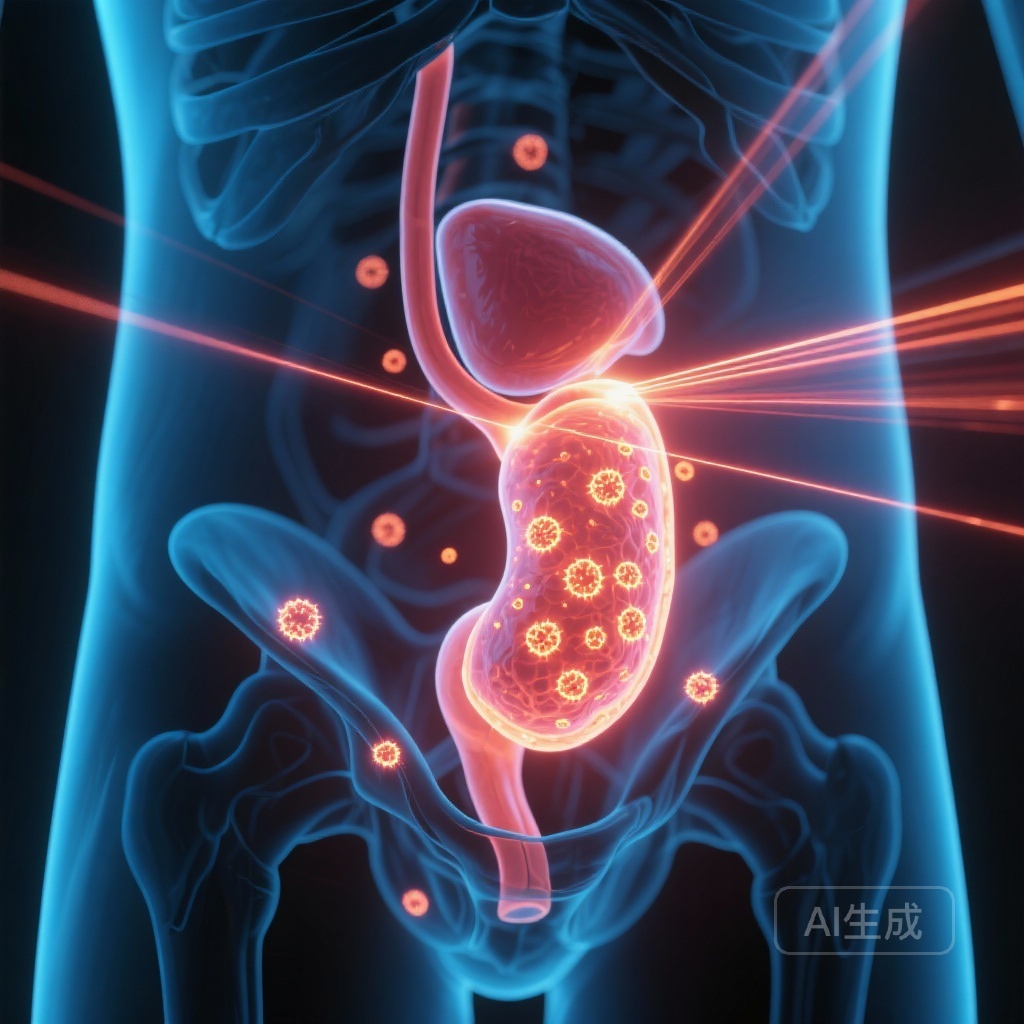
Long-term results from the SAKK 09/10 trial demonstrate that dose-intensified salvage radiotherapy (70 Gy) provides no oncological benefit over conventional dosing (64 Gy) in patients with biochemical recurrence after prostatectomy, while significantly increasing the risk of long-term gastrointestinal toxicity.
Integrated Multidisciplinary Care Slashes Radiotherapy Interruptions in Head and Neck Cancer: Results from the SHINE-MDT Randomized Trial

Integrated Multidisciplinary Care Slashes Radiotherapy Interruptions in Head and Neck Cancer: Results from the SHINE-MDT Randomized Trial

A randomized clinical trial demonstrates that the SHINE-MDT framework significantly reduces radiotherapy interruptions and improves nutritional, psychological, and quality-of-life outcomes for patients with head and neck cancer, offering a new standard for holistic supportive care during intensive oncology treatments.
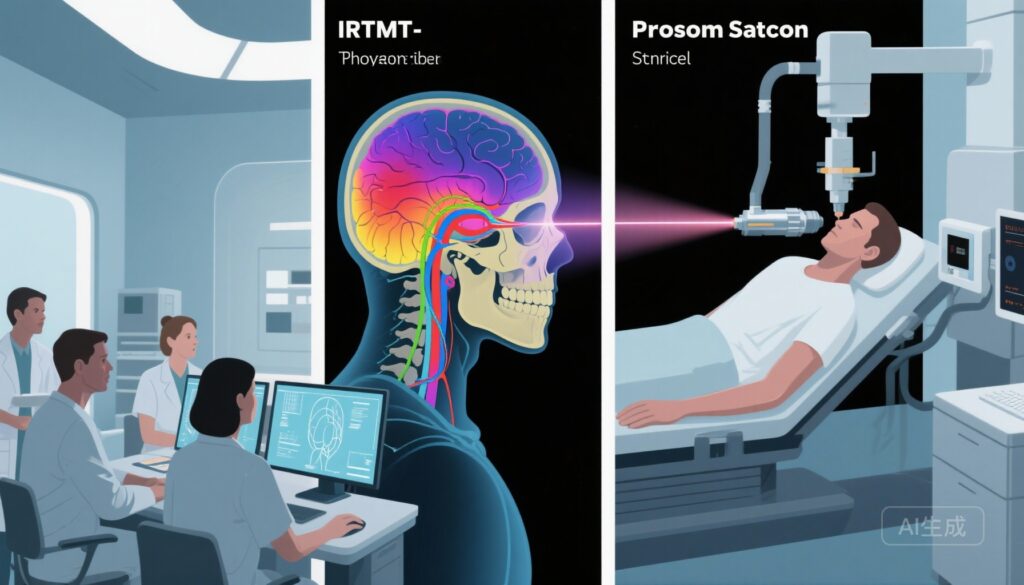
Proton Beam vs IMRT for Olfactory Neuroblastoma: Multicenter Propensity-Matched Cohort Shows No Clear Superiority

Proton Beam vs IMRT for Olfactory Neuroblastoma: Multicenter Propensity-Matched Cohort Shows No Clear Superiority

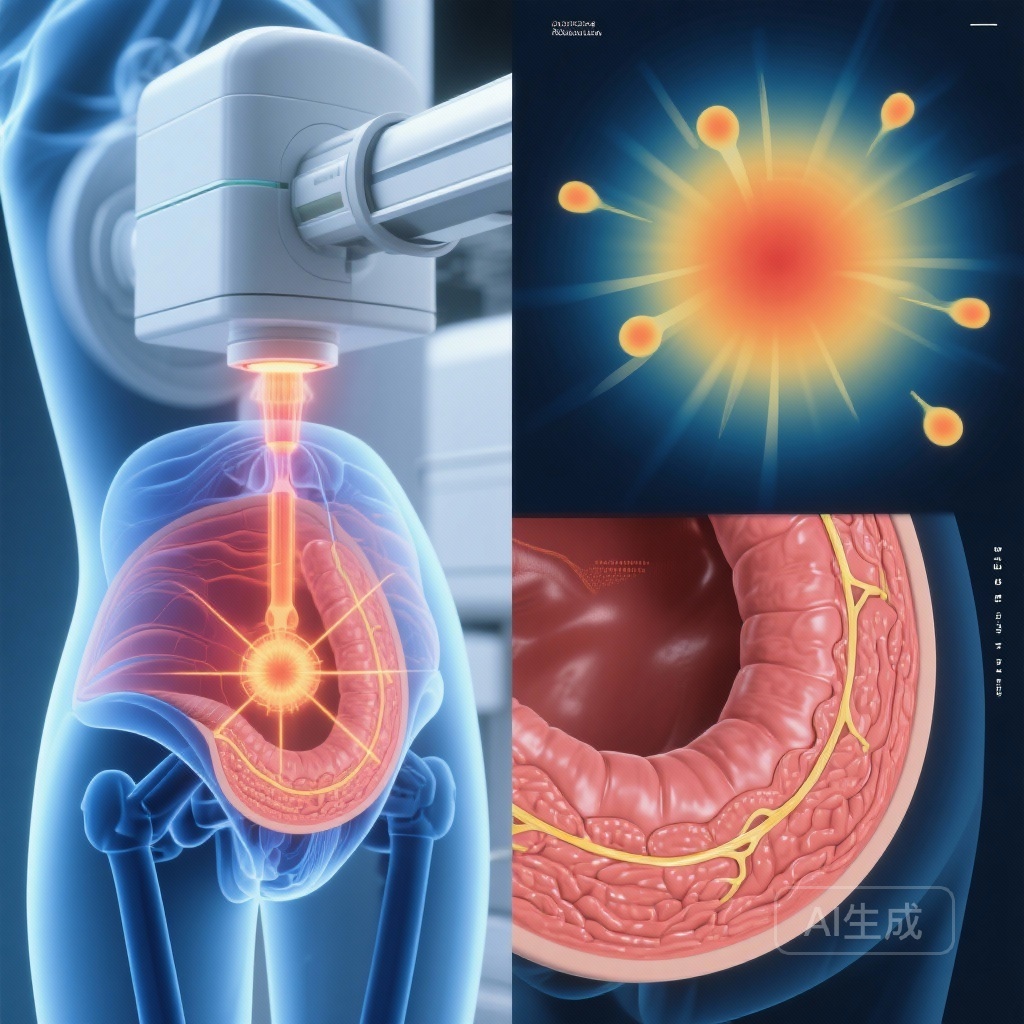
A multicenter propensity-matched cohort comparing adjuvant proton beam radiotherapy (PBRT) with intensity-modulated radiotherapy (IMRT) for olfactory neuroblastoma found no definitive differences in local control, recurrence-free survival, overall survival, or clinically meaningful reductions in grade ≥2 radiation toxicities, but estimates were imprecise.