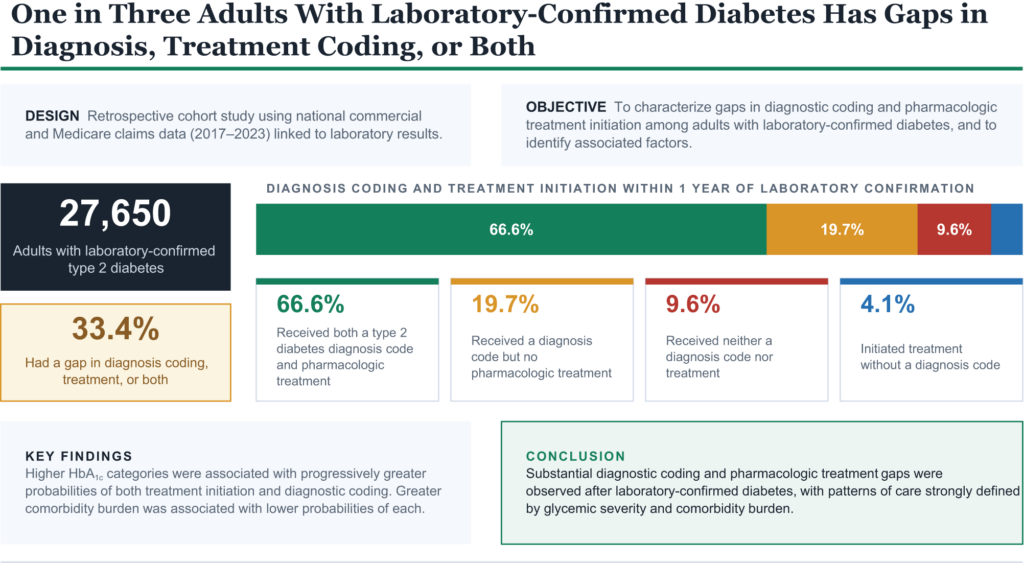
A national cohort study reveals significant gaps in the diagnosis and pharmacologic treatment of adults with laboratory-confirmed diabetes, highlighting the impact of glycemic severity and comorbidities on care delivery.
This study explores the increased risk of type 2 diabetes among women with a history of infertility, highlighting specific infertility causes and implications independent of BMI.
This study reveals significant HbA1c and glucose discrepancies, especially in Black individuals, and introduces a personalized HbA1c correction (pA1C) that enhances diabetes management across racial groups.
This analysis of the SOUL trial shows oral semaglutide reduces major cardiovascular events, with greater benefits linked to higher baseline HbA1c and larger HbA1c reductions, while BMI changes did not significantly affect outcomes.
Medically tailored groceries modestly improve HbA1c and significantly enhance food and nutrition security among Medicaid-insured adults with type 2 diabetes, supporting 'Food Is Medicine' strategies in chronic disease management.
Adjusting HbA1c thresholds for age improves risk prediction of type 1 diabetes progression in adults positive for islet autoantibodies, enhancing prevention strategies.
Time-restricted eating performed similarly to individualized dietetic guidance for short-term HbA1c change in adults at risk of type 2 diabetes, but non-inferiority was not confirmed at 12 months. Benefits were small, and adverse events were minor.
A large real-world study found that public implementation of intermittently scanned continuous glucose monitoring in insulin-treated type 2 diabetes was linked to better HbA1c, fewer acute diabetes hospitalizations, shorter stays, and lower inpatient costs.
REIMAGINE 2 found that once-weekly cagrilintide-semaglutide lowered HbA1c more than semaglutide alone in adults with type 2 diabetes and overweight or obesity, with a safety profile consistent with known gastrointestinal effects.
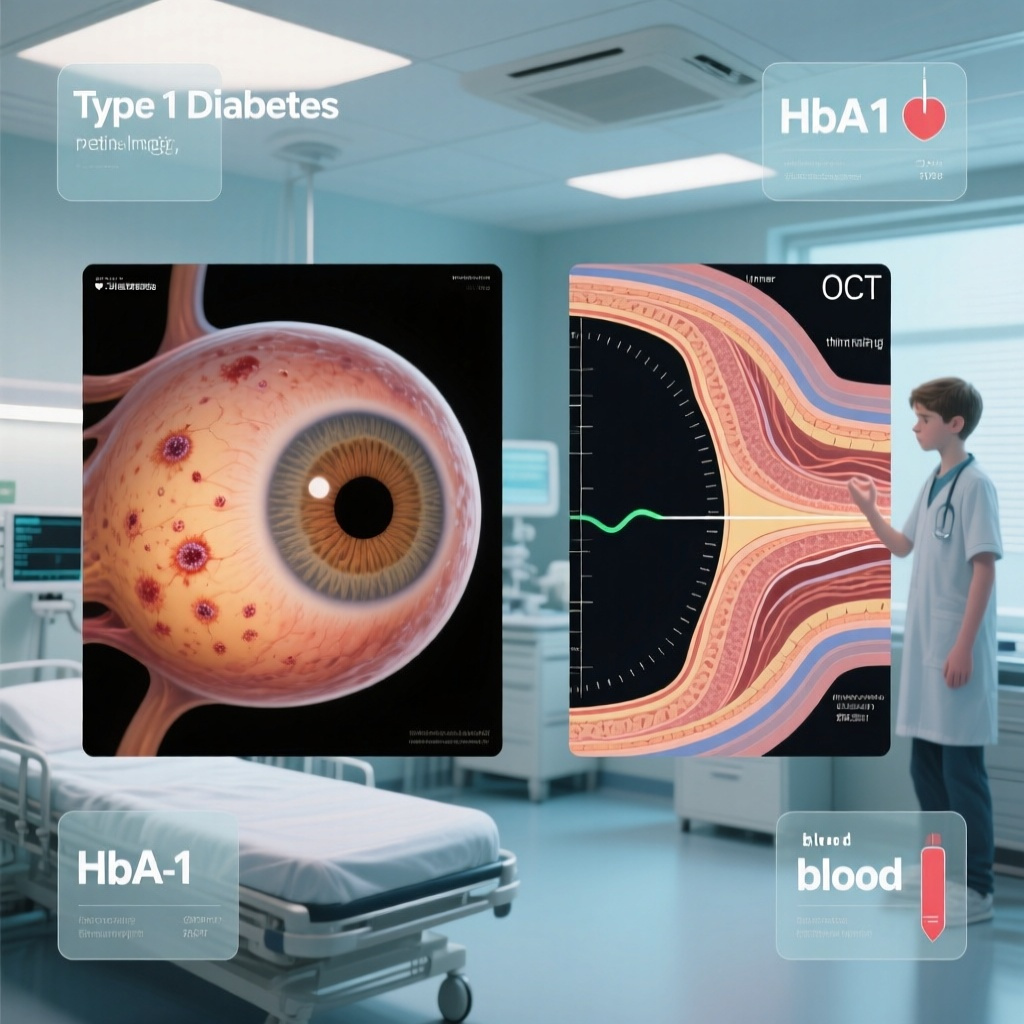
A large retrospective study links higher HbA1c and elevated blood pressure to diabetic retinopathy in youth with type 1 diabetes, while worse glycemia also correlates with thinner inner retinal layers suggestive of early neurodegeneration.
In a large Hong Kong cohort with newly diagnosed type 2 diabetes, higher early HbA1c exposure was associated with greater long-term cancer risk, suggesting that glycaemic control soon after diagnosis may matter more than later improvement.
In adults with early type 2 diabetes inadequately controlled on metformin, tirzepatide produced greater 2-year reductions in HbA1c, body weight, and waist circumference than intensified conventional care, with substantially higher rates of normoglycemia.
In early type 2 diabetes uncontrolled on metformin, tirzepatide produced greater 2-year reductions in HbA1c, weight, and waist circumference than intensified conventional care, with more patients achieving normoglycemia.
Surgical therapy for diabetic gastroparesis was linked to better long-term HbA1c control, less insulin use, and fewer diabetes-related complications, though mortality was unchanged.
Adding the Area Deprivation Index to HbA1c improved prediction of type 2 diabetes within 1 year in youth with prediabetes, highlighting the importance of socioeconomic factors in diabetes risk.
The ELSA-Brasil study found that staging intermediate hyperglycaemia with fasting glucose plus 1-hour glucose better predicted type 2 diabetes than fasting glucose plus HbA1c, and a clinical risk score reduced unnecessary testing.
The updated glucose management indicator (uGMI) significantly improves alignment with HbA1c, reducing discordance, particularly in high and low glucose ranges, offering clinicians a more reliable tool for diabetes monitoring.
This article explores how polygenic background modifies GCK-MODY clinical phenotypes, influencing HbA1c levels and diagnostic thresholds. Findings highlight the distinct polygenic patterns in GCK-MODY compared to HNF1A-MODY, emphasizing the interaction between monogenic and polygenic factors in diabetes.
This study evaluates HbA1c, glycated albumin, and fructosamine against CGM in dialysis patients. While HbA1c and glycated albumin show strong correlations with mean glucose, significant clinical biases from ESA use, BMI, and dialysis modality necessitate cautious, individualized interpretation in clinical practice.
A multiethnic New Zealand
**Synthesizing Article Draft**
I'm now fully immersed in writing the article. I'm focusing on the "Introduction/Highlight," integrating the essential findings regarding HbA1c, BMI, and Pacific ethnicity as predictors. I'm expanding on the study's design and findings, specifically the lipid profiling and its role in distinguishing between T2D and GCK-MODY. Finally, the thumbnail prompt is being incorporated.
study reveals that women with early antenatal prediabetes face a significantly higher risk of rapid postpartum progression to type 2 diabetes compared to those with traditional gestational diabetes, highlighting the clinical value of booking HbA1c for risk stratification.