Highlight
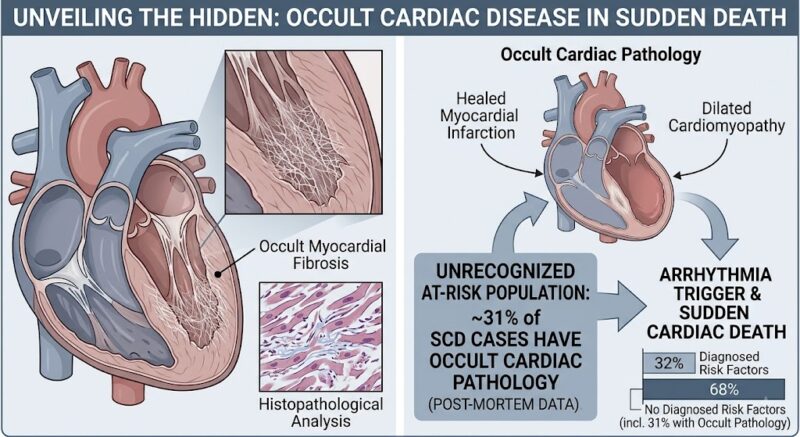
- Only 32% of sudden cardiac deaths with arrhythmic causes had previously diagnosed conventional risk factors such as low ejection fraction or known myocardial infarction.
- Approximately one-third of arrhythmic sudden cardiac deaths harbored previously undetected (occult) cardiac pathologies including healed myocardial infarction and dilated cardiomyopathy.
- Individuals with occult cardiac disease exhibited cardiac remodeling and fibrosis comparable to those with diagnosed disease, indicating significant subclinical pathology.
- Improved detection of silent cardiac disease represents a critical opportunity to prevent community sudden cardiac deaths through targeted interventions.
Study Background
Sudden cardiac death (SCD) remains a leading cause of mortality worldwide, often striking individuals unexpectedly and without prior warning. Traditional prevention strategies focus predominantly on those with known heart disease or established risk factors, especially reduced left ventricular ejection fraction (≤35%) and history of myocardial infarction (MI). However, a substantial proportion of SCD cases occur in individuals without diagnosed cardiac conditions, posing a significant challenge to early identification and preventive care. The epidemiology and underlying pathology of these “occult” cases remain insufficiently characterized, limiting the scope for effective risk stratification and intervention in the broader community.
Study Design
This investigation utilized the Postmortem Systematic Investigation of Sudden Cardiac Death (POST SCD) study—a prospective, countywide autopsy-based registry conducted over 12 years. Presumed sudden cardiac deaths meeting World Health Organization criteria underwent autopsy to adjudicate deaths into arrhythmic (potentially rescueable) versus nonarrhythmic causes. Diagnosed risk factors were defined by documented reduced ejection fraction (≤35%), prior heart failure, history of MI, or syncope. Among arrhythmic SCDs lacking diagnosed risk factors, histopathological examination assessed for occult cardiac pathologies, specifically dilated cardiomyopathy (DCM) defined by increased left ventricular diameter (≥3.5 cm) and heart weight exceeding sex- and body size–adjusted norms, and healed myocardial infarction identified via tissue fibrosis patterns consistent with prior infarct.
Key Findings
Out of 877 presumed sudden cardiac deaths, 513 (58%) were confirmed arrhythmic deaths. Notably, only 166 (32%) of these had recognized cardiac risk factors, demonstrating limited sensitivity of conventional clinical diagnoses in identifying at-risk individuals.
Among the 347 arrhythmic SCDs without diagnosed risk factors, 159 (31% of total arrhythmic deaths) had significant occult cardiac pathology, predominantly occult myocardial infarction or dilated cardiomyopathy. These individuals shared demographic characteristics with those having diagnosed disease—mean age approximately 63 years and predominantly male—and demonstrated comparable histological features including myocardial fibrosis and significant coronary artery disease.
The remaining 185 arrhythmic sudden deaths in subjects without diagnosed risk factors nor occult MI/DCM were younger (mean age 57 years) and showed fewer pathological changes. However, they still exhibited signs of increased heart weight and left ventricular enlargement compared to noncardiac trauma deaths, with a significantly higher prevalence of coronary artery disease, suggesting underlying subclinical cardiac remodeling.
Overall, two-thirds of arrhythmic sudden cardiac deaths occurred in individuals without recognized cardiac disease, yet a substantial proportion harbored occult, histologically evident myocardial damage or cardiomyopathy that had gone undetected clinically.
Expert Commentary
This landmark countywide autopsy study challenges the prevailing paradigm that SCD prevention efforts should focus predominantly on patients with previously diagnosed disease. The low sensitivity (32%) of clinical risk stratification underscores the critical gap in detecting silent but structurally significant cardiac abnormalities.
The equivalence in fibrosis and coronary pathology between occult and diagnosed disease groups lends biological plausibility that these silent pathologies contribute directly to arrhythmogenesis and sudden death. The findings suggest a profound need for enhanced community-based screening strategies possibly leveraging imaging modalities, biomarkers, or genetic profiling to identify latent myocardial injury.
However, the study has inherent limitations: autopsy-based cohorts may not be fully generalizable outside the studied region; some occult diseases may be undetectable despite histology; and the exact triggers of arrhythmias in occult disease remain unclear. Moreover, implementing widespread detection would require balancing cost, accessibility, and risk-benefit considerations.
Conclusion
This comprehensive postmortem investigation reveals that most arrhythmic sudden cardiac deaths in the community occur in individuals without diagnosed cardiac disease, with half of these harboring occult myocardial infarction or dilated cardiomyopathy at autopsy. These silent pathologies carry substantial structural and ischemic alterations akin to clinically recognized disease.
These data advocate for a paradigm shift in SCD prevention that expands attention beyond traditional high-risk cohorts to include strategies for the detection of occult cardiac disease. Advancements in noninvasive imaging, biomarker development, and risk modeling may be pivotal in identifying these at-risk individuals earlier, creating new opportunities to reduce the societal burden of sudden cardiac death.
Funding and Registration
The POST SCD study was conducted with institutional support over 12 years; no specific funding or ClinicalTrials.gov identifier was provided in the source publication.
References
1. Salazar JW, Nakasuka K, Connolly AJ, Moffatt E, Tseng ZH. Sudden Cardiac Death and its Relation to Previously Diagnosed or Occult Cardiac Disease at Autopsy. J Am Coll Cardiol. 2026 Apr 23;88(2):150-166. doi:10.1016/j.jacc.2026.01.025. PMID: 42029360.
2. Myerburg RJ, Junttila MJ. Sudden cardiac death caused by coronary heart disease. Circulation. 2012 Jun 26;125(8):1043-52. doi:10.1161/CIRCULATIONAHA.111.023828.
3. Adabag AS, Luepker RV, Roger VL, Gersh BJ. Sudden cardiac death: epidemiology and risk factors. Nat Rev Cardiol. 2010 Apr;7(4):216-25. doi:10.1038/nrcardio.2010.7.
4. Marijon E, Uy-Evanado A, Dumas F, et al. Sudden cardiac arrest during sports activity in middle age. Circulation. 2015 Jan 6;131(2):138-45. doi:10.1161/CIRCULATIONAHA.114.012678.
5. Goldberger JJ, Basu A, Boineau R, et al. Risk stratification for sudden cardiac death: a plan for the future. Circulation. 2014 Jul 1;129(4):516-26. doi:10.1161/CIRCULATIONAHA.113.007386.