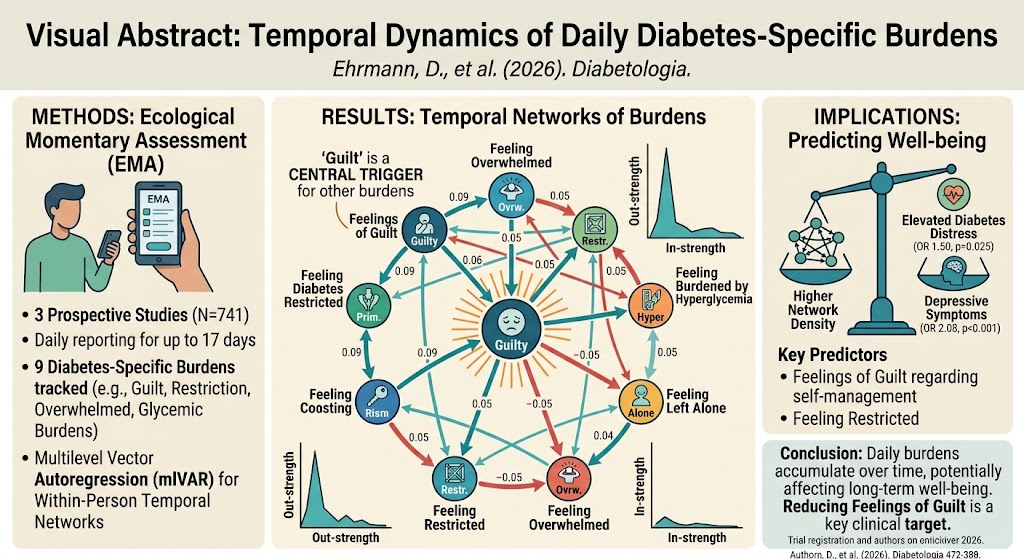
Daily feelings of guilt related to diabetes self-management act as a pivotal trigger of other negative emotional experiences in people with diabetes.
In type 1 diabetes, guilt precedes increased feelings of loneliness, overwhelm, restriction, and burden from hyperglycaemia the following day.
In type 2 diabetes, feelings of guilt more often occur as a result of other negative burdens such as loneliness and hypoglycaemia burden.
Higher interconnectivity among daily diabetes-specific burdens predicts incident diabetes distress and depressive symptoms, with guilt and feeling restricted as key predictors.