Highlight
- Physical fitness and body mass index (BMI) did not independently predict postoperative complications in DIEP flap breast reconstruction.
- Subcutaneous adipose tissue (SAT) measured by abdominal CT and smoking history were strong independent predictors of postoperative complications.
- Identified SAT thresholds differ by smoking history, allowing tailored risk stratification with high sensitivity and specificity.
- Findings were validated in an independent cohort, supporting the clinical utility of SAT as a risk marker over BMI.
Study Background
Autologous breast reconstruction using the deep inferior epigastric perforator (DIEP) flap is a widely adopted surgical approach that enhances quality of life following mastectomy for breast cancer. However, this procedure carries a significant risk of postoperative complications, which can prolong recovery, increase morbidity, and impact outcomes negatively. Traditionally, clinicians have relied heavily on body mass index (BMI) as a primary risk stratification tool to guide patient selection and preoperative counseling. While BMI is easy to assess, it is an imperfect surrogate of body composition and does not capture nuances such as fat distribution or patient fitness, both of which can influence surgical risk. Moreover, modifiable behavioral factors such as smoking have well-recognized effects on wound healing and vascular complications but are not always incorporated into formal risk algorithms in a quantifiable way. Cardiopulmonary fitness has also been proposed as an important prognostic indicator, but objective evidence supporting its independent predictive value in this context is limited. This study addresses the unmet need for more accurate and practical predictors of postoperative complications in patients undergoing DIEP flap reconstruction by exploring detailed body composition measures and smoking history, alongside traditional indices such as BMI and cardiopulmonary fitness.Study Design
This investigation was a prospective observational cohort study including 39 patients scheduled for DIEP flap breast reconstruction. Each patient underwent comprehensive preoperative assessment involving:- Cardiopulmonary exercise testing (CPET) to objectively measure physical fitness parameters.
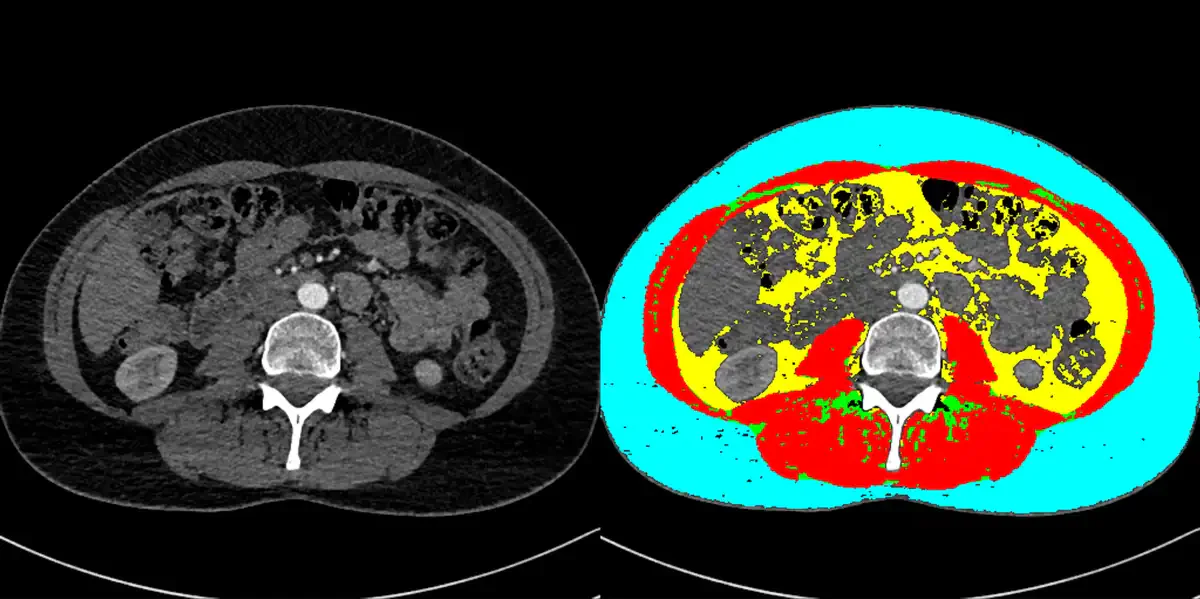
- Abdominal computed tomography angiography (CTA) to quantify fat compartments, specifically subcutaneous adipose tissue (SAT), visceral adipose tissue (VAT), and intramuscular adipose tissue (IMAT).
Key Findings
Of the 39 patients studied, 46% experienced postoperative complications, with 33% sustaining complications graded Clavien-Dindo II or higher, necessitating medical treatment or surgical intervention. The principal findings include:- Lack of association with BMI and cardiopulmonary fitness: Neither BMI nor CPET-derived physical fitness parameters correlated significantly with risk of moderate or severe postoperative complications. This challenges the current reliance on these measures alone for risk stratification.
- Subcutaneous adipose tissue (SAT) volume as a predictor: Quantitative SAT measured on CTA emerged as a strong independent predictor. Higher SAT correlated with increased risk of complications.
- Smoking history’s independent impact: Smoking status also independently predicted complications, highlighting its detrimental effect on surgical outcomes.
- Interactive risk stratification by SAT and smoking: The study identified discriminative SAT volume cutoffs based on smoking history—451 cm² for nonsmokers and 204 cm² for smokers—that yielded 100% sensitivity and 77% specificity in predicting complications. This suggests that lower SAT thresholds apply to smokers to capture risk adequately.
- Validation results: The predictive value of SAT was confirmed in an independent cohort, with an area under the ROC curve (AUC) of 0.715, indicating good discriminative ability.
Expert Commentary
The study by Holt-Kedde et al. offers a compelling advancement in tailoring risk stratification before DIEP flap breast reconstruction. The conventional use of BMI, while convenient, neglects critical aspects of patient physiology such as adipose tissue distribution. SAT specifically may impair wound healing and flap viability through mechanisms such as local inflammation, poor vascularization, and metabolic dysregulation. This biological plausibility supports the observed associations. Smoking’s detrimental effects on microvascular circulation and tissue oxygenation are well established, and quantitative integration into risk models further aids personalized medicine. The absence of a clear link between CPET fitness parameters and complications contrasts with some surgical literature, likely reflecting the dominance of local tissue factors in autologous flap outcomes over systemic cardiopulmonary reserve. Limitations to consider include the relatively small sample size and single-center origin of the initial cohort, which might limit generalizability. However, external validation lends credence to the findings. Future research with larger multicenter cohorts and inclusion of additional variables such as metabolic markers could refine predictive models further.Conclusion
This prospective study demonstrates that subcutaneous adipose tissue volume and smoking history are superior independent predictors of postoperative complications after DIEP flap breast reconstruction compared to BMI and physical fitness measures. Routine preoperative abdominal CT can provide actionable body composition data, allowing surgeons to better stratify risk and counsel patients accordingly. Incorporating these factors into clinical practice may help optimize outcomes through tailored prehabilitation, smoking cessation interventions, or alternative reconstructive strategies in high-risk patients. These findings advocate for a paradigm shift beyond simplistic indices toward personalized risk profiling grounded in precise, mechanistic assessment.Funding and ClinicalTrials.gov
Details on funding and clinical trial registration were not provided in the source abstract. For comprehensive transparency, future publications should specify funding sources, potential conflicts of interest, and trial registration identifiers.References
1. Holt-Kedde IL, Sadok N, Kuikhoven M, et al. Beyond Body Mass Index: Subcutaneous Adipose Tissue and Smoking History as Predictors of Postoperative Complications in DIEP Flap Breast Reconstruction. Plast Reconstr Surg. 2026 Feb 3;158(5):771e-781e. PMID: 41637144. 2. Clavien PA, Barkun J, de Oliveira ML, et al. The Clavien-Dindo classification of surgical complications: five-year experience. Ann Surg. 2009 Aug;250(2):187-96. 3. Blondeel PN. Perforator flaps for breast reconstruction. Br J Plast Surg. 1999 Sep;52(6):354-64. 4. Blackstock AW, Stanley AC, Zabuawala S, et al. The impact of smoking on microsurgical breast reconstruction. Breast. 2018;41:91-95. 5. Hughes V, Hughes P, Vafaei A, et al. Role of body composition in predicting surgical outcomes after colorectal surgery: A systematic review. Surg Obes Relat Dis. 2020 Jun;16(6):915-925.Specialty calculators
For clinical reference; use professional judgment.