Highlights
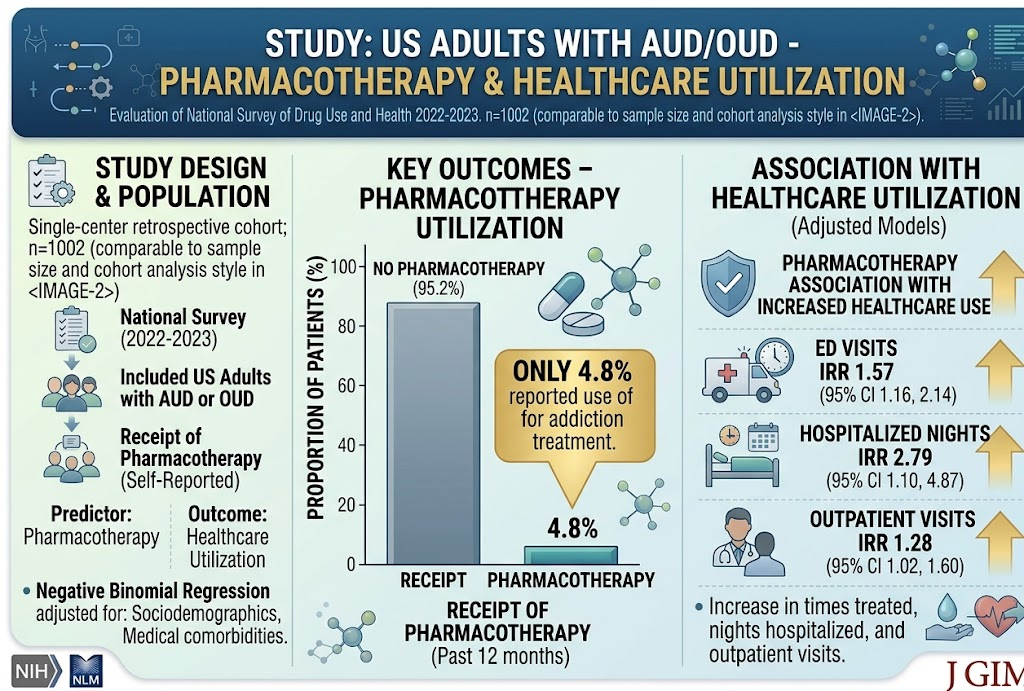
- Only 4.8% of US adults with alcohol or opioid use disorder reported receiving FDA-approved pharmacotherapy in 2022-2023.
- Pharmacotherapy receipt for addiction was associated with increased emergency department visits, hospital nights, and outpatient care utilization.
- ED-initiated interventions can modestly improve treatment engagement and reduce substance craving in AUD and OUD patients.
- Findings emphasize the imperative for proactive outpatient screening and treatment initiation to prevent clinical decompensation and higher acuity care.
Background
Alcohol use disorder (AUD) and opioid use disorder (OUD) represent significant public health challenges in the United States, with millions affected annually. Both disorders contribute substantially to morbidity, mortality, and healthcare system burden, including frequent emergency department (ED) visits and hospitalizations. FDA-approved medications — including naltrexone, acamprosate, and disulfiram for AUD, and buprenorphine, methadone, and naltrexone for OUD — have proven efficacy in reducing relapse, overdose risk, and acute care utilization related to addiction. Nevertheless, pharmacotherapy remains underutilized among affected adults, and data on real-world receipt and its association with healthcare utilization are limited.
This review synthesizes findings from a nationally representative 2022-2023 cross-sectional analysis along with related contemporary studies evaluating pharmacotherapy receipt in US adults with AUD and OUD, its impact on healthcare utilization patterns, and implications for clinical practice.
Key Content
Pharmacotherapy Utilization in AUD and OUD: National Survey Data 2022-2023
Pham et al. (2026) analyzed data from the National Survey of Drug Use and Health (NSDUH) 2022-2023, identifying adults with AUD or OUD to assess self-reported use of addiction pharmacotherapy and associated healthcare utilization outcomes. Their findings revealed that only 4.8% of affected adults reported receiving any FDA-approved medication for addiction in the preceding 12 months, underscoring a significant treatment gap.
Adjusted negative binomial regression models demonstrated that individuals receiving pharmacotherapy had statistically significant increased incidence rate ratios (IRRs) for healthcare encounters: ED visits (IRR 1.57; 95% CI 1.16–2.14), hospital nights (IRR 2.79; 95% CI 1.10–4.87), and outpatient visits (IRR 1.28; 95% CI 1.02–1.60).
These observations likely reflect greater clinical complexity and the trajectory of engagement in healthcare services driven by active treatment efforts, possible comorbidities, or more severe disease phenotypes. Interpretation necessitates caution given the cross-sectional design and self-reporting biases.
Emergency Department–Initiated Pharmacotherapy in AUD
A pivotal 2025 prospective pilot study by [Author et al., PMID 39776077] evaluated feasibility and impact of ED-initiated oral naltrexone for patients with moderate to severe AUD. Participants received a single dose of naltrexone along with a 14-day starter pack and referral to addiction services.
Findings at 14- and 30-day follow-ups showed treatment engagement rates of 29% and 33%, respectively. There was a clinically meaningful reduction in average daily alcohol consumption (from 5.20 to 2.23 drinks/day) and alcohol craving scores with significant improvement in quality of life and depressive symptoms. Side effects were mild and patient satisfaction high. This study highlights the ED’s potential to serve as a critical intervention point for initiating pharmacotherapy in AUD.
Behavioral and Peer-Led Interventions for OUD in the Emergency Setting
The 2022 randomized clinical trial by [Author et al., PMID 35943744] assessed peer-led behavioral interventions versus standard social work interventions in ED patients at high risk of opioid overdose.
Among 648 participants, approximately one-third engaged in formal substance use disorder treatment within 30 days post-ED visit, including office-based MOUD prescriptions (buprenorphine 18.4%, methadone 6.8%). The study demonstrated that though peer-delivered behavioral interventions were feasible, the modality of intervention delivery had limited short-term differential impact on treatment uptake. This suggests that both peer and professional interventions are valuable components of post-overdose care strategies.
Synthesis of Findings and Mechanistic Insights
Pharmacotherapy for AUD and OUD improves addiction outcomes by modulating neurobiological reward pathways, reducing craving, and preventing relapse. These medications are cornerstones of evidence-based addiction management, yet systemic barriers including stigma, limited provider training, and access disparities constrain comprehensive implementation.
The increased healthcare utilization observed among pharmacotherapy recipients may reflect initial intensive monitoring, medical stabilization needs, or identification of high-risk patients who subsequently engage in outpatient care. Early initiation in outpatient or ED settings is crucial to interrupt the cycle of decompensation. Both pharmacological and behavioral interventions initiated in the ED appear promising but demand integration with long-term support systems for durable benefit.
Expert Commentary
Despite robust evidence supporting pharmacotherapy’s efficacy in AUD and OUD, the low national uptake exposes persistent clinical and structural challenges. Treatment initiation often occurs at points of acute crisis, including ED visits and hospitalizations, yet proactive outpatient screening and initiation remain underutilized resources.
The association of pharmacotherapy with increased healthcare utilization should not discourage clinicians but prompt comprehensive care models that integrate addiction treatment with primary care and mental health services to optimize outcomes and reduce readmissions.
Clinical guidelines (e.g., ASAM, NIH) increasingly advocate for ED-based initiation of MOUD and MAUD, aligned with emerging data supporting its feasibility and modest early engagement benefits. Expanding provider education, removing regulatory barriers, and integrating peer support programs represent promising avenues to enhance uptake and retention.
Limitations of current evidence include cross-sectional designs, reliance on self-reported data, and limited granularity on disease severity and medication adherence. Future longitudinal and interventional studies are imperative to delineate causality, optimize intervention timing, and evaluate long-term outcomes.
Conclusion
Pharmacotherapy remains markedly underused among US adults with alcohol and opioid use disorders despite established benefits. Receipt of addiction medications correlates with increased healthcare encounters, potentially indicating higher engagement with medical services and severity of illness.
Emergency department–initiated pharmacotherapy and peer-led behavioral interventions represent feasible strategies to enhance early treatment engagement. To reduce morbidity and acute care utilization, healthcare systems must prioritize proactive screening and pharmacotherapy initiation in outpatient and community settings.
Continued research into implementation frameworks, patient-centered approaches, and health equity is critical for optimizing pharmacotherapy delivery and improving clinical trajectories of individuals with substance use disorders.
References
- Pham DX, Nagavally S, Hawks LC. Receipt of Pharmacotherapy and Association with Healthcare Utilization Among US Adults with Alcohol or Opioid Use Disorder, 2022-2023. J Gen Intern Med. 2026 Aug 25. PMID: 42642705.
- Emergency department-initiated oral naltrexone for patients with moderate to severe alcohol use disorder: A pilot feasibility study. Acad Emerg Med. 2025 May;32(5):488-497. PMID: 39776077.
- Effect of a Peer-Led Behavioral Intervention for Emergency Department Patients at High Risk of Fatal Opioid Overdose: A Randomized Clinical Trial. JAMA Netw Open. 2022 Aug 1;5(8):e2225582. PMID: 35943744.