Highlight
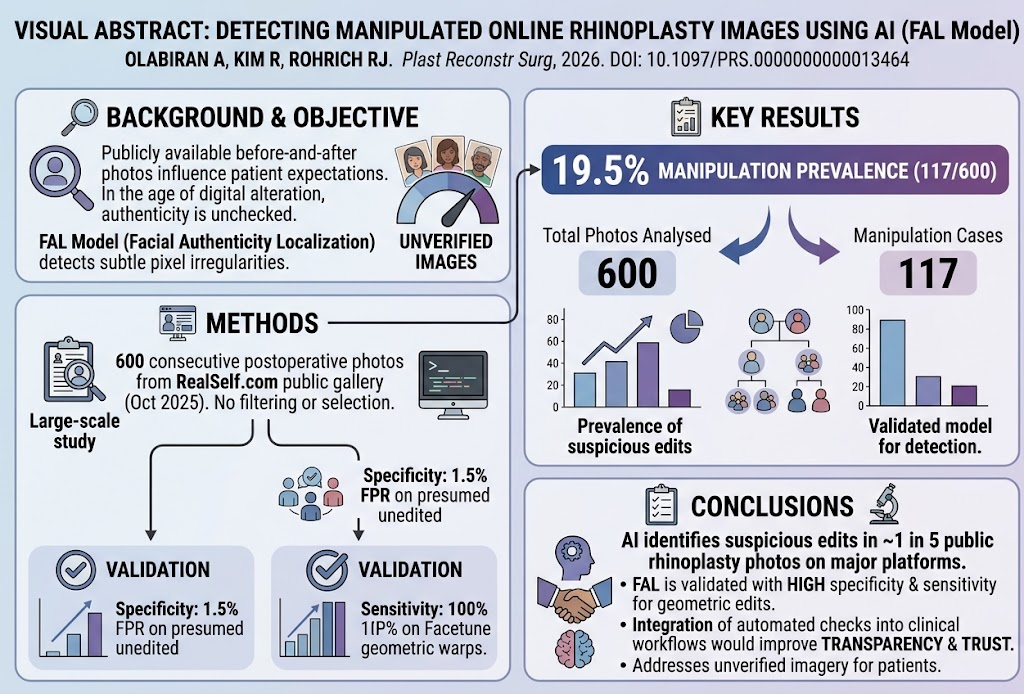
1. Approximately 19.5% of postoperative rhinoplasty photos on RealSelf.com are digitally manipulated, as detected by the Facial Authenticity Localization (FAL) AI model.
2. The FAL model demonstrated high sensitivity (100%) for Facetune-generated geometric warps and high specificity (98.5%) in distinguishing unaltered clinical images.
3. Integration of AI-based manipulation detection could enhance transparency, patient education, and trust in aesthetic surgical media.
4. This study represents the first large-scale application of AI for detecting photo alterations in publicly available aesthetic surgery imagery.