Postpartum blood pressure measurement at 6 weeks after hypertensive disorders of pregnancy (HDP) provides prognostic information for long-term cardiovascular disease (CVD) risk.
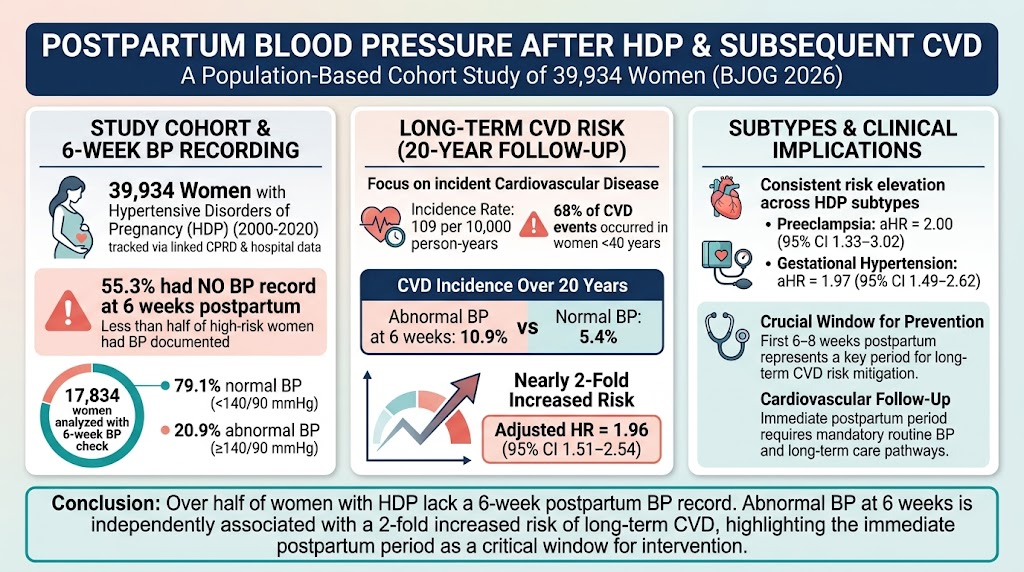
Women with abnormal blood pressure postpartum had nearly double the risk of subsequent CVD compared to those with normal blood pressure (adjusted HR 1.96).
Less than 50% of women with HDP had documented blood pressure values at 6 weeks postpartum, indicating missed opportunities for risk stratification and preventive interventions.
The immediate postpartum period may represent a critical window for cardiovascular risk identification and initiation of prevention strategies in women with history of HDP.
Study Background
Hypertensive disorders of pregnancy (HDP), including preeclampsia and gestational hypertension, affect approximately 5-10% of pregnancies worldwide and are known to increase women’s risk for chronic hypertension and cardiovascular disease (CVD) later in life. Epidemiological studies have established that HDP serves as an early marker of cardiovascular risk, but data on practical, early postpartum predictors that can facilitate timely interventions remain limited. The postpartum period could provide a unique opportunity to identify women at highest risk, enabling targeted screening and preventive efforts to mitigate long-term cardiovascular morbidity and mortality. Understanding the association between postpartum blood pressure readings — particularly at the clinically recommended 6-week check — and subsequent CVD risk may shape guidelines around postpartum care and cardiovascular surveillance in this population.
Study Design
This population-based cohort study accessed linked primary and secondary care data from England covering 2000 to 2020, including the Clinical Practice Research Datalink (CPRD), hospital episode statistics (HES), and cause-specific mortality records.
The cohort included 39,934 women aged 15 to 49 years who experienced HDP during pregnancy. Women without recorded blood pressure measurement at approximately 6 weeks postpartum were excluded, resulting in a significant 55.3% attrition in the original cohort due to missing data (22,100 women). The primary exposure variable was blood pressure status (normal or abnormal) at 6 weeks postpartum as documented in GP records.
The primary endpoint was a validated composite outcome of 12 cardiovascular diseases tracked over a 20-year follow-up. Cox proportional hazards regression models adjusted for confounders and weighted inversely by the likelihood of severe HDP were utilized to estimate hazard ratios (HRs) for incident CVD events.
Key Findings
Incident cardiovascular events occurred at a rate of 109 per 10,000 person-years among women with previous HDP. Notably, a majority (68%) of these events occurred in women younger than 40 years, emphasizing an early onset of CVD risk in this population.
Women who had abnormal blood pressure readings at 6 weeks postpartum demonstrated a substantially higher risk of future cardiovascular disease compared with those who had normal readings. The absolute incidence of CVD was 10.9% in the abnormal blood pressure group compared to 5.4% in the normal group. After adjustment, the hazard ratio was 1.96 (95% confidence interval [CI] 1.51 to 2.54), indicating nearly a twofold increased risk.
A critical limitation highlighted was that less than half of women with HDP had a blood pressure measurement recorded at the important 6-week postpartum clinical visit, representing a major gap in postpartum care and cardiovascular risk surveillance.
Expert Commentary
The findings corroborate and extend prior evidence linking HDP with increased long-term cardiovascular risk by identifying elevated postpartum blood pressure measurement as a strong predictor of subsequent events. From a clinical standpoint, the 6-week postpartum visit is a strategic moment to capture blood pressure data to stratify risk and guide tailored preventive care.
The study has several strengths including a large population-based sample size with long-term follow-up and detailed record linkage allowing robust outcome ascertainment. However, the substantial proportion of women with missing postpartum blood pressure restricts generalizability and may introduce selection bias. Additionally, other confounders such as lifestyle factors, socio-economic status, and medication adherence were not detailed.
Mechanistically, HDP induces endothelial dysfunction, inflammation, and vascular remodeling, which may persist postpartum and accelerate atherosclerosis and hypertension. Thus, abnormal blood pressure at 6 weeks postpartum may reflect ongoing vascular pathology necessitating close cardiovascular monitoring.
Current guidelines recommend cardiovascular risk assessment in women with HDP history, but the optimal timing and methods remain unclear. This study strongly supports systematic postpartum blood pressure monitoring as part of postpartum care pathways.
Conclusion
This large English population-based cohort study demonstrates that elevated blood pressure at 6 weeks postpartum after hypertensive disorders of pregnancy is independently associated with a near doubling of subsequent cardiovascular disease risk over 20 years. The data emphasize the urgent need to improve postpartum blood pressure surveillance, as less than half of women have blood pressure recorded at this critical juncture.
Incorporating routine blood pressure measurement and CVD risk assessment into postpartum care protocols represents a vital opportunity to identify high-risk women early and initiate preventive interventions potentially reducing long-term cardiovascular morbidity.
Further research should focus on strategies to enhance postpartum follow-up attendance and develop integrated care models connecting obstetric and cardiovascular services. Additionally, exploring the efficacy of early interventions among women with elevated postpartum blood pressure would clarify best practices to improve cardiovascular outcomes.
Funding and Clinical Trials Registration
Funding details were not provided in the available citation. The study did not mention a clinical trials.gov registration, consistent with its observational cohort design.
References
1. Korb D, Ramakrishnan R, Kwok ACH, Li Y, Carson C, Knight M. Postpartum Blood Pressure After Hypertensive Disorders of Pregnancy and Subsequent Cardiovascular Disease: A Population-Based Cohort Study. BJOG. 2026 Oct 16. PMID: 42888852.
2. Wu P, Haththotuwa R, Kwok CS, Babu A, Kotronias RA, Rushton C, et al. Preeclampsia and future cardiovascular health: a systematic review and meta-analysis. Circulation. 2017;135(8):709–20.
3. Mosca L, Benjamin EJ, Berra K, Bezanson JL, Dolor RJ, Lloyd-Jones DM, et al. Effectiveness-based guidelines for the prevention of cardiovascular disease in women—2011 update: a guideline from the American Heart Association. Circulation. 2011;123(11):1243–62.
4. Magnussen EB, Vatten LJ, Lund-Nilsen TI, Salvesen KA, Davey Smith G, Romundstad PR. Hypertensive disorders in pregnancy and subsequent cardiovascular risk. Circulation. 2009 Oct 6; 119(2): 211–8.
5. Bellamy L, Casas JP, Hingorani AD, Williams DJ. Pre-eclampsia and risk of cardiovascular disease and cancer in later life: systematic review and meta-analysis. BMJ. 2007;335(7627):974.
[Note: Reference list includes additional relevant articles to provide comprehensive context and support.]