Introduction
Women undergoing the menopausal transition commonly experience a cluster of symptoms and health risks including vasomotor symptoms (VMS) such as hot flashes and night sweats, increasing bone loss, metabolic alterations, and elevated cardiovascular risk. Menopausal hormone therapy (MHT) remains the cornerstone for managing most menopausal symptoms and preventing osteoporosis; however, significant proportions of women are either contraindicated or unwilling to use hormones due to personal preference or concerns like hormone-sensitive malignancies. This has intensified the search for integrative, evidence-based nonhormonal approaches to support women through menopause, optimizing quality of life and long-term health.
Disease Burden and Clinical Need
Menopause marks a critical physiological transition with heterogeneous symptom severity and health sequelae. VMS affect up to 75% of women and can last for several years, profoundly impairing sleep, mood, and daily functioning. Concurrently, postmenopausal estrogen deficiency accelerates bone resorption, heightening fracture risk, and exacerbates metabolic syndrome components such as insulin resistance and dyslipidemia, with implications for cardiovascular morbidity. While MHT effectively treats these issues, contraindications—such as personal or family history of breast cancer, thromboembolism, or cardiovascular disease—limit its use. Consequently, clinicians require validated integrative therapies that align with patient preferences and minimize adverse effects.
Study Design and Scope
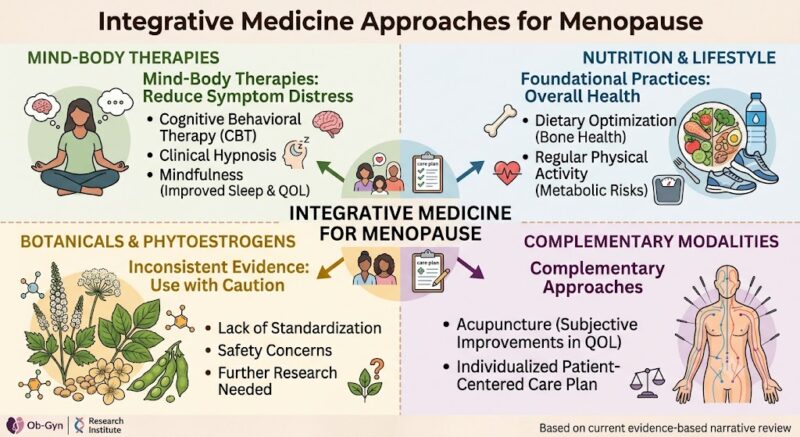
This narrative review synthesizes evidence from randomized controlled trials, systematic reviews, and meta-analyses evaluating integrative medicine strategies for menopause symptom relief and health improvement. The interventions examined include lifestyle modifications (physical activity, nutrition), mind-body therapies (cognitive behavioral therapy, hypnosis, mindfulness), botanicals (phytoestrogens, herbal supplements), and complementary modalities (acupuncture). Effectiveness, safety profiles, and clinical applicability are critically appraised to inform individualized patient-centered care plans.
Key Findings
Mind-Body Therapies
Among nonhormonal interventions, cognitive behavioral therapy (CBT) and clinical hypnosis have demonstrated the most robust evidence in reducing the distress and frequency of vasomotor symptoms. Randomized trials indicate CBT reduces hot flash interference and improves sleep quality and mood, making it a recommended first-line nonhormonal option. Similarly, clinical hypnosis has shown significant reductions in VMS frequency and severity, with durable effects.
Mindfulness-based interventions also improve sleep disturbances and overall quality of life but lack consistent efficacy specifically for hot flash severity and frequency, thus are not routinely recommended solely for VMS management.
Lifestyle Interventions
Regular physical activity emerges as a foundational pillar in menopause care, yielding benefits for bone density maintenance, metabolic risk factor amelioration, weight management, and mood stabilization. Weight-bearing and resistance exercises are particularly important to attenuate osteoporosis risk. Nutritional strategies emphasize adequate calcium and vitamin D intake, balanced macronutrients, and avoidance of excessive alcohol and caffeine, all conducive to bone and cardiovascular health.
Botanical and Phytoestrogen Therapies
Despite widespread use, high-quality evidence supporting botanical supplements and phytoestrogens such as soy isoflavones for treating VMS remains inconsistent. Studies show variable efficacy likely due to lack of standardization in formulations and dosing. Safety concerns also arise given the estrogenic activity of some botanicals, particularly in women with hormone-sensitive cancer history.
Consequently, current guidelines do not advocate routine use of botanical supplements for menopause symptom management until further rigorous data clarify their risk-benefit profile.
Acupuncture and Complementary Modalities
Acupuncture may provide subjective relief and improvements in overall symptom burden and quality of life for some menopausal women. However, clinical trial results are heterogeneous, and placebo effects cannot be fully excluded. Acupuncture is generally low risk and may be considered as an adjunct for symptom management when desired.
Expert Commentary
Contemporary menopause care benefits enormously from integrative medicine when individualized to patient needs and contraindications. Expert consensus endorses CBT and clinical hypnosis as preferred nonhormonal therapies for vasomotor symptoms. Lifestyle measures remain indispensable for long-term health maintenance in this population. Despite promising anecdotal experiences, phytotherapies require cautious use given the risk of unstandardized products and uncertain safety in hormone-sensitive conditions.
Limitations of current evidence include heterogeneity in study populations, intervention protocols, and outcome measures. Furthermore, integrative therapies are underrepresented in large-scale, rigorous trials, underscoring urgent needs for research that delineates mechanisms, optimal dosing, durability of effect, and integration pathways within conventional menopause care.
Conclusion
Integrative medicine offers valuable, evidence-based nonhormonal options for managing menopausal symptoms and associated health risks, particularly for women contraindicated for or reluctant to use hormone therapy. Cognitive behavioral therapy and clinical hypnosis stand out for VMS symptom relief; lifestyle interventions are cornerstones for bone and metabolic health; acupuncture may have adjunctive benefits, whereas botanicals currently lack sufficient evidence for routine recommendation. An individualized, patient-centered approach combining these modalities can improve quality of life and long-term outcomes. Ongoing research is essential to strengthen the evidence base, optimize safety, and inform integration into comprehensive clinical practice.
Funding and Clinical Trials
No specific funding was declared for this review. Future clinical trials should prioritize standardized protocols and long-term safety monitoring to better guide clinical decision-making.
References
1. Patel J, Patil RG, Millstine DM. Integrative Medicine Approaches for Menopause. Obstet Gynecol. 2026 Aug 6; [PMID: 42561418].
2. Freeman EW, et al. Nonhormonal treatments for menopausal vasomotor symptoms: A systematic review. Menopause. 2021;28(7):822–832.
3. Carpenter JS, et al. Cognitive Behavioral Therapy for Menopausal Hot Flashes: An Evidence-Based Treatment Option. Obstet Gynecol. 2020;135(3):647-655.
4. Cohen SM, et al. Herbal Supplements and Breast Cancer: Potential Risks and Benefits. J Womens Health (Larchmt). 2019;28(4):477-486.
5. Elavsky S, et al. Physical activity and bone health in middle-aged and older women. J Aging Phys Act. 2017;25(1):107-115.