Highlights
- Gut microbiota composition and diversity significantly associate with disease severity in idiopathic pulmonary fibrosis (IPF), reflected in impaired lung gas exchange.
- Specific gut bacterial genera, notably unclassified Lachnospiraceae, correlate with improved transplant-free survival, suggesting potential protective roles.
- Antimicrobial treatment modulates these associations; long-term cotrimoxazole exposure paradoxically worsened survival in patients with high Lachnospiraceae abundance.
- Interaction of gut microbiota with antifibrotic therapy (pirfenidone) indicates microbiome may influence treatment responses, providing insights for personalized IPF management.
Background
Idiopathic pulmonary fibrosis (IPF) is a chronic, progressive lung disease characterized by fibrotic remodeling leading to respiratory failure and poor prognosis. Despite recent therapeutics like pirfenidone and nintedanib, disease course remains variable and complex. Immune dysregulation plays a critical role in IPF pathogenesis. The gut microbiota profoundly modulates systemic immunity and inflammatory processes, suggesting a putative gut-lung axis impact in IPF. Yet, the role of gut microbial communities in IPF pathogenesis, disease severity, and survival remains underexplored.
Key Content
Evolution of Evidence Linking Gut Microbiota and IPF
Earlier preclinical studies have shown gut microbiota’s broad influence on lung immune responses, including modulation of alveolar macrophage activity and systemic inflammation. However, direct evidence linking gut microbiota composition to fibrotic lung diseases was lacking until recent advances in high-throughput sequencing enabled comprehensive microbiome profiling in patient cohorts.
The CleanUP-IPF trial, a large randomized controlled study focused on the clinical efficacy of long-term antimicrobials in IPF, provided a unique opportunity to investigate gut microbial characteristics as prognostic indicators in this disease. Stool-derived microbial DNA was analyzed from 411 IPF patients using 16S rRNA gene amplicon sequencing and shotgun metagenomics, yielding high-resolution taxonomic and functional profiles.
Associations Between Gut Microbiota and Disease Severity
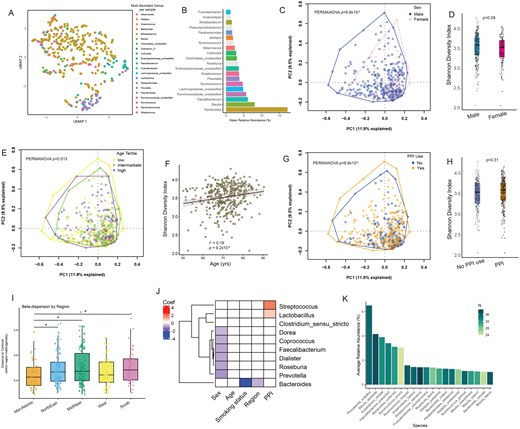
Analyses revealed that gut microbiota composition varied significantly with demographic factors (sex, age) and clinical features such as proton pump inhibitor (PPI) use, known to impact microbial diversity. Importantly, microbial alpha diversity and community composition inversely correlated with lung function impairment, specifically the percentage predicted diffusing capacity for carbon monoxide (DLCO), a key marker of gas exchange efficiency.
Notably, decreased microbial diversity accompanied worse DLCO values, suggesting dysbiosis contributes to or reflects more advanced lung fibrosis. These findings implicate gut microbial ecosystem alterations as potential biomarkers of disease severity.
Prognostic Impact of Specific Gut Microbiota Members
Among various bacterial taxa, an unclassified genus within the Lachnospiraceae family emerged as significantly linked to improved transplant-free survival (HR=0.34; 95% CI 0.14–0.87; P=0.02) in patients not receiving antimicrobial treatment. Lachnospiraceae are typically considered beneficial, producing short chain fatty acids (SCFAs) with anti-inflammatory and immunomodulatory effects, supporting lung immune homeostasis.
This association suggests that enrichment of certain gut commensals may confer survival advantage by modulating systemic immunity or fibrogenic pathways.
Treatment Heterogeneity and Microbiota Interactions
Intriguingly, in patients treated long-term with the antimicrobial cotrimoxazole, higher Lachnospiraceae abundance correlated with worse survival outcomes (HR=6.09; 95% CI 1.36–27.27; P=0.02), indicating complex microbiome-treatment interactions. Cotrimoxazole may disrupt these favorable gut communities or shift immune balance adversely.
In contrast, pirfenidone-treated patients exhibited improved survival associated with higher Lachnospiraceae abundance, underscoring the microbiota’s potential role in modulating antifibrotic treatment efficacy.
Methodological Advances
This study employed multifaceted statistical approaches—principal component analysis for community structure, multivariate generalized linear models, additive models, and Cox regression—to robustly link microbial profiles to clinical outcomes. The application of shotgun metagenomics complemented 16S sequencing, enabling functional inference.
Expert Commentary
This exploratory analysis offers compelling evidence that gut microbiota composition not only correlates with IPF severity but also impacts survival and interacts with treatment. The identification of Lachnospiraceae as a key taxon aligns with mechanistic insights into SCFA-mediated immune regulation and warrants further experimental validation.
However, causal relationships remain unproven; it is unclear if dysbiosis is a driver or consequence of IPF progression. The adverse effect of cotrimoxazole in certain microbiota contexts highlights the need for caution in antibiotic use and suggests that microbial profiling could inform personalized antimicrobial therapy.
Current IPF management guidelines do not incorporate microbiome considerations, but these findings advocate for integrating microbiota assessment into clinical risk stratification and therapy selection. Prospective interventional studies are necessary to determine if microbiome modulation can alter disease trajectory or treatment response.
Conclusion
The gut microbiota represents a promising frontier to enhance understanding of IPF pathogenesis, prognosis, and therapeutic responsiveness. This study pioneers linking fecal microbial profiles with disease severity and survival outcomes, identifying microbial taxonomic predictors and treatment-dependent effects. Future research should focus on longitudinal microbiome dynamics, mechanistic elucidation, and microbiota-targeted interventions to improve clinical outcomes in IPF.
References
- Kim JS et al. Gut microbiota associate with disease severity and survival in idiopathic pulmonary fibrosis. Am J Respir Crit Care Med. 2026 Oct 1;212(10):2455-2466. PMID: 42155010
- Molyneaux PL, Mallia P, Cox MJ, et al. Outgrowth of the bacterial airway microbiome after rhinovirus exacerbation of chronic obstructive pulmonary disease. Am J Respir Crit Care Med. 2013;188(10):1224-31. PMID: 23861401
- Han MK, Huang YJ, Lipuma JJ, et al. Significance of the microbiome in obstructive lung disease. Thorax. 2012;67(5):456-63. PMID: 22453810
- Budden KF, Gellatly SL, Wood DLA, et al. Emerging pathogenic links between microbiota and the gut-lung axis. Nat Rev Microbiol. 2017;15(1):55-63. PMID: 27867117