Highlight
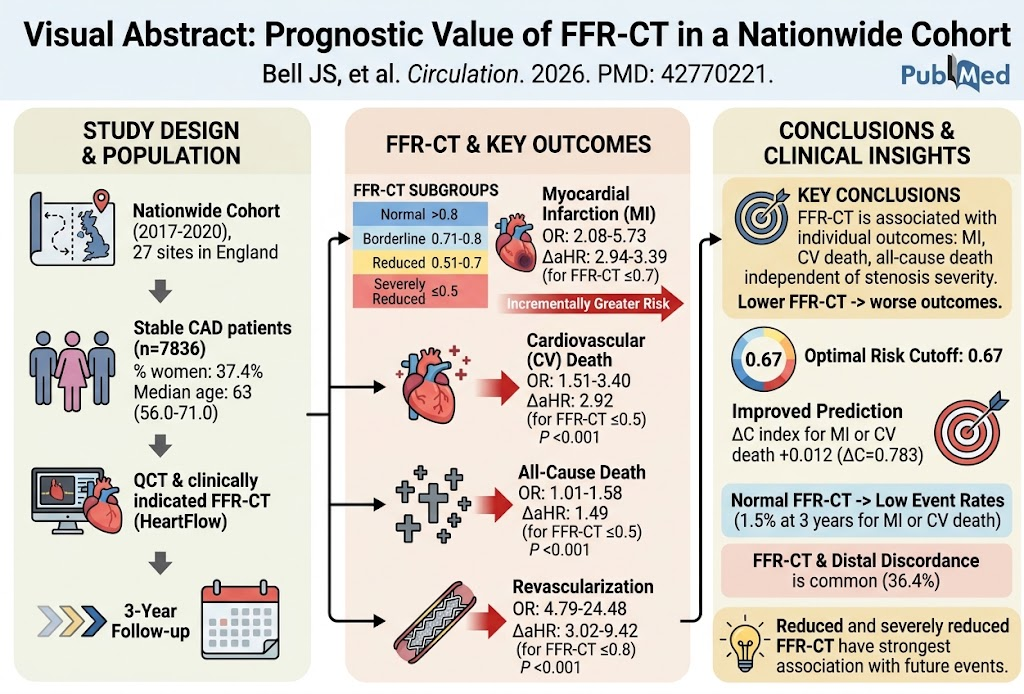
1. Coronary computed tomography angiography-derived fractional flow reserve (FFR-CT) measurements from a large, contemporary, multi-center nationwide cohort are significantly associated with future myocardial infarction (MI), cardiovascular mortality, all-cause mortality, and revascularization in stable coronary artery disease (CAD) patients.
2. Lower FFR-CT values, especially those ≤0.7, independently predict higher incidence of adverse cardiovascular events after adjusting for traditional risk factors and stenosis severity.
3. An optimal FFR-CT cutoff value of 0.67 was identified to stratify risk effectively, with values below this threshold indicating higher risk for adverse events.
4. FFR-CT offers incremental prognostic value beyond clinical risk factors and coronary stenosis assessment and thus can improve clinical decision making in stable CAD.