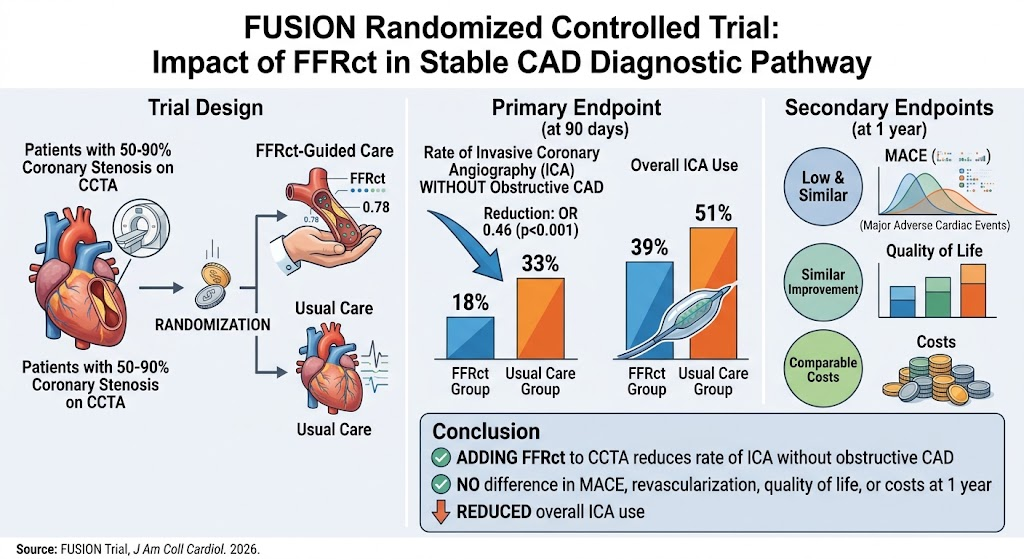
Adding CT-derived fractional flow reserve (FFRct) to the diagnostic pathway significantly reduces the rate of invasive coronary angiography (ICA) without obstructive coronary artery disease (CAD) in patients with intermediate (50-90%) stenosis on CCTA.
The overall number of ICAs performed was lower with FFRct guidance at both 90 days and 1 year, reflecting better patient selection for invasive procedures.
Revascularization rates, major adverse cardiac events (MACE), quality of life, and healthcare costs were comparable between FFRct-guided and usual care groups, with low event rates in both arms.