Differential Gastrointestinal Risks of Opioids in Type 2 Diabetes Patients on GLP-1RA Therapy: A Comparative Analysis

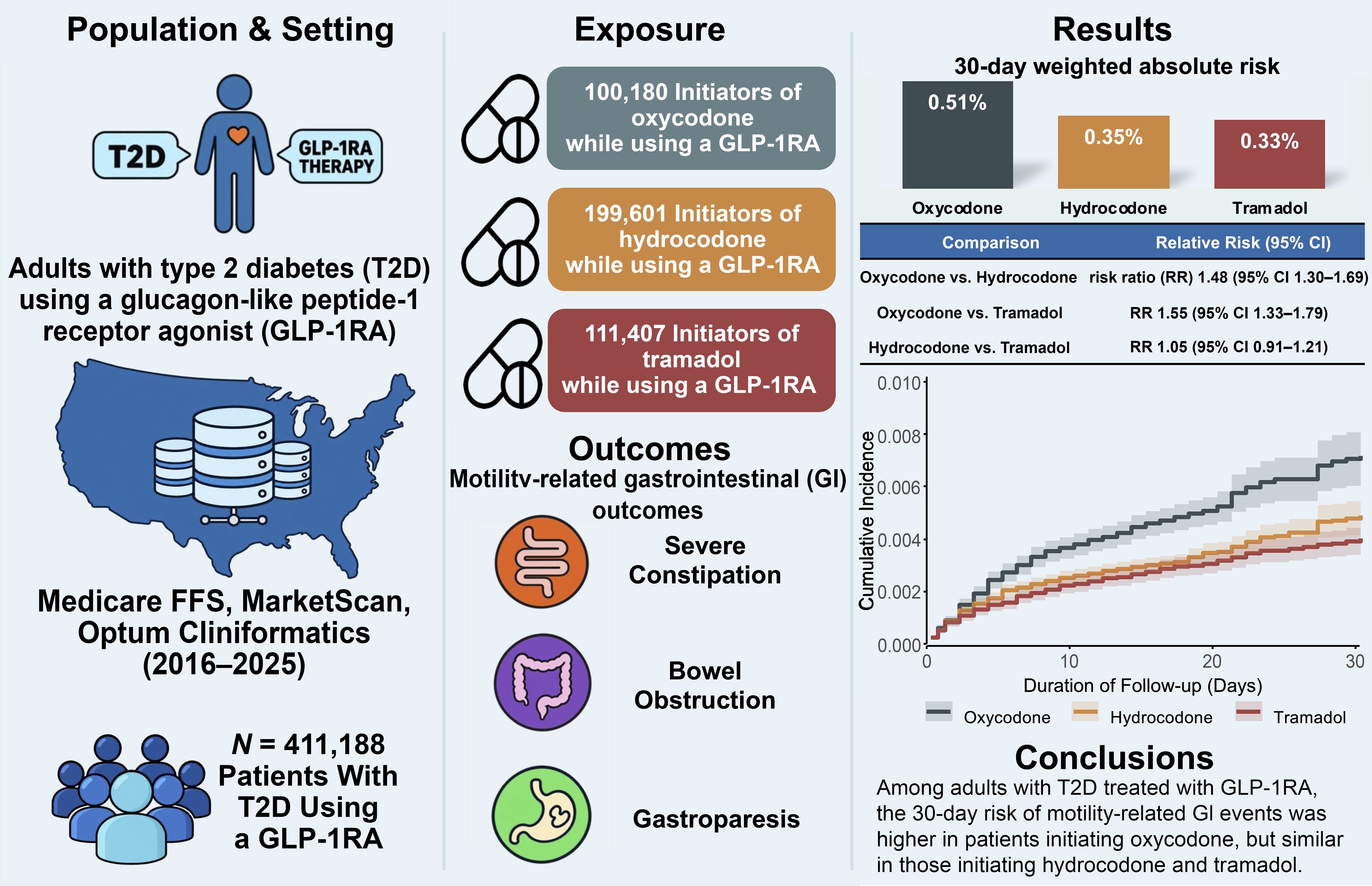
Adults with T 2 D using G L P 1 R A include 411,188 patients from Medicare, MarketScan, and Optum Clinformatics, 2016 to 2025. Exposure groups comprise 100,180 oxycodone, 199,601 hydrocodone, and 111,407 tramadol initiators. Outcomes are severe constipation, bowel obstruction, and gastroparesis. Thirty-day weighted risks are 0.51, 0.35, and 0.33 per cent, respectively. R R values are 1.48, 1.55, and 1.05 with 95 percent CI ranges of 1.30 to 1.69, 1.33 to 1.79, and 0.91 to 1.21.

Highlight

• Oxycodone initiation in adults with type 2 diabetes (T2D) on GLP-1 receptor agonists (GLP-1RAs) is associated with higher short-term risks of severe constipation and bowel obstruction compared to hydrocodone and tramadol.
• Hydrocodone and tramadol show comparable gastrointestinal safety profiles in this patient population.
• No significant differences were observed in gastroparesis risk among the opioids studied.
• Careful opioid selection is crucial to minimize gastrointestinal adverse effects in T2D patients receiving GLP-1RA therapy.


Comments

No comments yet. Why don’t you start the discussion?

Leave a Reply