Highlight
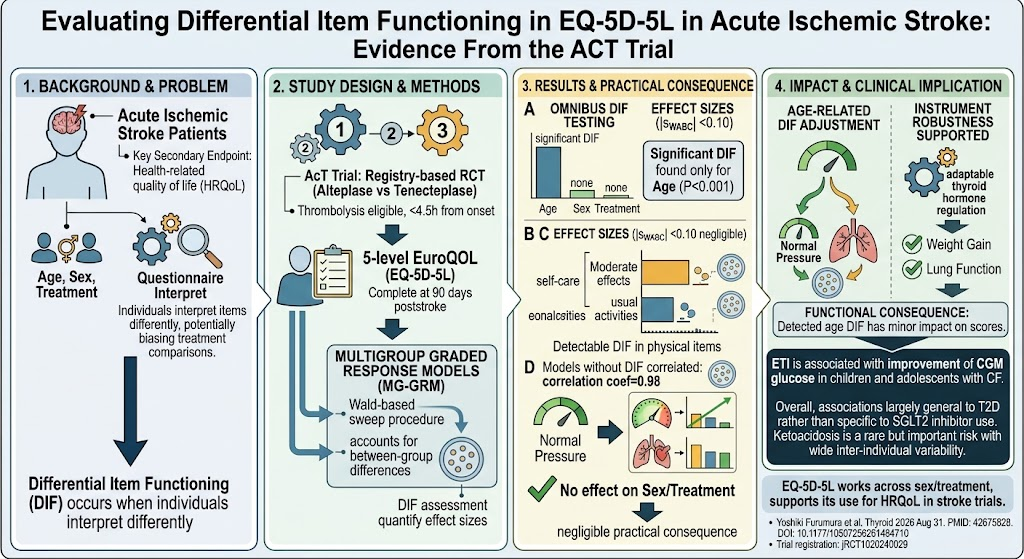
This article examines the potential for differential item functioning (DIF) in the widely used EQ-5D-5L patient-reported outcome measure among stroke survivors. Using robust statistical modeling, the ACT trial data reveal that while some age-related differences exist, especially in physical function items, these differences do not substantially alter individual health-related quality of life (HRQoL) scores. The measure functions equivalently across sex and thrombolytic treatment groups, supporting its validity in acute ischemic stroke trials.