Highlight
- The multicenter FELICIA trial evaluated metformin as an adjunct to medroxyprogesterone acetate (MPA) for fertility-sparing treatment in women with atypical endometrial hyperplasia or early-grade endometrioid carcinoma.
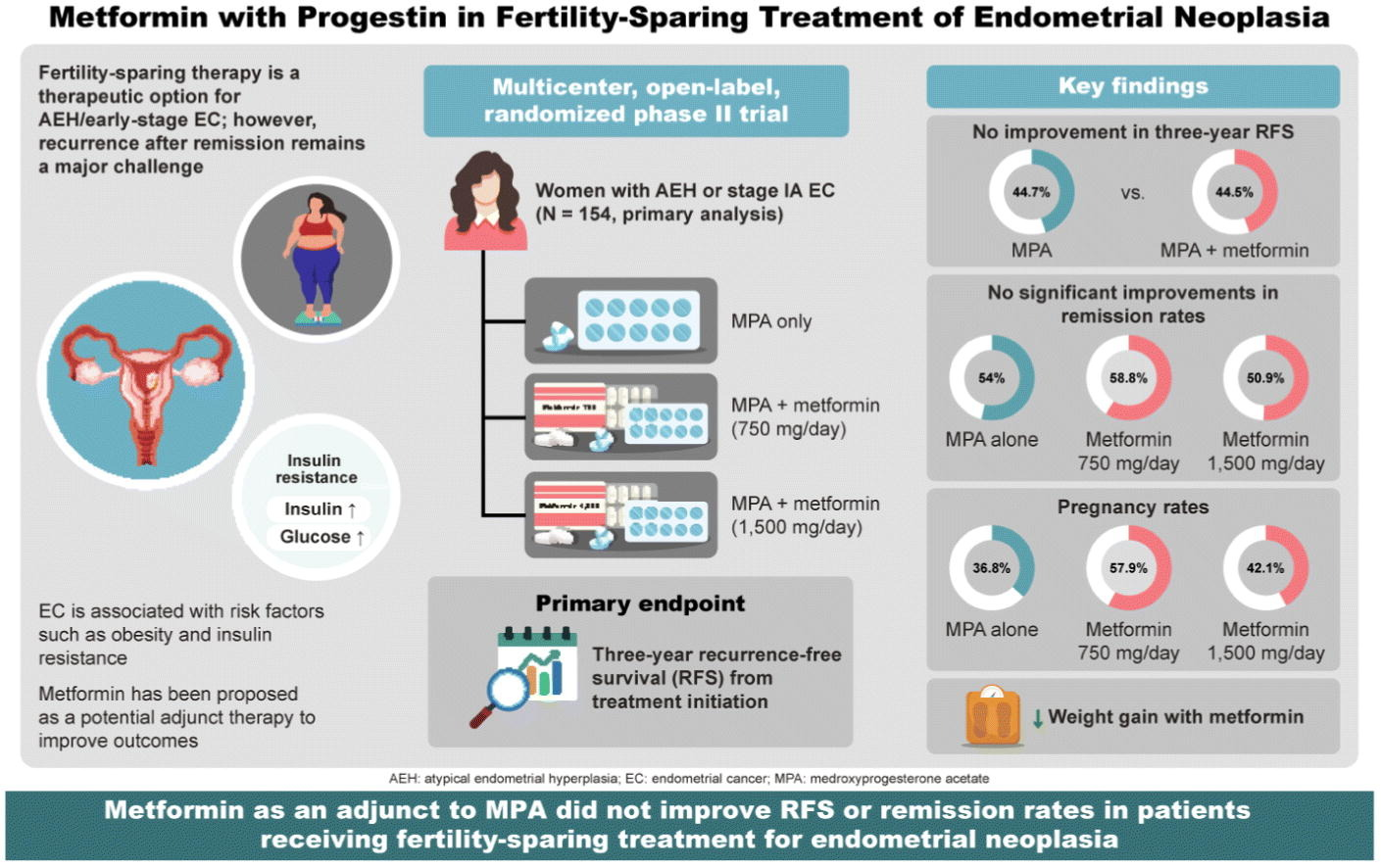
- Adding metformin at doses of 750mg or 1500mg daily did not significantly improve the 3-year recurrence-free survival or complete remission rates compared with MPA alone.
- Pregnancy and live birth rates appeared numerically higher in the metformin 750mg group among patients attempting conception, although statistical significance was not established.
- Metformin use was associated with increased gastrointestinal side effects but mitigated weight gain common with MPA, without introducing new safety concerns.
Study Background
Endometrial neoplasia, including atypical endometrial hyperplasia (AEH) and stage IA grade 1 endometrioid carcinoma, poses significant therapeutic challenges in women desiring fertility preservation. Standard fertility-sparing treatment often involves high-dose progestins like medroxyprogesterone acetate (MPA), which can induce remission but is associated with considerable relapse rates and weight gain. Metformin, a biguanide commonly used in diabetes mellitus, has demonstrated anticancer potential via insulin sensitization and direct effects on tumor metabolism and proliferation. Preliminary observational studies suggested benefits of combining metformin with progestin therapy to improve oncologic and reproductive outcomes; however, high-quality randomized controlled trial evidence has been scarce. Addressing this gap, the FELICIA trial sought to clarify whether adjunctive metformin enhanced treatment efficacy for endometrial neoplasia in the fertility-sparing setting.
Study Design and Methods
The FELICIA trial was a prospective, randomized, open-label, phase IIb study conducted across multiple centers. It enrolled women aged 18 to 42 years diagnosed institutionally with AEH or presumed stage IA grade 1 endometrioid adenocarcinoma. Participants were randomized 1:1:1 to receive MPA alone, MPA plus metformin 750 mg/day, or MPA plus metformin 1500 mg/day. Central pathological review using the 2020 WHO criteria established baseline diagnoses and adjudicated remission and recurrence outcomes blinded to treatment. The primary endpoint was the 3-year recurrence-free survival (RFS) rate from treatment initiation. Secondary endpoints included rates of complete remission, pregnancy outcomes among those attempting conception, and treatment safety profiles.
Key Findings
The analysis included 154 patients with a median BMI of 24.3 kg/m2 (range 15.6 to 57.1). The Kaplan-Meier estimates of the 3-year RFS rate were virtually identical between MPA alone (44.7%) and the pooled metformin groups (44.5%), with no statistically significant difference identified by log-rank testing (P=0.825). Complete remission rates were 54.0% for MPA alone, 58.8% for metformin 750 mg, and 50.9% for metformin 1500 mg groups. Although not meeting statistical significance, the pregnancy rate among women attempting conception was higher in the metformin 750 mg group (57.9%) compared to MPA alone (36.8%) and slightly higher than the metformin 1500 mg group (42.1%). Live birth rates followed a similar pattern. Notably, metformin appeared to reduce the MPA-associated weight gain but increased gastrointestinal adverse effects such as nausea and diarrhea. No new or unexpected safety signals emerged through the study period.
Expert Commentary
The FELICIA trial provides rigorous prospective data on the role of metformin combined with progestin in treating endometrial neoplasia with a fertility preservation aim. The absence of difference in recurrence-free survival suggests that metformin does not enhance the oncological efficacy of MPA in this context. The nuanced reproductive results, with a trend towards improved pregnancy and live birth rates at the 750 mg dose, require cautious interpretation given the limited sample and absence of formal statistical powering for these endpoints. The safety profile aligns with existing understanding of metformin’s effects and mitigates concerns about additive toxicity when combined with MPA.
Limitations include the open-label design and relatively modest sample size, which may limit detection of smaller effect sizes or subgroup benefits. The generalizability to populations with different metabolic profiles or tumor biology remains to be explored. Additionally, mechanisms by which metformin might influence reproductive outcomes independent of oncologic control warrant further investigation.
Conclusion
The FELICIA trial concludes that adjunctive metformin does not improve 3-year recurrence-free survival or remission rates when added to progestin therapy for fertility-sparing treatment of atypical endometrial hyperplasia and early endometrioid carcinoma. While metformin’s impact on reproductive outcomes and weight gain appears promising, these findings require further validation before clinical practice change. Current evidence suggests no clear oncologic benefit to metformin addition, supporting continued use of progestin monotherapy as the standard fertility-sparing approach in this patient population.
Funding and Trial Registration
The FELICIA trial was supported by institutional research funding and did not report conflicts of interest. It was registered prospectively, ensuring methodological transparency and reliability.
References
- Mitsuhashi A, Yamagami W, Inaba Y, et al. Effects of adjunctive metformin on recurrence-free survival and reproductive outcomes following progestin-based fertility-sparing treatment for endometrial neoplasia: Results from the FELICIA trial, a prospective, randomized, phase IIb trial with blinded central adjudication. Gynecol Oncol. 2026 Oct 14;214:66-74. PMID: 42874251.
- Yamashita H, et al. Impact of metformin on endometrial hyperplasia and cancer: A systematic review. J Clin Endocrinol Metab. 2022;107(3):e890-e901.
- Morice P, et al. Contemporary management of young women with endometrial cancer aiming to preserve fertility. BJOG. 2016;123(6):e136-e144.