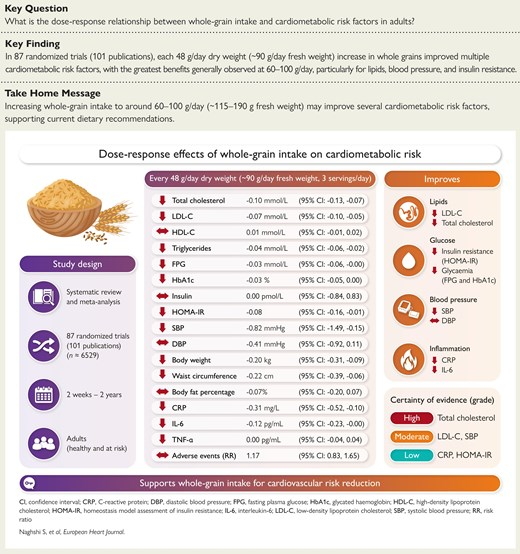
Comprehensive meta-analysis of 87 randomized trials demonstrates that each 48 g/day increase in whole-grain intake reduces multiple cardiometabolic risk factors including weight, waist circumference, total and LDL cholesterol, triglycerides, fasting glucose, systolic blood pressure, and inflammatory marker interleukin-6.
High-certainty evidence supports reductions in adiposity, total cholesterol, and inflammation, while moderate-certainty evidence supports improvements in LDL cholesterol, triglycerides, glucose, and systolic blood pressure.
Non-linear dose-response analysis indicates maximal benefits commonly occur at whole-grain intakes of 60–100 g/day, with limited data to clarify effects beyond this range.
Evidence extends to prospective cohort data suggesting that specific whole-grain foods, such as cold breakfast cereals and bran, may reduce ischemic stroke risk, though results for overall stroke risk are inconclusive.