Study Background
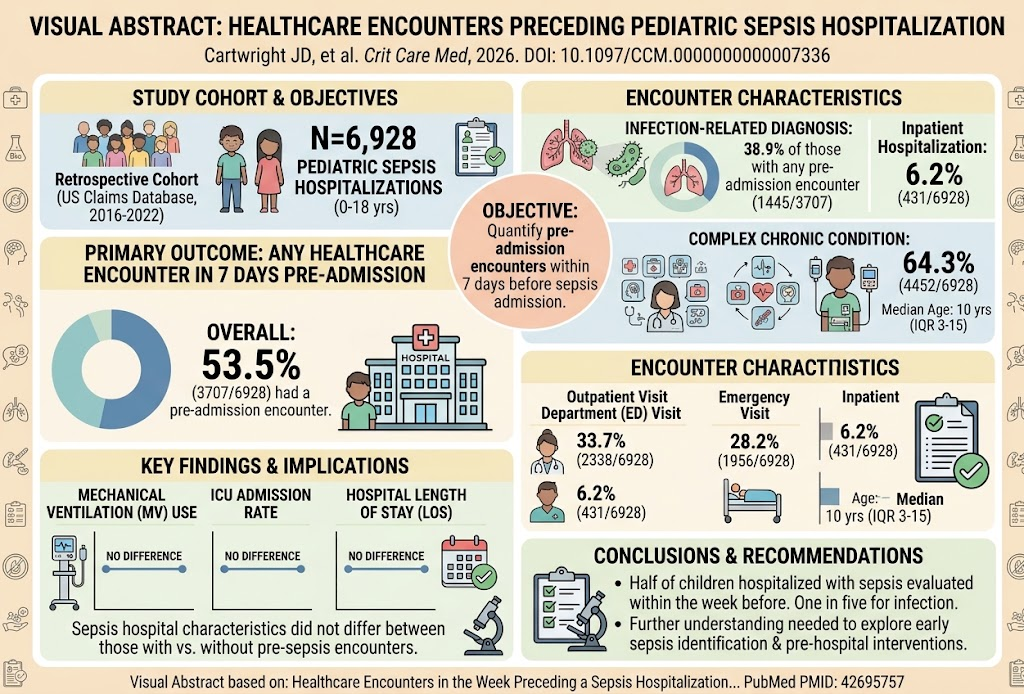
Sepsis remains a major cause of morbidity and mortality among critically ill children worldwide. Despite advances in supportive care, pediatric sepsis poses ongoing challenges including timely diagnosis and early intervention, which are critical for improving outcomes. While much research has focused on the in-hospital management of sepsis, patterns of healthcare utilization prior to hospital admission have remained underexplored. Understanding whether children have healthcare encounters—such as outpatient visits or emergency department presentations—in the days preceding sepsis hospitalization may reveal opportunities for earlier recognition, diagnosis, and preemptive intervention that could attenuate disease severity and improve prognosis.