Septorhinoplasty, a surgical procedure designed to correct both functional and aesthetic nasal deformities, is increasingly performed worldwide. Despite its commonality and generally favorable outcomes, patients often experience perioperative concerns that lead them to initiate communication with their care team. Understanding these concerns, their frequency, and associated patient factors is critical to optimizing perioperative care and enhancing patient satisfaction and safety.
Background
Patient-initiated communication (PIC) during the perioperative period can reflect unmet informational needs or management challenges. In the context of septorhinoplasty, both functional and cosmetic aspects of the surgery may prompt patient questions or worries. Although the procedure is considered safe, the nasal anatomy’s complexity and visible postoperative changes often heighten patient anxiety. Despite this, data on the prevalence, nature, and predictors of PIC in this population remain limited. Addressing this knowledge gap can inform targeted quality improvement initiatives.
Study Design and Methods
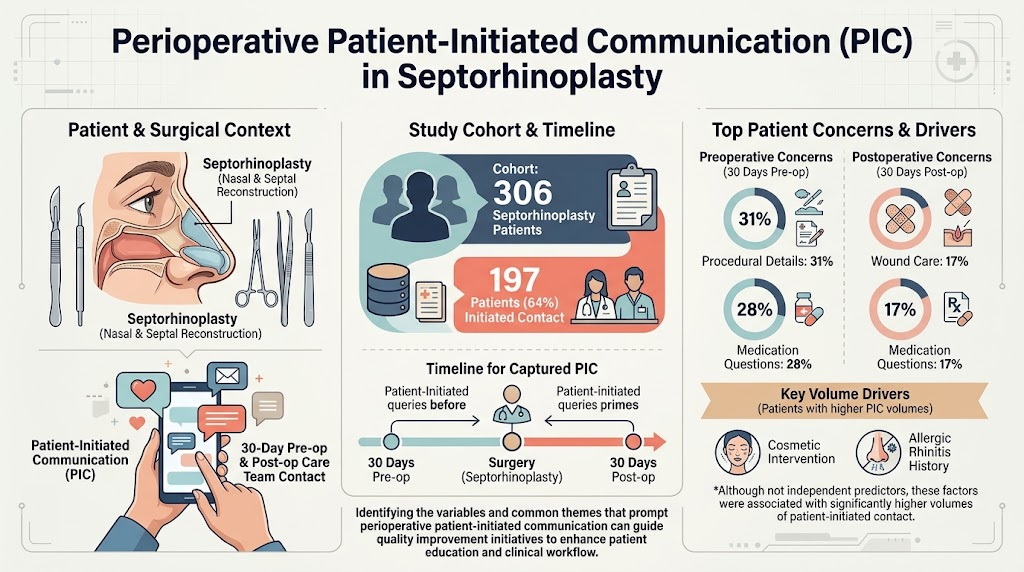
This retrospective chart review analyzed records from 306 patients undergoing septorhinoplasty between August 6, 2017, and August 6, 2022. The study evaluated perioperative communications initiated by patients during a 60-day window encompassing 30 days before and 30 days after surgery. Demographic data, surgical characteristics, and medication histories were compiled alongside detailed records of PIC instances. Communication topics were categorized to delineate common themes.
Results
Of the 306 patients, 197 (64%) initiated contact with the clinical team regarding perioperative concerns. The frequency was notably higher postoperatively compared to the preoperative period. Patients undergoing cosmetic interventions and those with a history of allergic rhinitis demonstrated significantly greater volumes of PIC, although these associations did not emerge as independent predictors after multivariate adjustment.
The thematic analysis of PIC revealed distinct patterns in the pre- and postoperative phases. Before surgery, the most frequent concerns concerned procedural details (31% of contacts), highlighting patients’ desire for clarity on the surgical process. Medication-related questions comprised 28% of preoperative communications, reflecting apprehensions about perioperative pharmacotherapy.
Postoperative inquiries commonly involved wound care (17%) and medication-related issues (17%), underscoring the importance of clear instructions and follow-up in the immediate recovery phase. These concerns may include questions on dressing changes, infection signs, pain management, and adherence to prescribed medications.
Discussion
This study underscores the high prevalence of perioperative patient-initiated communication in septorhinoplasty, especially in the postoperative period. The predominance of questions about procedural details and medications before surgery indicates patients’ need for thorough preoperative counseling. Similarly, postoperative wound care and medication concerns highlight areas where enhanced education and support could reduce anxiety and unplanned contacts.
The association between cosmetic interventions and increased communication volumes may reflect elevated patient expectations and psychological investment in outcomes. Additionally, allergic rhinitis history might predispose patients to greater nasal symptoms or postoperative concerns, warranting proactive management.
While patients with these characteristics had more frequent communications, they were not independent predictors in multivariate models, suggesting that other unmeasured factors, such as individual anxiety levels or social support, may influence PIC frequency.
Clinical Implications and Quality Improvement
Understanding the nature and drivers of PIC can guide tailored educational strategies. Enhanced preoperative counseling focusing on procedural expectations and medication regimens, along with clear postoperative instructions on wound care, may mitigate concerns. Implementing structured communication pathways, including standardized informational materials and proactive outreach, could improve patient confidence and resource utilization.
Furthermore, clinicians should be attentive to patients undergoing cosmetic septorhinoplasty and those with allergic rhinitis, as they may require additional support. Integrating multidisciplinary teams including nursing and allergy specialists could optimize perioperative care.
Limitations
The retrospective design limits causal inference. The study was conducted at a single institution, which may affect generalizability. Psychosocial factors influencing PIC were not assessed. Future prospective studies incorporating patient-reported outcomes and qualitative analyses could deepen understanding.
Conclusion
Perioperative patient-initiated communication is common in septorhinoplasty, reflecting substantial informational and management needs, especially postoperatively. Recognizing the key themes and contributory patient factors enables clinicians to develop focused interventions to enhance perioperative care quality, reduce patient anxiety, and potentially improve surgical outcomes.
References
1. Tripuraneni P, Hakimi AA, Lava CX, Aribindi S, Parsa KM, Chu E, Reilly MJ. Predictors and Themes of Perioperative Patient-Initiated Communication in Septorhinoplasty. The Laryngoscope. 2026 Oct 12. PMID: 42864859.
2. Haacke N, et al. Patient communication in plastic surgery: A review of educational strategies and patient satisfaction. Plast Surg Nurs. 2019;39(1):34-41.
3. Ceremonet D, et al. Postoperative care in rhinoplasty: Managing patient expectations. Facial Plast Surg Clin North Am. 2020;28(1):67-75.

 By
No Comments