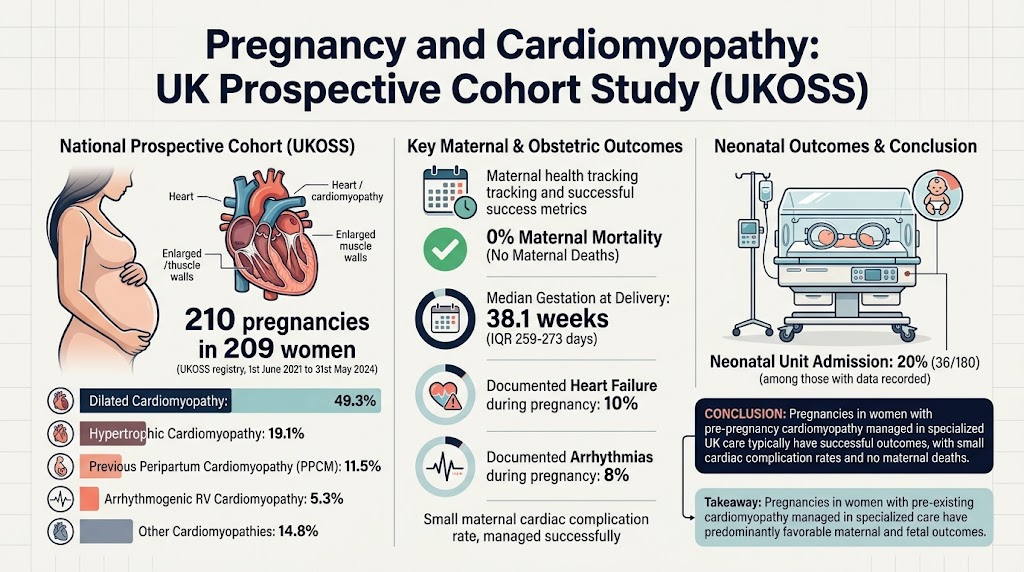
Pregnancies in women with preexisting cardiomyopathy managed in the UK show predominantly positive maternal and neonatal outcomes.
Cardiomyopathy types studied include dilated, hypertrophic, arrhythmogenic right ventricular cardiomyopathy, and peripartum cardiomyopathy.
Low rates of maternal cardiac complications were observed, with no maternal mortality reported.
Approximately 20% of neonates required neonatal unit admission, with a median gestational age at delivery of 38.1 weeks.
Study Background
Cardiomyopathy encompasses a heterogeneous group of myocardial disorders that impair cardiac function and pose significant challenges during pregnancy due to the hemodynamic and hormonal changes involved. The interplay between cardiomyopathy and pregnancy can increase risks of maternal morbidity, including heart failure and arrhythmia, as well as adverse neonatal outcomes such as preterm delivery and neonatal intensive care admission. Despite advances in cardiovascular and obstetric care, data delineating pregnancy risks according to specific cardiomyopathy subtypes remain limited. Moreover, contemporary, large-scale, prospective data are required to guide clinical counselling and management.
Study Design
This study is a prospective observational cohort conducted via the United Kingdom Obstetric Surveillance System (UKOSS) from June 1, 2021, to May 31, 2024. It enrolled women with a pre-pregnancy diagnosis of cardiomyopathy, categorized into dilated cardiomyopathy (DCM), hypertrophic cardiomyopathy (HCM), arrhythmogenic right ventricular cardiomyopathy (ARVC), previous peripartum cardiomyopathy (PPCM), and other cardiomyopathies.
Data collection included maternal cardiovascular status, obstetric outcomes, and neonatal outcomes. The main outcome measures were maternal mortality, cardiac complications (heart failure episodes and arrhythmias), gestational age at delivery, neonatal unit admissions, and delivery methods.
Results
A total of 210 pregnancies among 209 women were identified. Distribution included 103 women with DCM (49.3%), 40 with HCM (19.1%), 24 with prior PPCM (11.5%), 11 with ARVC (5.3%), and 31 women with other cardiomyopathies (14.8%).
The median gestational age at delivery for 206 singleton pregnancies was 38.1 weeks (IQR 259–273 days). Neonatal admission to a special or intensive care unit occurred in 20% (36/180) of babies, reflecting the need for heightened neonatal monitoring in this population.
Critically, there were no maternal deaths reported during the follow-up period. Cardiac complications occurred in a minority: about 10% of women experienced heart failure episodes, and 8% had documented arrhythmias during pregnancy. These data indicate that while cardiac events are not uncommon, their incidence remains relatively low with appropriate management.
Delivery methods and obstetric interventions were consistent with standard UK obstetric practice, without notable deviations related to cardiomyopathy subtype.
Expert Commentary
This comprehensive UK prospective cohort provides reassuring evidence that pregnancies in women with various forms of preexisting cardiomyopathy, when managed within specialized multidisciplinary teams, often proceed with successful outcomes and low maternal mortality. The absence of maternal deaths and relatively low cardiac event rates contrast with historically higher risks recorded in earlier literature, likely reflecting improved cardiac and obstetric care pathways.
The stratification by cardiomyopathy subtype enhances understanding, although the study did not report detailed subgroup-specific complication rates, which would be valuable. The neonatal admission rate highlights that infants born to mothers with cardiomyopathy remain a vulnerable group requiring careful postnatal observation.
Limitations include potential underreporting of minor cardiac events and lack of long-term postpartum maternal and infant follow-up. Additionally, generalizability may vary in settings without similar multidisciplinary management capabilities.
Conclusion
This UK national prospective cohort confirms that women with pre-pregnancy cardiomyopathy can generally expect favorable obstetric and neonatal outcomes with low maternal cardiac morbidity and no maternal mortality under contemporary care standards. These findings underscore the importance of structured multidisciplinary management and individualized antenatal surveillance. Future research should focus on refining risk stratification by cardiomyopathy subtype and optimizing postnatal follow-up to support long-term maternal and child health.
Funding and Clinical Trials Registration
The study was conducted under the auspices of the United Kingdom Obstetric Surveillance System (UKOSS). Funding sources were not explicitly stated in the abstract. Clinical trial registration details are not reported.
References
1. Cauldwell M, Johnson M, Piercy CN, Steer P. Pregnancy and Cardiomyopathy: A Prospective Cohort Study. BJOG. 2026 Oct 9. PMID: 42855936.
2. Sharma S, et al. Cardiomyopathy and Pregnancy Outcome: A Systematic Review. Circulation. 2020;141(11):895-906.
3. Regitz-Zagrosek V, et al. ESC Guidelines on the management of cardiovascular diseases during pregnancy. Eur Heart J. 2018;39(34):3165-3241.
4. Estensen ME, et al. Predictors of adverse outcomes in pregnancy with preexisting cardiomyopathy. J Am Coll Cardiol. 2017;69(14):1766-1776.