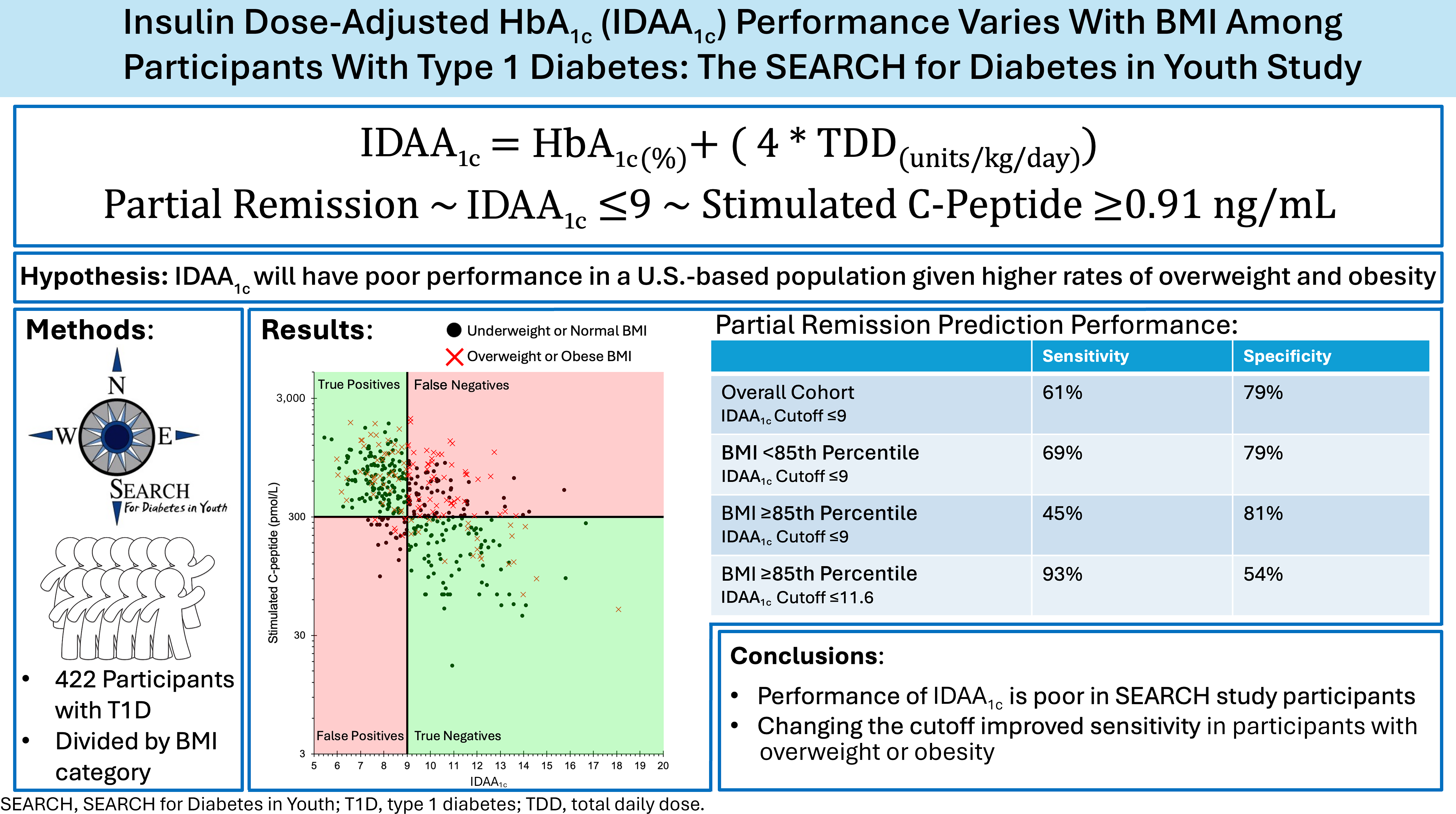
Challenges in Using Insulin Dose-Adjusted HbA1c to Identify Partial Remission in Pediatric Type 1 Diabetes: Insights from the SEARCH for Diabetes in Youth Study

Challenges in Using Insulin Dose-Adjusted HbA1c to Identify Partial Remission in Pediatric Type 1 Diabetes: Insights from the SEARCH for Diabetes in Youth Study

This study highlights the limitations of insulin dose-adjusted hemoglobin A1c (IDAA1c) ≤9 in detecting partial remission in US youth with type 1 diabetes, especially those with overweight or obesity, suggesting BMI-specific adjustments improve accuracy but reduce specificity.

Teplizumab Preserves Beta Cell Function in Youth with Newly Diagnosed Type 1 Diabetes: Insights from the PROTECT Trial Per-Protocol Analysis

Teplizumab Preserves Beta Cell Function in Youth with Newly Diagnosed Type 1 Diabetes: Insights from the PROTECT Trial Per-Protocol Analysis

The PROTECT trial's per-protocol analysis confirms teplizumab's efficacy in preserving beta cell function, reducing insulin needs, and improving glycemic control in children and adolescents newly diagnosed with stage 3 type 1 diabetes, regardless of HLA subtype or autoantibody profile.
Autoantibody Screening in Sibling-Dominant Pediatric Relatives of Type 1 Diabetes Patients: Prevalence, Determinants, and Psychological Impact

Autoantibody Screening in Sibling-Dominant Pediatric Relatives of Type 1 Diabetes Patients: Prevalence, Determinants, and Psychological Impact

This multicentre Turkish study identifies ZnT8 autoantibodies as predominant in young siblings at risk for type 1 diabetes and highlights gestational age as a protective factor, while revealing significant anxiety changes in children and parents post-screening, underscoring the need for integrated immunological and psychological care.