Introduction
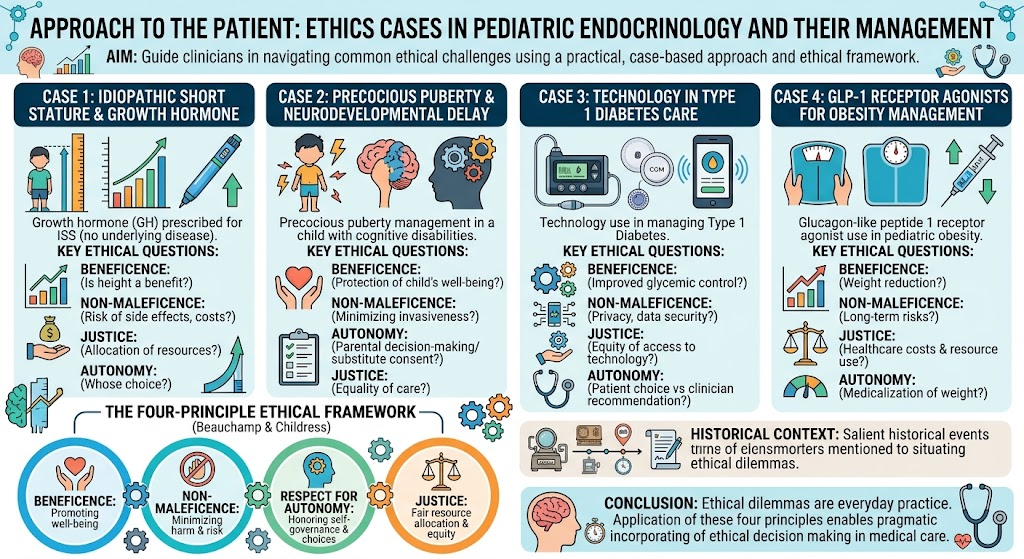
Pediatric endocrinology is an evolving field characterized by rapid advancements in diagnostic technologies and therapeutic interventions. These innovations, while beneficial, often present ethical dilemmas that challenge clinicians’ decision-making processes. The balancing act involves optimizing patient outcomes, respecting patient and family autonomy, and navigating resource limitations and societal values. This article reviews four common ethical scenarios in pediatric endocrinology, emphasizing the pragmatic application of Beauchamp and Childress’s four-principle ethical framework: beneficence, non-maleficence, respect for autonomy, and justice.