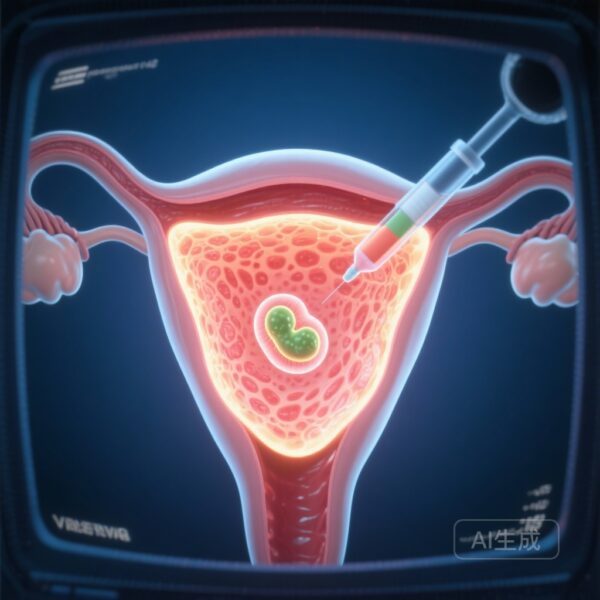
Introduction: The Persistent Dilemma of the Thin Endometrium
The pursuit of optimizing success in assisted reproductive technology (ART) has led to a granular focus on the uterine environment. Among the various biomarkers of endometrial receptivity, endometrial thickness (ET) remains one of the most debated and frequently measured parameters in clinical practice. For decades, clinicians have grappled with the ‘thin endometrium’—a condition often perceived as a major impediment to successful implantation and live birth. However, despite its ubiquitous use, the evidence defining a definitive threshold for ET has been inconsistent, often confounded by variations in embryo quality and transfer protocols.
The advent of preimplantation genetic testing for aneuploidy (PGT-A) has revolutionized the field by allowing for the selection of euploid embryos, thereby theoretically removing embryo quality as a primary variable for failure. This shift provides a unique opportunity to isolate the impact of the endometrium on reproductive outcomes. A new multicenter study by Genovese et al., recently published in Human Reproduction, seeks to provide clarity on this issue by analyzing over 30,000 euploid single embryo transfers (SET).