Introduction
Facial paralysis (FP) is a neurologic condition with significant functional implications, including impaired facial movement that affects speech, eating, and expression, and considerable psychosocial morbidity. The incidence and clinical course of FP can vary widely, with treatment modalities such as chemodenervation (botulinum toxin injections) commonly employed to manage symptoms like facial synkinesis and spasticity. Despite extensive clinical knowledge, disparities in diagnosis, comorbidities, and treatment access among different racial and ethnic groups remain underexplored. This review critically examines the study by Wang et al. which investigates racial and ethnic differences in FP diagnosis, associated comorbidities, and chemodenervation treatment utilization using a large multicenter database.
Clinical Background and Disease Burden
FP encompasses a spectrum of etiologies, from idiopathic (Bell’s palsy) to traumatic, infectious, or neoplastic causes, often leading to lasting facial asymmetry and functional disability. The disease burden includes not only physical impairment but also psychological distress due to altered appearance. The prevalence of comorbid conditions such as diabetes mellitus, hypertension, and thyroid disease may impact outcomes and management options. Moreover, socioeconomic factors and psychosocial stressors can influence disease recognition, healthcare access, and adherence to treatments.
Study Design and Methods
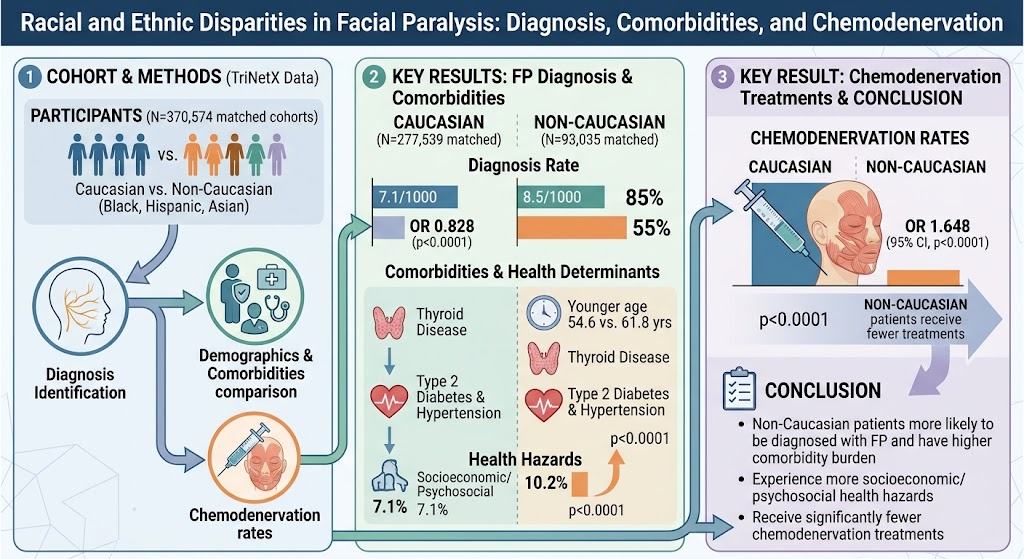
Wang et al. utilized the TriNetX real-world database to identify 370,574 patients diagnosed with FP based on International Classification of Diseases (ICD) codes. The cohort was stratified into Caucasian and non-Caucasian groups, with the latter including Black, Hispanic, and Asian patients. Age and sex matching controlled for demographic confounders. Comparative analyses assessed differences in FP diagnosis rates, patient comorbidities, socioeconomic/psychosocial risk factors, and rates of chemodenervation treatment. Odds ratios (OR) and p-values were calculated to determine statistical significance.
Key Findings
Diagnosis Rates and Demographics: Non-Caucasian patients showed a higher likelihood of FP diagnosis (8.5 cases per 1000) compared to Caucasians (7.1 cases per 1000), with an OR of 0.828 favoring non-Caucasian diagnosis (p<0.0001). Additionally, non-Caucasian FP patients were diagnosed at a younger mean age (54.6 vs. 61.8 years).
Comorbidities: There was a significantly greater prevalence of Type 2 diabetes and hypertension among non-Caucasian FP patients, which are well-known risk factors that may influence nerve health and recovery. Conversely, thyroid disease was less common in this group. The presence of psychosocial and socioeconomic hazards was also higher among non-Caucasians (10.2% vs. 7.1%, p<0.0001), revealing an increased burden of social determinants of health that may impact care.
Treatment Disparities: Despite a higher disease burden, non-Caucasian FP patients received markedly fewer chemodenervation treatments compared to Caucasians (OR 1.648, p<0.0001). Chemodenervation is a key therapeutic measure to reduce symptoms such as facial synkinesis, suggesting a treatment gap likely related to access, healthcare utilization patterns, or systemic biases.
Expert Commentary
The findings underscore complex interactions between race/ethnicity, comorbid health conditions, and healthcare delivery in FP management. The higher diagnosis rates and younger age at presentation in non-Caucasians may reflect increased risk factors, differential disease expression, or disparities in clinical detection. The elevated prevalence of metabolic comorbidities aligns with known trends in minority populations but raises concerns about their influence on FP prognosis.
Critically, the underutilization of chemodenervation therapies in non-Caucasian patients highlights a significant healthcare inequity. Potential contributory factors include limited access to specialists, financial barriers, differences in health-seeking behavior, and implicit bias in treatment recommendations. The study is strengthened by a large sample size and multicenter data but is limited by inherent retrospective database constraints and inability to capture disease severity or patient preferences.
Current guidelines support chemodenervation as an effective intervention for synkinesis, yet this study indicates persistent disparities in real-world application. Future research should focus on prospective designs to better characterize incidence across ethnicities, understand sociocultural barriers, and develop interventions to ensure equitable care delivery.
Conclusion and Future Directions
The analysis by Wang et al. reveals significant racial and ethnic disparities in FP diagnosis, associated comorbidities, and notably, in the administration of chemodenervation treatment. These findings highlight urgent needs to address social determinants of health, improve equitable access to specialized treatments, and optimize multidisciplinary care pathways.
Going forward, clinical efforts should incorporate culturally competent education, improved access to facial nerve specialists, and community outreach to mitigate these disparities. Further studies employing longitudinal designs and incorporating qualitative patient experiences are essential to unravel the underlying causes of these observed differences and to promote health equity in facial paralysis care.
References
1. Wang A, Barna AJ, Wei EX, Stephan SJ, Patel PN, Yang SF. Racial and Ethnic Disparities in Facial Paralysis: Diagnosis, Comorbidities, and Chemodenervation. Laryngoscope. 2026 Sep 29. PMID: 42810834.
2. Baugh RF, Basura GJ, Ishii LE, et al. Clinical practice guideline: Bell’s palsy. Otolaryngol Head Neck Surg. 2013;149(3_Suppl):S1-S27.
3. Moscardini A, Nicholson C, Yell M, et al. Psychosocial impact of facial paralysis on patients: a comprehensive review. Int J Oral Maxillofac Surg. 2021;50(1):11-17.
4. Peitersen E. Bell’s palsy: the spontaneous course of 2,500 peripheral facial nerve palsies of different etiologies. Acta Otolaryngol Suppl. 2002;(549):4-30.