Introduction and Context
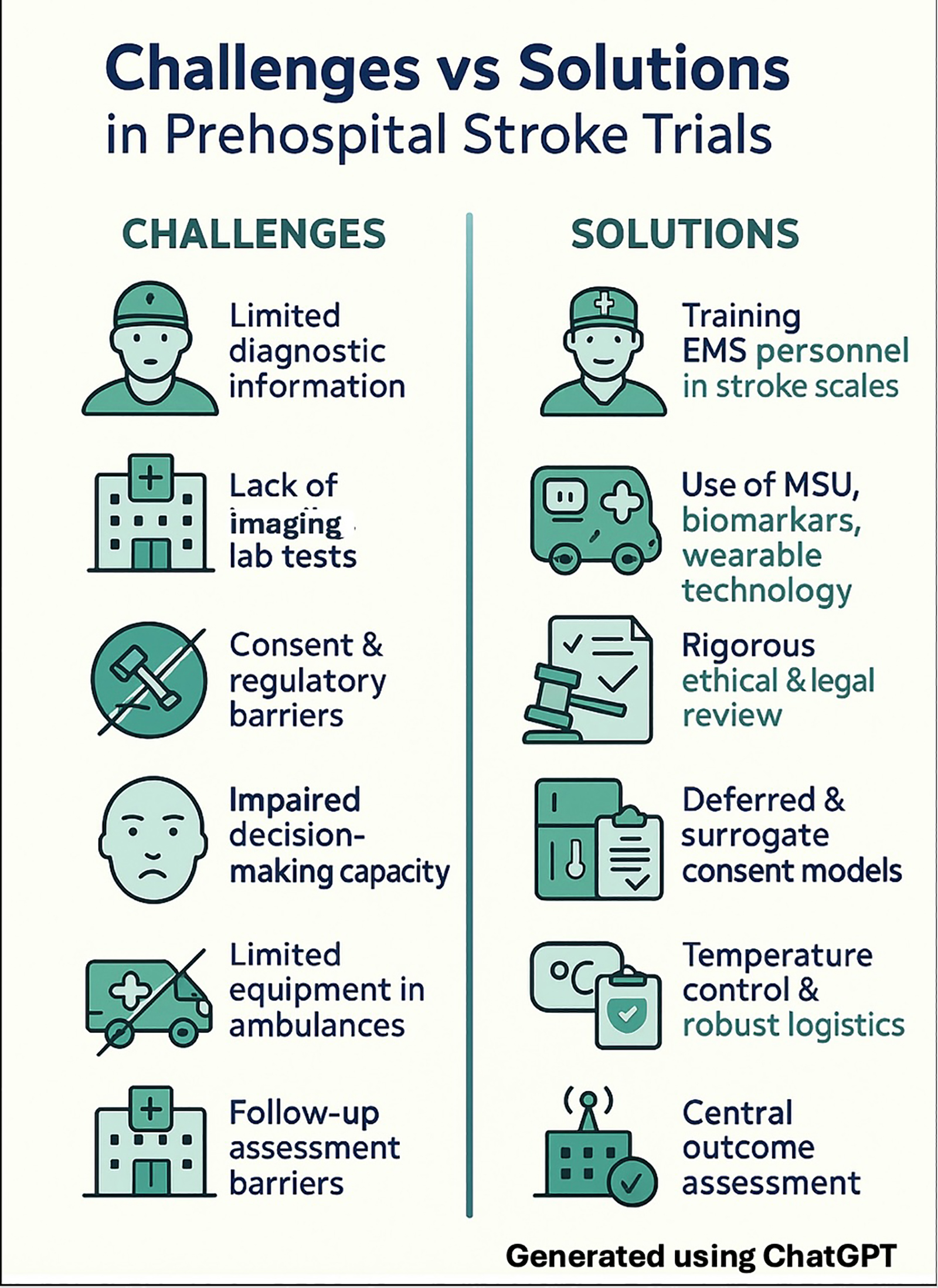
Acute ischemic stroke is one of the quintessential time-sensitive medical emergencies—every minute of ischemia costs neurons and functional outcome. Prehospital stroke research aims to push the time boundary further: delivering interventions or treatment strategies while patients are still in the ambulance, enabling ultraearly therapy and new approaches to triage. However, conducting robust randomized trials in conventional emergency medical services (EMS) brings operational, ethical, statistical, and technological challenges that differ from in-hospital research and from trials run on dedicated Mobile Stroke Units (MSUs).