Highlight
- Substantial variation exists among hospitalists regarding the treatment of asymptomatic elevated blood pressure readings in hospitalized patients.
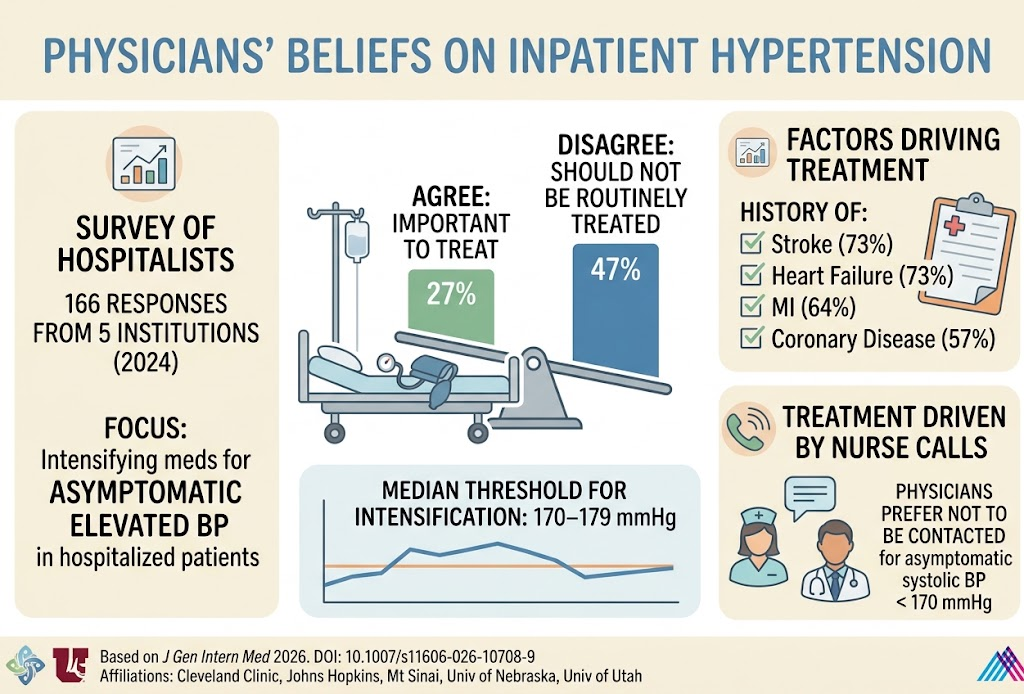
- Only 27% of surveyed physicians believed it important to routinely treat asymptomatic elevated BP during hospitalization.
- Treatment thresholds varied, with a median systolic BP threshold for intensification around 170-179 mmHg.
- Physicians were more inclined to initiate antihypertensive treatment in patients with significant cardiovascular histories such as heart failure, stroke, or coronary artery disease.
Study Background
Managing elevated blood pressure (BP) during hospitalization presents a clinical challenge. Elevated BP is commonly observed in hospitalized patients, often incidentally during routine monitoring. However, there is currently no high-quality evidence or established guidelines to direct the treatment of asymptomatic elevated BP in the inpatient setting. This uncertainty places clinicians in a difficult position regarding whether to initiate or intensify antihypertensive therapy during hospitalization, with concerns about potential overtreatment or undertreatment. Given the prevalence of hypertension as a risk factor for cardiovascular complications, understanding physicians’ beliefs and practices is critical to guide future clinical protocols and research.
Study Design
This cross-sectional survey was conducted in 2024 across five hospitals in the United States involving hospitalists who routinely manage inpatient care. Using a research team-designed questionnaire, physicians were queried about their approaches toward managing asymptomatic elevated BP readings defined as systolic BP ≥140 mmHg and <210 mmHg and/or diastolic BP ≥90 mmHg and <120 mmHg. The survey explored preferences for intensifying antihypertensive medications, treatment thresholds, and the influence of patients’ cardiac history on management decisions. Responses were analyzed descriptively, and comparisons were made across different hospital sites.
Key Findings
A total of 166 hospitalists responded, with response rates varying between 24% and 64% among the five institutions. Key results include:
- Variable Treatment Perspectives: Only 27% of respondents agreed that treating asymptomatic elevated BP in hospitalized patients is important, while 47% disagreed. This split was consistent across all sites.
- Treatment Thresholds: The median BP threshold prompting treatment intensification was a systolic BP between 170-179 mmHg, indicating that many physicians reserve intervention for higher BP levels than standard outpatient hypertension cutoffs.
- Influence of Cardiovascular Comorbidities: A majority of physicians were more likely to intensify BP treatment in patients with cardiovascular history—73% for heart failure, 73% for stroke, 64% for myocardial infarction, and 57% for coronary artery disease—reflecting perceived higher risk in these groups.
- Role of Nursing Communication: Most physicians preferred not to be contacted by nurses for asymptomatic systolic BP readings below 170 mmHg, and they acknowledged that their treatment decisions were often driven by nurse-initiated alerts.
These findings suggest substantial clinical uncertainty and variability in inpatient BP management, with many physicians prioritizing cardiovascular risk factors and symptom presence before therapy intensification.
Expert Commentary
This study shines light on a critical gap in evidence-based inpatient hypertension management. Hospitalized patients frequently present with transient BP elevations related to pain, anxiety, or acute illness rather than persistent hypertension requiring medication changes. Overtreatment risks include hypotension and associated adverse outcomes. Current inpatient BP management guidelines lack clarity, and randomized clinical trials addressing inpatient hypertension treatment thresholds and outcomes are absent.
The observed variation among hospitalists likely reflects this uncertainty and a prudent clinical approach of avoiding overtreatment unless patients have high cardiovascular risk or very elevated readings. Nurse-driven alerts influence physician responses, but the preference to avoid frequent communications about mildly elevated readings underscores the need for evidence-based protocols defining actionable thresholds.
Future research should focus on prospective clinical trials examining patient-centered outcomes related to treating asymptomatic elevated BP in hospital settings. Until then, individualized clinical judgment considering patient comorbidities remains paramount.
Conclusion
The survey reveals that nearly half of hospitalists do not support routine treatment of asymptomatic elevated blood pressure in hospitalized patients. Treatment tends to be reserved for those with significant cardiovascular disease or very high BP thresholds. These findings highlight the need for robust clinical evidence and consensus guidelines to standardize inpatient hypertension management. Clinicians must balance the risks and benefits of antihypertensive treatment in the acute hospital setting, considering patient-specific factors.
Funding and ClinicalTrials.gov
The original study did not report specific funding sources or clinical trial registration.
References
1. Pfoh ER, Harris CM, Singh M, et al. Physicians’ Beliefs About Treating Asymptomatic Elevated Blood Pressure Readings Among Hospitalized Patients. J Gen Intern Med. 2026 Sep 18. PMID: 42760462.
2. Qaseem A, Wilt TJ, Rich R, Humphrey LL, Frost J, Forciea MA. Pharmacologic Treatment of Hypertension in Adults Aged 60 Years or Older to Higher versus Lower Blood Pressure Targets: A Clinical Practice Guideline From the American College of Physicians and the American Academy of Family Physicians. Ann Intern Med. 2017;166(6):430-437.
3. Chobanian AV, Bakris GL, Black HR, et al. The Seventh Report of the Joint National Committee on Prevention, Detection, Evaluation, and Treatment of High Blood Pressure: The JNC 7 report. JAMA. 2003 May 21;289(19):2560-72.
4. Kheterpal S, O’Reilly M, Shanks AM, et al. Transient inpatient hypertension: clinical course and relationship to adverse outcomes. Hypertension. 2018;72(3):689-695.