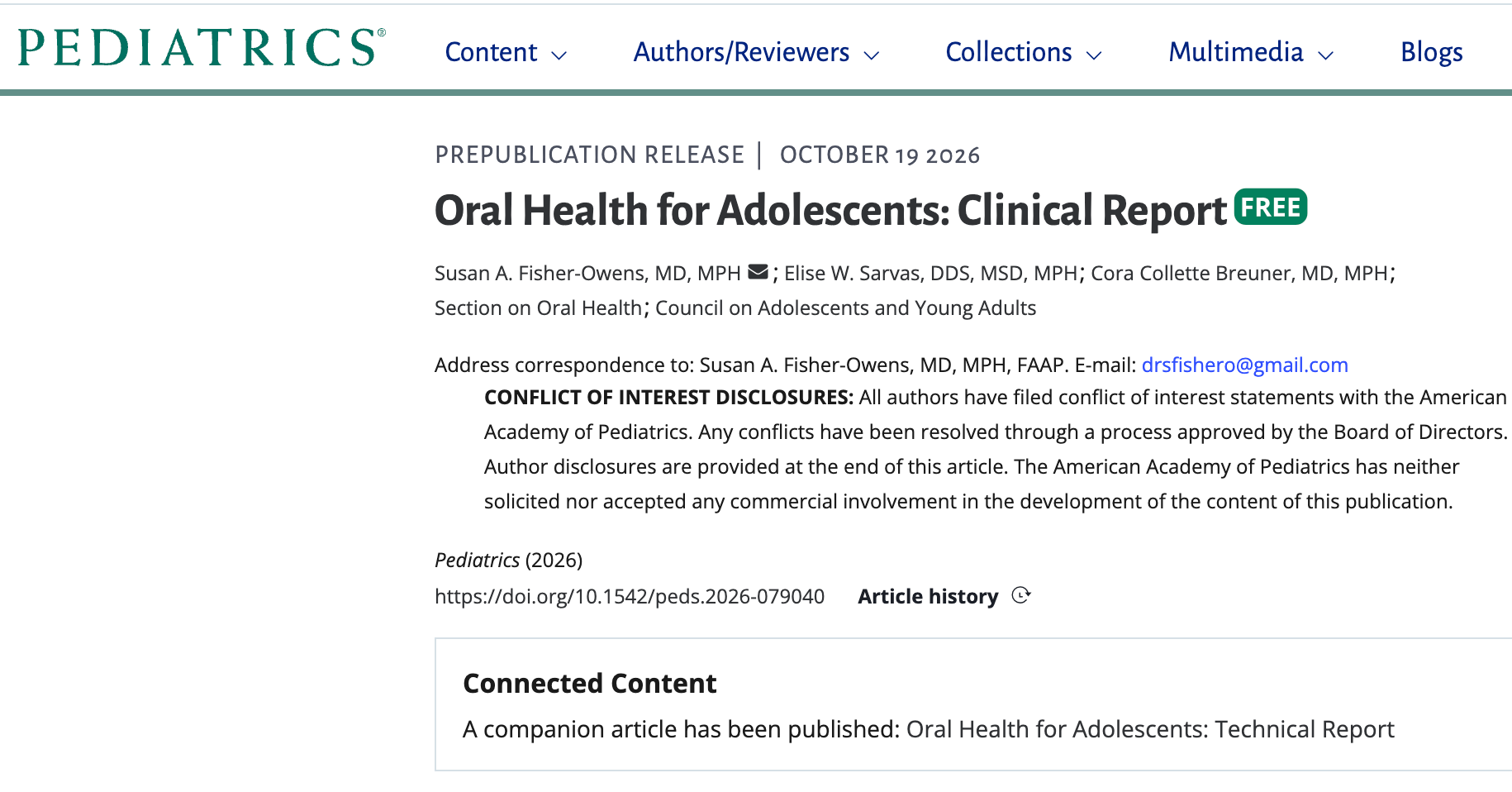
Adolescence is a period of rapid physical, behavioral and social change—and a time when oral health problems can have outsized effects on pain, school attendance, mental health and social engagement. The American Academy of Pediatrics (AAP) Section on Oral Health released a Clinical Report, “Oral Health for Adolescents,” (Fisher-Owens SA, Sarvas EW, Breuner CC, Section on Oral Health and Council on Adolescents and Young Adults. Pediatrics. 2026 Oct 19. PMID: 42894291) that specifically reframes oral health as central to adolescent preventive care. This report updates pediatric clinicians on evidence-based screening, preventive actions and management strategies tailored to adolescents, emphasizing practical practice-based skills and effective referral pathways to dental care.
Why this guidance matters now
– New and evolving adolescent risks—widespread use of e-cigarettes/vaping, energy drinks, orthodontic treatment prevalence, sports participation, and persistent disparities—require adolescent-specific guidance.
– Advances in caries-arresting therapies (e.g., silver diamine fluoride), tele-dentistry, and updated trauma and periodontal classifications increase clinical options.
– The report responds to gaps in pediatric primary care: inconsistent oral screening, unclear referral timing, and missed prevention opportunities during well visits.
Key sources and framing documents cited in the report include the AAP clinical report itself (2026), longstanding AAP Bright Futures recommendations, USPSTF and Moyer (2014) guidance on fluoride varnish for young children, the 2017 World Workshop classification for periodontal disease (Caton et al., J Periodontol 2018), CDC resources on adolescent oral health, and specialty guidance on dental trauma and sports mouthguards.
New Guideline Highlights
Major recommendations and themes
– Integrate oral health into every adolescent health supervision visit: a focused oral screening, caries and periodontal risk assessment, counseling, and clear referral plans.
– Address adolescent-specific risks: orthodontic appliances, contact sports, vaping/tobacco, disordered eating behaviors, pregnancy, and sexual practices with implications for oral health (including HPV-related oropharyngeal risks).
– Use evidence-based preventive tools: topical fluoride strategies, dental sealants when indicated, targeted use of silver diamine fluoride (SDF) for managing carious lesions when restoration is delayed or infeasible, and individualized fluoride toothpaste/rinse recommendations.
– Prevent and promptly manage dental trauma: emphasize immediate steps (e.g., reimplantation of avulsed permanent teeth) and timely referral per dental trauma guidance.
– Prioritize equity: screen for social determinants of health (SDOH) that impact access to dental care, connect families to community resources (school sealant programs, Medicaid, CHIP, community health centers), and use tele-dentistry when access is limited.
Key takeaways for clinicians
– A 60–90 second visual oral exam at every adolescent visit is high-yield and feasible.
– Document caries risk level and create a plan: preventive (fluoride, sealants), delayed restorative care, or urgent dental referral.
– Coach adolescents and families on practical behaviors: limit frequent sugar/acid exposure, encourage twice-daily fluoride toothpaste use (appropriate fluoride concentration by age), and discuss safe sports mouthguard options.
Updated Recommendations and Key Changes
What is new or emphasized compared with prior AAP statements
– Adolescent-focused detail: previous AAP guidance emphasized early childhood oral health and establishing a dental home by age 1; the 2026 report explicitly outlines adolescent issues—orthodontic hygiene, sports and facial trauma prevention, vaping impacts, sexually transmitted infections with oral manifestations, and pregnancy-related oral health.
– Expanded role for pediatric clinicians: stronger emphasis on ongoing oral risk assessment and prevention in adolescents, not only young children; clearer workflows for applying or arranging topical fluoride, brief motivational counseling to reduce vaping/tobacco, and school/sports-related prevention.
– Inclusion of SDF as a pragmatic caries management option: the report supports SDF use as a caries-arresting, interim strategy for adolescents when definitive restorative care must be delayed or where access barriers exist (consistent with dental specialty guidance).
– Tele-dentistry and collaborative care: the report encourages use of teleconsultation for triage, education and follow-up where in-person dental access is limited.
Table: Summary of major updates (concise)
– Integration of adolescent-specific risks: NEW
– Stronger pediatrician role in prevention and fluoride management: UPGRADE
– Endorsement of SDF for pragmatic caries control: NEW/CONDITIONAL
– Explicit guidance on vaping/tobacco counseling with oral health framing: NEW
– Emphasis on tele-dentistry and cross-system referral pathways: NEW
Evidence driving updates
– Expand clinical evidence for SDF effectiveness in arresting caries and its use as a noninvasive interim therapy.
– Observational and mechanistic data linking acidic beverage consumption and vaping to enamel erosion and periodontal inflammation.
– Continued public health data showing persistent disparities in adolescent dental caries and limited access to dental care in underserved populations.
Topic-by-Topic Recommendations
Oral screening and caries-risk assessment (every well visit)
– Perform a focused visual inspection of teeth, gingiva, oral mucosa and occlusion. Look for carious lesions, white spot lesions, gingival bleeding or swelling, mucosal lesions, tooth mobility and orthodontic appliance issues.
– Use a structured caries-risk assessment tool (Bright Futures/AAP oral health tools or locally adopted instruments) to stratify risk as low, moderate or high.
– Document risk level and plan: low-risk (standard preventive counseling), moderate-risk (topical fluoride, consider sealants), high-risk (urgent dental referral, consider SDF or restorative planning).
Fluoride use and topical agents
– Reinforce twice-daily fluoride toothpaste use appropriate to age and risk (pea-sized amount for adolescents implies adult-strength fluoride formulations when age-appropriate). Discuss supervised toothbrushing for those with poor technique.
– Pediatricians should discuss community water fluoridation and support access. For patients with elevated caries risk, coordinate with dental colleagues regarding in-office topical fluoride varnish or prescription-strength fluoride toothpaste.
– Silver diamine fluoride (SDF): recommend consideration of SDF as an interim, non-surgical caries-arresting strategy for adolescents when restorative care is delayed or not feasible; discuss esthetic consequences (black staining) and obtain assent.
Dental sealants
– Promote dental sealants for eligible permanent molars in adolescents per dental recommendations; pediatricians should ensure referral or linkage to programs offering sealants (school-based or dental home).
Orthodontics and appliances
– Adolescents with braces or other fixed appliances are at heightened risk for plaque accumulation and white spot lesions. Counsel on intensified oral hygiene, use of interdental cleaners, fluoride mouth rinses and frequent dental visits for hygiene and monitoring.
– For patients undergoing orthodontic treatment, coordinate care and reinforce that optimal oral hygiene reduces risk of decalcification and gingivitis.
Sports participation and facial trauma prevention
– Recommend a properly fitted mouthguard for all adolescents engaged in contact or collision sports. Custom and boil-and-bite mouthguards reduce dental injury compared with no protection.
– Provide brief counseling to coaches/parents about helmet fit, field safety and timely management of dental injuries.
Dental trauma management (brief primary-care steps)
– Avulsed permanent tooth: reimplantation by a clinician or caregiver immediately is ideal. If immediate reimplantation is not possible, store the tooth in milk, saline or a tooth-preservation kit and arrange urgent dental care. Avoid storing in water.
– Preserve avulsed primary teeth; do not reimplant deciduous teeth.
– For other traumatic injuries (fractures, luxation), urgent dental referral is indicated; the report points pediatricians to dental trauma guidelines for detailed algorithms.
Periodontal health and gingivitis
– Adolescents commonly experience gingivitis. Recommend improved oral hygiene, regular dental cleaning and cessation of tobacco/vaping.
– For signs of periodontitis (localized rapid attachment loss, deep pockets, tooth mobility), arrange expedited dental or periodontal evaluation, recognizing that aggressive forms of periodontitis can present in adolescents (reference: World Workshop 2017 classification).
Behavioral risk factors: vaping, tobacco, diet, eating disorders, sexual behaviors
– Vaping and tobacco: include oral health framing in brief cessation counseling. Discuss mucosal irritation, increased calculus, gingival inflammation and potential association with periodontal and caries risks.
– Diet: counsel to limit frequency of sugar-sweetened beverages and acidic drinks; recommend water between meals and after acidic exposures.
– Eating disorders: be alert to enamel erosion, salivary gland enlargement, mucosal trauma and caries. Avoid immediate toothbrushing after vomiting; recommend rinsing with water or neutralizing solutions and prompt referral for medical/behavioral treatment.
– Sexual behaviors and STIs: discuss HPV vaccination (strongly recommend per ACIP/CDC for adolescents beginning at age 11–12), and recognize oral manifestations of certain STIs (gonococcal pharyngitis, syphilitic lesions) as reasons for oral exam and targeted referral.
Pregnancy and adolescent pregnancy
– Pregnant adolescents require additional attention to periodontal care because of pregnancy-associated gingivitis; ensure timely dental referral and prioritize safe dental treatment during pregnancy.
Special populations
– Adolescents with special health care needs (ASHCN) have higher oral disease burden; coordinate earlier and more frequent dental care, ensure preventive fluoride regimens and consider home-based supports.
– Incarcerated, homeless or otherwise marginalized adolescents: screen for SDOH, link to community dental programs, and support school-based preventive services where available.
Follow-up and care coordination
– Document dental referrals and confirm follow-up where possible; use telephone or tele-dentistry check-ins for adolescents with barriers to care.
– Collaborate with dental colleagues to create clear triage pathways (urgent vs routine) and specify shared responsibility for preventive care (e.g., pediatricians applying topical fluoride when dental access is delayed).
Recommendation strength (practical grading for clinicians)
– Strong recommendation (supported by consistent evidence and consensus): integrate oral screening at every adolescent preventive visit; recommend fluoride toothpaste and community water fluoridation advocacy; encourage mouthguard use for sports; recommend HPV vaccination for eligible adolescents.
– Moderate recommendation (good evidence but conditional): use topical fluoride varnish or prescription fluoride for higher-risk adolescents when dental care is delayed; promote sealants via referral to dental services.
– Conditional/recommendation based on emerging evidence: use of SDF for adolescent caries arrest when restorative care is unavailable or delayed; long-term vaping effects on adolescent periodontal disease remain an area of growing but incomplete evidence.
Expert Commentary and Insights
Committee perspectives
The authors and Section on Oral Health emphasize practical, clinic-ready steps for pediatricians. Key messages from the committee include:
– Oral health is integral to overall adolescent health; pediatricians can and should address it routinely.
– Small actions—documenting an oral exam, identifying high caries risk, applying brief preventive counseling and ensuring a dental referral pathway—can reduce morbidity.
– Equity must be central: targeted efforts to increase access for low-income, rural, minority and special-needs adolescents are essential.
Areas of consensus and controversy
– Consensus: routine screening, fluoride-based prevention, mouthguards for sport and coordination with dental professionals.
– Ongoing debates: the best models for integrating preventive dental procedures into primary care for older adolescents (many existing programs focus on younger children), the appropriate role for pediatricians in delivering advanced preventive treatments (scope and reimbursement issues), and how to effectively counteract misinformation about fluoride.
Future trends and research needs
– Large pragmatic trials on SDF use in adolescents and comparative effectiveness versus restorative care.
– Longitudinal studies of vaping’s direct oral health effects in adolescents.
– Implementation research on optimal primary care–dental integration models, tele-dentistry triage effectiveness, and reimbursement strategies that sustain primary care prevention.
Practical Implications for Clinic Practice
Quick action steps for pediatric clinicians
– Add a 60–90 second oral inspection to adolescent well visits and document findings.
– Use a simple caries-risk assessment and categorize patients (low/moderate/high).
– Provide behavior counseling tied to oral health: diet, oral hygiene, vaping/tobacco cessation, safe sex and HPV vaccination.
– Ensure referral pathways to a dental home or community dental programs; know local resources (school-based sealant programs, federally qualified health centers, state Medicaid/CHIP dental benefits).
– Consider SDF when restorative access is delayed and discuss esthetic considerations with adolescents and families.
A short clinical vignette
Maya, a 15-year-old high school soccer player who is two months into fixed orthodontic treatment, comes for an annual well visit. A focused oral inspection reveals early white spot lesions on the maxillary incisors and mild interdental gingival bleeding. The pediatrician documents high caries risk (orthodontic appliance + frequent sports drinks), provides tailored counseling (stop sports drinks, use fluoride mouth rinse nightly, supervised brushing), prescribes a high-fluoride toothpaste and refers Maya urgently to her orthodontist/dentist for hygiene reinforcement and possible topical SDF application to arrest lesions until restorations are feasible. The pediatrician also confirms HPV vaccination status and advises a properly fitted mouthguard for play.
References
1) Fisher-Owens SA, Sarvas EW, Breuner CC, Section on Oral Health, Council on Adolescents and Young Adults. Oral Health for Adolescents: Clinical Report. Pediatrics. 2026 Oct 19. PMID: 42894291. URL: https://pubmed.ncbi.nlm.nih.gov/42894291/
2) Moyer VA; U.S. Preventive Services Task Force. Prevention of Dental Caries in Children From Birth Through Age 5 Years: USPSTF Recommendation Statement. Pediatrics. 2014;133(6):1102–1111. DOI:10.1542/peds.2014-1490
3) Caton JG, Armitage G, Berglundh T, et al. A new classification scheme for periodontal and peri-implant diseases and conditions—Introduction and key changes from the 1999 classification. J Periodontol. 2018;89(Suppl 1):S1–S8.
4) Centers for Disease Control and Prevention (CDC). Children’s Oral Health. https://www.cdc.gov/oralhealth/children_adolescents/index.htm
5) American Dental Association. Mouthguards. https://www.ada.org/resources/research/science-and-research-institute/oral-health-topics/mouthguards
6) American Academy of Pediatric Dentistry. Guideline on silver diamine fluoride use for pediatric patients. AAPD Clinical Guidelines. (See AAPD resources; SDF guidance widely referenced by pediatric dental bodies.) https://www.aapd.org
7) International Association of Dental Traumatology (IADT). Guidelines for the management of traumatic dental injuries (updated guidance available through Dental Traumatology and IADT website). https://www.iadt-dentaltrauma.org
8) Centers for Disease Control and Prevention. HPV Vaccination Information for Clinicians. https://www.cdc.gov/vaccines/vpd/hpv/hcp/index.html
9) CDC. Community dental sealant programs—A Preventive Service. https://www.cdc.gov/oralhealth/dental_sealant_program/index.htm
Note: The AAP clinical report (Fisher-Owens et al., 2026) synthesizes these and other sources into practical recommendations for pediatric clinicians.
Closing
Oral health matters throughout life, and adolescence is a critical window for preventive action. The 2026 AAP Clinical Report on Oral Health for Adolescents gives pediatric clinicians actionable steps to screen, prevent and coordinate care—bridging primary care and dental services to reduce pain, missed school and long-term oral disease. Small, sustained changes in preventive practice can yield meaningful benefits for adolescent patients.

 By
No Comments