Highlight
– Nadir prolactin-guided cabergoline therapy achieves 100% biochemical normalization in prolactinoma patients.
– Individualized dosing safely enables durable tumor remission and favorable pregnancy outcomes.
– Prophylactic tumor debulking via medical therapy minimizes gestational tumor enlargement risks.
– No cardiac valvulopathy or impulse control disorders observed with long-term cabergoline treatment.
Study Background
Prolactinomas are the most common pituitary adenomas, characterized by excessive secretion of prolactin, which causes infertility, menstrual disturbances, and galactorrhea. Medical therapy with dopamine agonists, primarily bromocriptine and cabergoline, is the first-line treatment aiming for tumor shrinkage and normalization of prolactin levels. However, bromocriptine-resistant or -intolerant cases pose clinical challenges, particularly for women seeking pregnancy, where tumor enlargement risks and treatment safety must be carefully managed. Achieving sustained remission without compromising gestational safety is an important yet unmet clinical goal.
Study Design
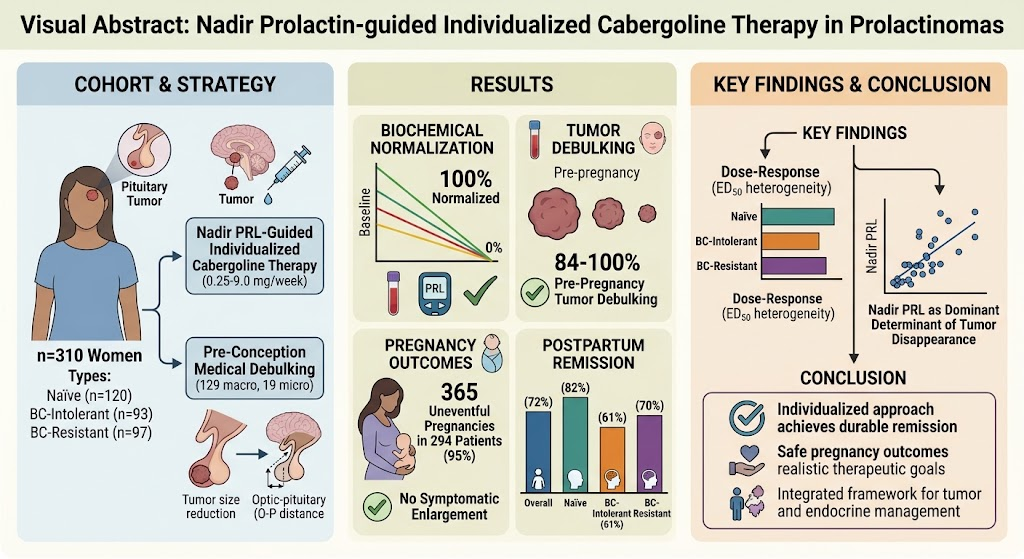
This prospective cohort study involved 310 women with prolactinomas stratified by prior treatment status: 97 bromocriptine-resistant, 93 bromocriptine-intolerant, and 120 treatment-naïve patients. Tumor size ranged from microprolactinomas (less than 10 mm) to large macroprolactinomas (≥20 mm). The intervention was individualized-dose cabergoline therapy titrated to maintain the nadir (lowest) prolactin concentration within the normal reference range, optimizing endocrine control and tumor response. For patients with macroprolactinomas at risk of gestational tumor enlargement (129 macro and 19 microprolactinomas), cabergoline was used prophylactically to achieve medical debulking, restoring the optic-pituitary (O-P) distance to more than 5.0 mm before conception. Cabergoline was discontinued immediate upon pregnancy confirmation to ensure fetal safety. Outcome measures included biochemical normalization, tumor reduction, pregnancy outcomes, remission rates postpartum, and treatment safety over longitudinal follow-up.
Key Findings
Biochemical and Tumor Response: Cabergoline therapy achieved 100% normalization of prolactin levels across all patient subsets. Tumor debulking was highly effective with 84% to 100% reduction in tumor size prepregnancy, including substantial shrinkage of large macroprolactinomas. The individualized dosing approach revealed marked heterogeneity in cabergoline sensitivity: effective median doses (ED50) ranged from 0.66 mg/week in bromocriptine-intolerant versus 3.71 mg/week in bromocriptine-resistant patients, demonstrating the necessity for personalized therapy.
Pregnancy Outcomes: Among 294 women, 365 pregnancies were documented with 95% uneventful courses. No patients experienced symptomatic tumor enlargement during pregnancy, indicating that preconception tumor control and immediate cessation of cabergoline can mitigate gestational risks.
Remission Rates: At postpartum follow-up, an overall 72% remission rate was documented, with rates varying by patient subgroup: treatment-naïve (82%), bromocriptine-resistant (70%), and bromocriptine-intolerant (61%). Remission rates were comparable between microprolactinomas (73%) and macroprolactinomas (72%). Notably, multivariate analysis highlighted that lower nadir prolactin levels predicted tumor disappearance, particularly in patients without visible residual tumors, underscoring the importance of prolactin as a biomarker for remission.
Safety Profile: Longitudinal follow-up showed no instances of cardiac valvulopathy or impulse control disorders, adverse effects sometimes associated with dopamine agonists, reinforcing the safety of this individualized dosing approach.
Expert Commentary
This study elegantly demonstrates the feasibility and clinical value of titrating cabergoline dosing based on nadir prolactin levels to optimize therapeutic outcomes in prolactinoma patients planning pregnancy. The integration of medical tumor debulking as a prophylactic measure to preserve optic-pituitary anatomy before conception is a pragmatic strategy aligned with current endocrinology and neuro-ophthalmology principles. It addresses the primary clinical concern of gestational tumor expansion without exposing the fetus to prolonged dopamine agonist exposure. The heterogeneous dose-response underscores the inadequacy of one-size-fits-all dosing and calls for routine prolactin monitoring to guide therapy.
While the large cohort and prospective design strengthen the evidence, longer-term surveillance of postpregnancy remission durability and possible rare adverse events remains warranted. Additionally, this approach may need adaptation in resource-limited settings where frequent biochemical monitoring is less accessible. Comparative studies with other dopamine agonists, or surgical approaches in resistant cases, would further elucidate optimal individualized management paradigms.
Conclusion
Nadir prolactin-guided individualized cabergoline therapy represents an evidence-based, clinically actionable framework for prolactinoma management that safely achieves durable tumor remission and favorable pregnancy outcomes. By integrating rigorous endocrine target achievement, anatomical risk reduction, and tailored dosing strategies, this approach advances treatment goals from mere biochemical control to comprehensive disease eradication and reproductive safety. These findings support incorporation of nadir prolactin monitoring into routine clinical practice for patients with prolactinomas, especially women desiring pregnancy.
Funding and Clinicaltrials.gov
The original study did not specify funding sources or clinical trial registration information.
References
Miki N, Ono M, Izumi SI, Hori T, Abe K, Kawamata T. Nadir Prolactin-guided Individualized Cabergoline Therapy Achieves Durable Remission and Safe Pregnancy in Prolactinomas. J Clin Endocrinol Metab. 2026 Oct 1:dgag406. doi: 10.1210/clinem/dgag406. Epub ahead of print. PMID: 42816952.