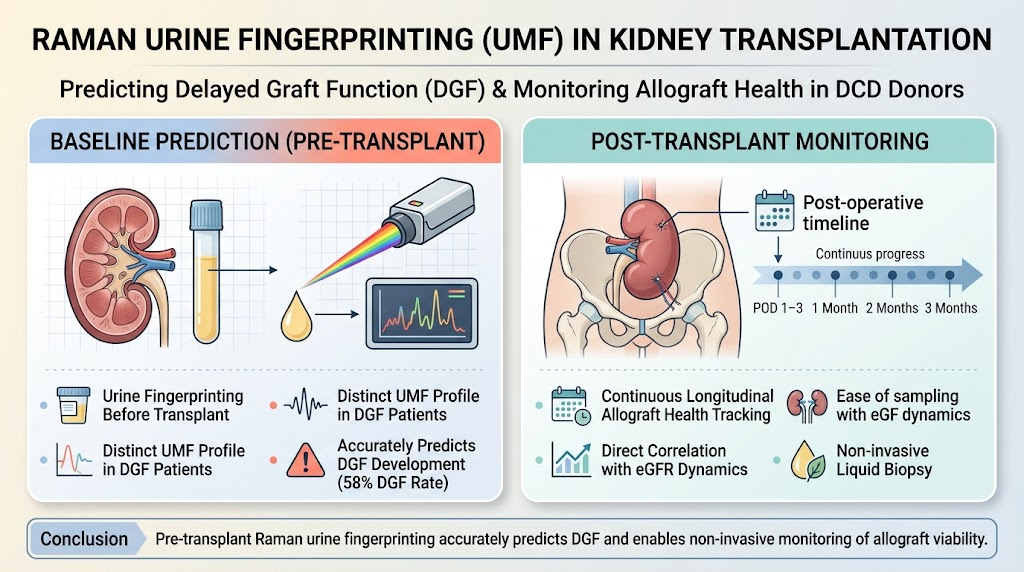
末期腎不全に対しては、腎移植が依然として第一選択の治療であり、透析と比較して生存率および生活の質を大きく改善する。しかし、遅発性移植片機能不全(DGF)—一般に移植後1週間以内に透析を要する状態と定義される—は、特に循環死後臓器提供(donation after circulatory death、DCD)において高頻度にみられる合併症である。DGFは、急性拒絶反応、慢性移植片機能障害、および移植片生着率の低下と関連する。現在、移植前の腎移植片の質評価は主としてドナーの臨床因子と病理組織学的所見に依存しているが、これらは精度に限界があり、侵襲的でもある。移植後のモニタリングには血清クレアチニンと臨床経過観察が用いられるが、合併症の早期発見はなお困難である。したがって、腎移植片の状態を予測・監視できる、非侵襲的、迅速、かつ信頼性の高いバイオマーカー法が求められている。
Raman分光法は、生体試料の分子フィンガープリントを捉える振動分光技術である。これを用いた尿分子フィンガープリンティング(UMF)は、侵襲的手技を必要とせず、移植片障害や機能に関連する生化学的変化を反映し得るため、有望である。
1. Orlando G, Senger RS, Issa AS, et al. Raman Urine Fingerprinting to Predict DGF, Assess Renal Allograft Quality, and Monitor Its State of Health. Clinical Transplantation. 2026;40(10):e70716. doi:10.1111/ctr.70716
2. Yarlagadda SG, Coca SG, Formica RN Jr, Poggio ED, Parikh CR. Association between delayed graft function and allograft and patient survival: a systematic review and meta-analysis. Nephrol Dial Transplant. 2009;24(3):1039-1047.
3. Matignon M, Lerut E, Rossert J. Delayed graft function: definitions, outcomes and impact on long- and short-term kidney transplant survival. Transplantation Reviews. 2021;35(1):100585.
4. Hernandez-Vargas P, et al. Urine metabolomics analysis by Raman spectroscopy: a potential non-invasive technique in kidney transplant monitoring. Biosensors. 2020;10(4):38.