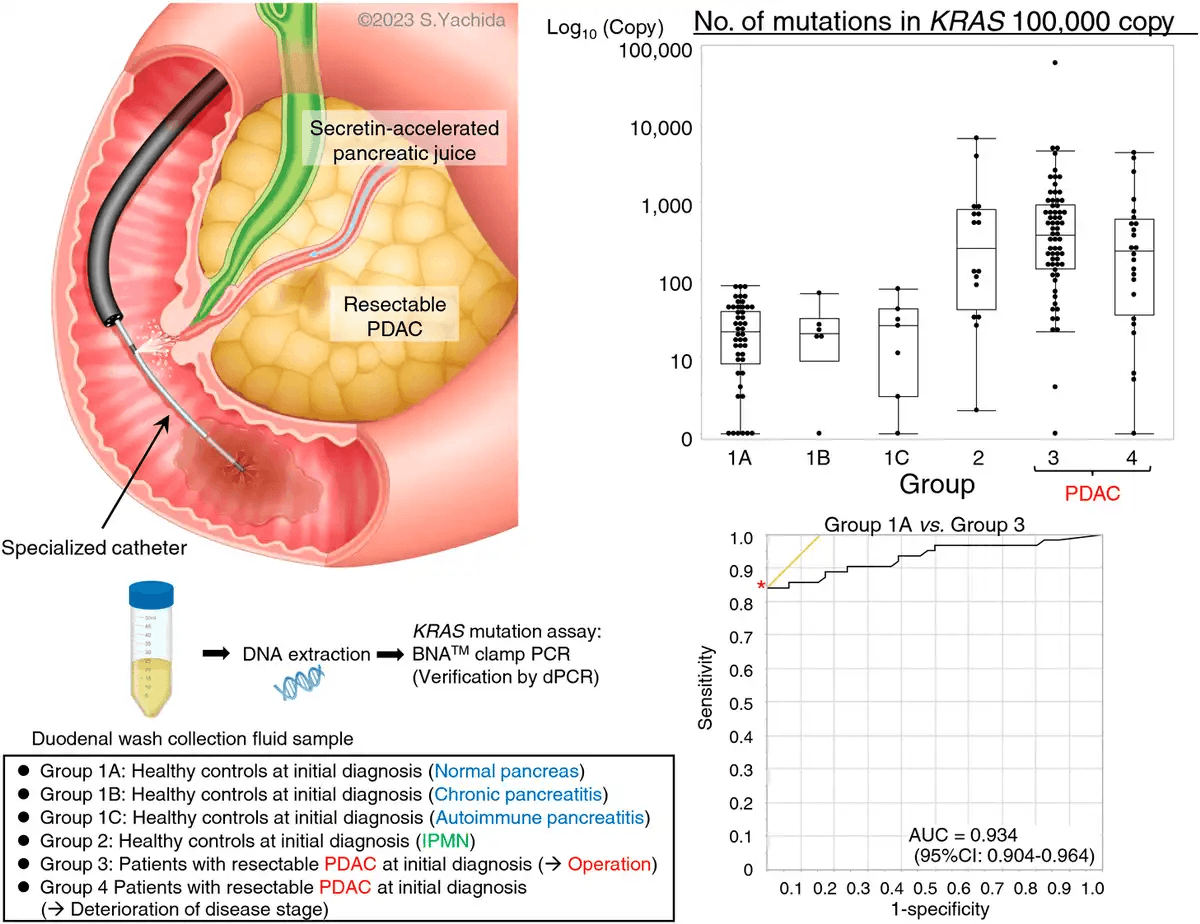
膵液中KRAS変異の検出に向けた初期の試みは、十二指腸から採取したセクレチン刺激下膵液に対する変異解析の実現可能性を示した。Farrellら(2015年)による重要な研究では、膵疾患リスクが異なる272例を対象に、膵癌患者では73%、スクリーニングを受けた高リスク者では50%にKRAS変異が認められ、対照群の19%と比較して高率であった。この研究は、KRAS変異が早期バイオマーカーとなり得ることを示す一方、対照群でも変異検出がみられたことから、画像診断では捉えられない微小な膵上皮内腫瘍(pancreatic intraepithelial neoplasia, PanIN)病変を反映している可能性が示唆された。
既報を踏まえ、Yachidaらによる最近の多施設前向き研究(2025年)は、セクレチン刺激を伴うEGDを受けた169例を評価した。著者らは、切除可能なPDAC患者89例および対照75例の十二指腸洗浄液に対し、高感度な変異検出法を適用した。その結果、受信者動作特性曲線下面積(receiver operating characteristic area under the curve, AUC)は0.934、感度は83.1%、特異度は100%であった。この成績は従来の血清バイオマーカーを上回り、KRAS変異の感度は血清CEAおよびCA19-9より有意に高かった(P <0.0001)。これらの血清マーカーは、特に早期病変において偽陽性率および感度の低さが課題である。
Yachida S, Yoshinaga S, Shiba S, et al. KRAS Mutations in Duodenal Lavage Fluid After Secretin Stimulation for Detection of Pancreatic Cancer. Ann Surg. 2025;284(4):e62-e72. PMID: 39902566.
Farrell JJ, Brand RE, Kastrinos F, et al. KRAS and guanine nucleotide-binding protein mutations in pancreatic juice collected from the duodenum of patients at high risk for neoplasia undergoing endoscopic ultrasound. Clin Gastroenterol Hepatol. 2015 May;13(5):963-9.e4. PMID: 25481712.