Introduction
Frailty represents a critical concern in clinical medicine, characterized by diminished physiological reserve and increased vulnerability to adverse health outcomes, including hospitalization, disability, and mortality. Traditional frailty assessments, such as the Hospital Frailty Risk Score (HFRS), rely on administrative and clinical episodic data that may insufficiently capture dynamic functional decline. Wearable technology offers an unprecedented opportunity to augment these assessments through objective, continuous, and passive monitoring of mobility, activity patterns, and physiological signals in real-world settings.The article by Patel et al. outlines the prospects and challenges of integrating wearable-derived data with established risk stratification tools like the HFRS. The fusion of continuous monitoring data with validated predictive models promises earlier detection of frailty trajectories and personalized interventions. However, realizing this potential demands confronting inherent device measurement biases and algorithmic inequities that risk exacerbating health disparities, particularly among racially minoritized populations. This article critically interprets the content of Patel et al., contextualizing the clinical implications and methodological considerations inherent in extending frailty assessment via wearable technologies.
Background and Disease Burden
Frailty affects a growing segment of the aging population worldwide, imposing substantial clinical and socioeconomic burdens through heightened risks of falls, hospitalization, disability, and mortality. Early and accurate identification of frailty is essential to implement interventions that slow decline and improve outcomes. The HFRS, derived from routinely collected hospital administrative data, stratifies patients by frailty risk but is limited by episodic data capture and indirect proxy measures of physiological function.Continuous, objective assessments through wearable devices—capturing metrics such as step count, gait speed, heart rate variability, and sleep quality—offer the opportunity to monitor frailty in real time within a patient’s natural environment. This approach aligns with a paradigm shift toward precision medicine and function-centered care. However, widespread adoption must carefully consider validation across demographically diverse populations to avoid perpetuating systemic biases in digital health tools.
Wearable-Derived Data and Hospital Frailty Risk Score Integration
Patel and colleagues advocate for extending the HFRS framework through integration with wearable-derived data. Such integration involves combining clinical risk factors with continuous physiological and functional metrics captured unobtrusively. Indicators like reduced mobility patterns and alterations in heart rate dynamics can signal early functional decline preceding clinical events.Machine learning and AI algorithms can analyze multi-dimensional sensor data to enhance predictive accuracy. Nonetheless, the algorithms must be trained and calibrated with datasets representative of the target populations to minimize biases. For example, skin tone and physiological variability influence sensor accuracy, and socio-economic factors impact device accessibility, potentially skewing data representativeness.
Approaches must incorporate equity-by-design principles, including transparent validation across racial, ethnic, age, and socioeconomic strata; bias detection; and continuous post-deployment auditing to ensure robust and fair performance of frailty assessments across diverse groups.
Challenges: Bias and Inequities in Measurement and Algorithms
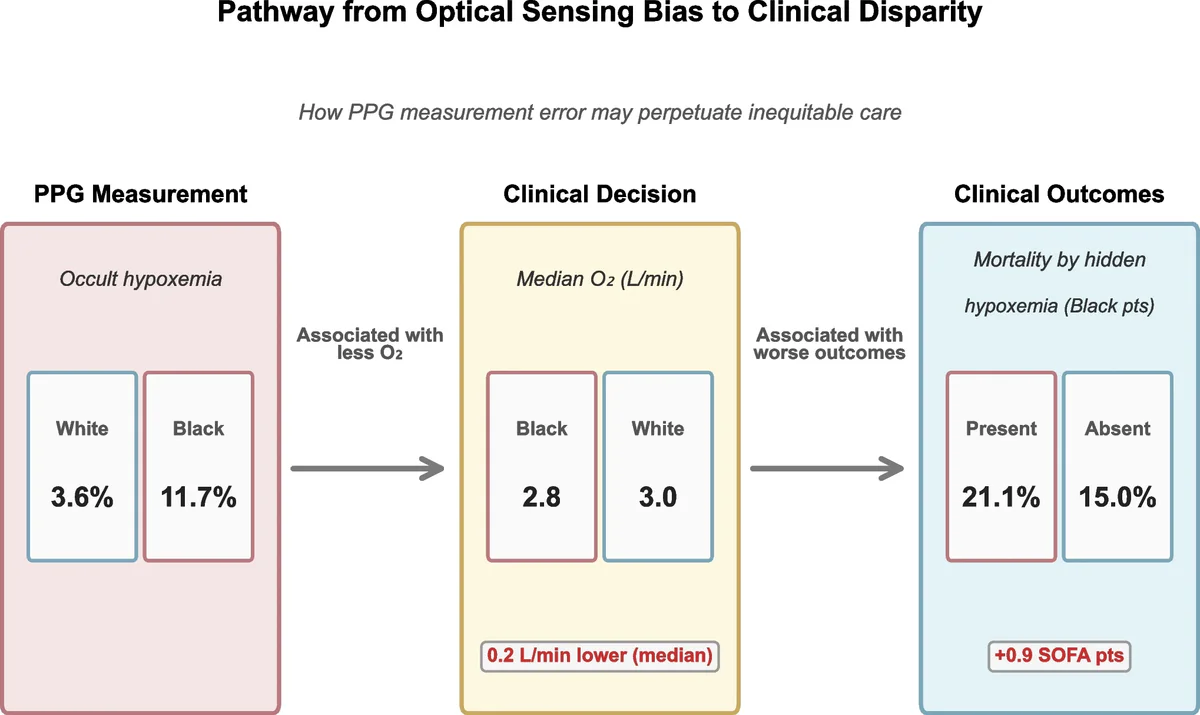
Wearable devices often exhibit measurement biases related to sensor technology limitations, such as photoplethysmography inaccuracies in individuals with darker skin pigmentation or non-uniform device adherence. Algorithmic models trained predominantly on data from homogenous populations risk reduced generalizability and may inadvertently reinforce disparities in triage, risk scoring, and clinical decision-making.Furthermore, disparities in access to wearable devices and digital literacy create barriers to equitable monitoring. Patients from disadvantaged backgrounds may lack access to these technologies, leading to underrepresentation in datasets and subsequent model training.
To confront these challenges, Patel et al. argue for governance frameworks that emphasize inclusive design, equitable device distribution, and local validation of AI models. Integrating clinical relevance in algorithmic targets by focusing on functional status rather than isolated biometric data enhances clinical translation and patient-centered utility.
Practical Applications and Future Directions
Wearable-enhanced frailty dashboards could assist clinicians in dynamic risk stratification, enabling personalized interventions such as tailored physiotherapy, nutritional support, or social service engagement. Integrating alerts for functional decline into clinical workflows facilitates proactive management to prevent adverse outcomes.Continued research is needed to refine sensor technologies, develop bias-mitigated analytic algorithms, and evaluate clinical impact through prospective validation studies. Health systems must invest in equitable infrastructure to overcome digital divides and enable broad implementation.
Ultimately, a synergistic framework combining wearable data with validated clinical scoring systems like HFRS, governed by equity-focused oversight, holds promise for advancing precision frailty care globally.
Conclusion
Integrating wearable-derived continuous data streams with the Hospital Frailty Risk Score signifies a transformative advance in frailty assessment and management. However, ensuring equitable and unbiased deployment requires rigorous validation, transparency, continuous monitoring, and equitable access initiatives. By centering equity-by-design principles alongside technical integration, health systems can harness AI-augmented frailty monitoring to improve early detection, tailor interventions, and reduce health disparities across diverse populations. This alignment of technological innovation with social responsibility fosters precision geriatrics that prioritizes function, quality of life, and health equity for all patients.Specialty calculators
For clinical reference; use professional judgment.