Highlight
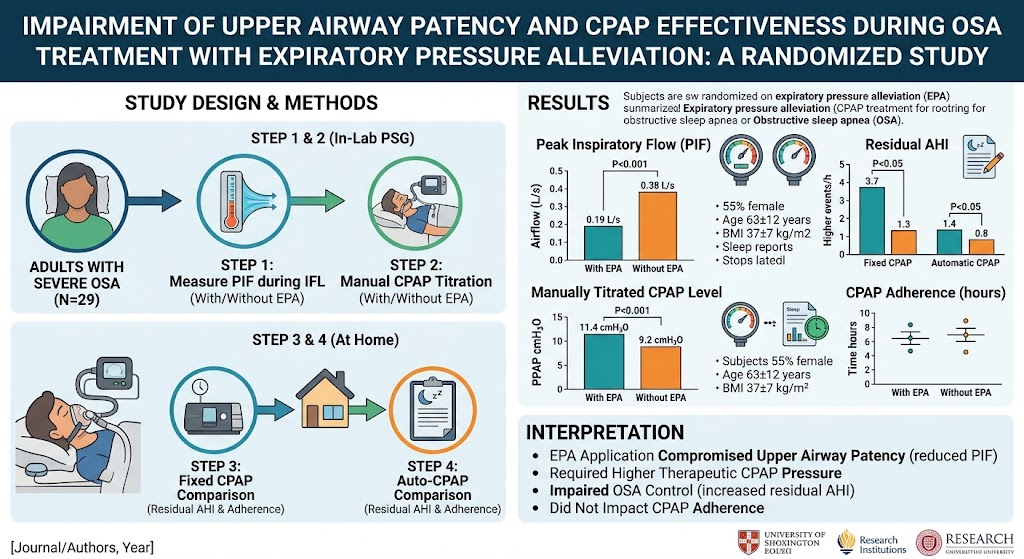
– Expiratory pressure alleviation (EPA) in CPAP therapy reduces peak inspiratory flow and compromises upper airway patency in severe obstructive sleep apnea (OSA) patients.
– EPA requires higher therapeutic CPAP pressures to maintain airway patency and control apnea-hypopnea events.
– Residual apnea-hypopnea index (AHI) is significantly higher with EPA than without during both fixed and automatic CPAP settings.
– CPAP adherence is unaffected by the use of EPA despite impaired airway patency and OSA control.