Highlight
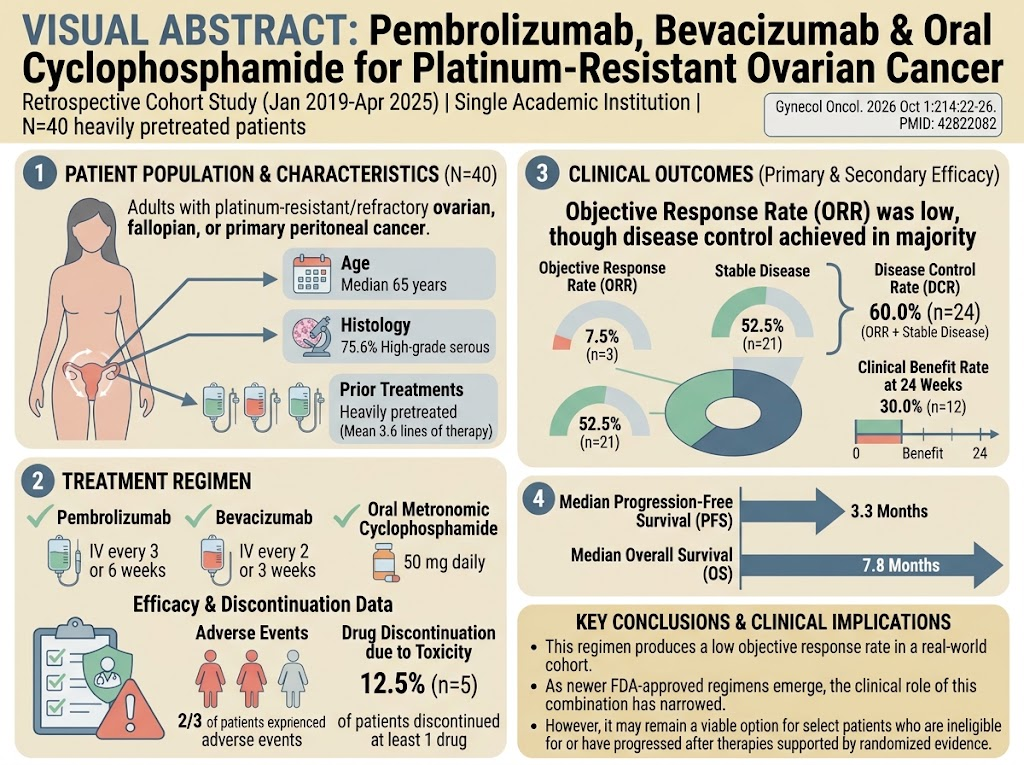
- The combination of pembrolizumab, bevacizumab, and oral metronomic cyclophosphamide demonstrated a low objective response rate of 7.5% in heavily pretreated platinum-resistant ovarian cancer patients.
- A disease control rate of 60% with a clinical benefit rate of 30% at 24 weeks suggests potential disease stabilization despite limited tumor shrinkage.
- Median progression-free survival was 3.3 months, and overall survival was 7.8 months, reflecting the aggressive nature of this highly refractory cancer subgroup.
- Tolerability was acceptable, with two-thirds of patients experiencing adverse events but only 12.5% discontinuing therapy due to toxicity.
Study Background
Ovarian cancer remains one of the deadliest gynecologic malignancies worldwide, with high-grade serous carcinoma constituting the most common and aggressive histologic subtype. Despite initial responses to platinum-based chemotherapy, approximately 20-30% of patients develop platinum-resistant or refractory disease, defined by progression within six months of platinum therapy. This subgroup faces limited therapeutic options and poor prognosis, highlighting an unmet clinical need for effective treatments.
Immune checkpoint inhibitors such as pembrolizumab, which block PD-1 signaling to enhance anti-tumor immunity, have shown efficacy in some solid tumors but only marginal or variable effects in ovarian cancer. Bevacizumab, an anti-VEGF antibody, has established benefits in ovarian cancer by inhibiting angiogenesis. Combining these agents with oral metronomic cyclophosphamide—a chemotherapy administered at low, frequent doses to inhibit tumor angiogenesis and modulate immune responses—has been proposed to potentially enhance therapeutic efficacy in platinum-resistant ovarian cancer.
Study Design
This retrospective single-center study evaluated the real-world clinical efficacy and safety of pembrolizumab in combination with bevacizumab and oral metronomic cyclophosphamide in 40 patients treated from January 2019 through April 2025. Eligible patients had platinum-resistant or refractory epithelial ovarian, fallopian tube, or primary peritoneal carcinoma and were heavily pretreated with a mean of 3.6 prior systemic therapies.
The primary endpoint was objective response rate (ORR) assessed by RECIST criteria. Secondary endpoints included disease control rate (DCR: sum of complete response, partial response, and stable disease), clinical benefit rate (CBR) at 24 weeks, progression-free survival (PFS), overall survival (OS), and treatment discontinuation due to toxicity.
Key Findings
The cohort had a median age of 65 years and predominantly high-grade serous histology (75.6%). Treatment yielded an ORR of 7.5%, with only a small fraction of patients achieving measurable tumor shrinkage. However, 52.5% attained stable disease, leading to a DCR of 60%. This suggests that while deep tumor responses were rare, a significant proportion of patients experienced disease stabilization, which can be clinically meaningful in resistant disease settings.
The clinical benefit rate at 24 weeks was 30%, indicating that nearly one-third of patients maintained disease control beyond six months. Median PFS was 3.3 months (95% CI not reported), and median OS was 7.8 months, consistent with expectations for advanced platinum-resistant ovarian cancer.
Safety analysis showed that approximately two-thirds of patients experienced adverse events commonly associated with immunotherapy, antiangiogenic therapy, or low-dose chemotherapy. Treatment discontinuation due to toxicity occurred in 12.5% of patients, reflecting acceptable tolerability given the heavily pretreated population and combination regimen.
Expert Commentary
These results underline the challenges in treating platinum-resistant ovarian cancer, a population with few therapeutic breakthroughs. The low ORR aligns with other trials of immune checkpoint inhibitors in this disease, where meaningful tumor regression is infrequent. The relatively high rate of stable disease and modest PFS benefit may reflect some disease control attributable to antiangiogenic and immunomodulatory effects of the combination regimen.
Given the heterogeneous tumor microenvironment and low immunogenicity in ovarian cancer, it is plausible that only a subset of patients derive significant benefit from this combination. Biomarker-driven patient selection may improve outcomes in future studies.
It is noteworthy that newer FDA-approved regimens, including PARP inhibitors and antibody-drug conjugates, have expanded the therapeutic arsenal for platinum-resistant ovarian cancer. Consequently, the role of pembrolizumab plus bevacizumab and oral cyclophosphamide is likely to be limited to patients without indications for or who have failed these established therapies.
Limitations of the study include its retrospective design, single-center setting, small sample size, and absence of a comparator arm. Prospective randomized trials remain essential to robustly define efficacy and optimal patient selection for this combination.
Conclusion
In this real-world cohort of heavily pretreated patients with platinum-resistant ovarian cancer, the combination of pembrolizumab, bevacizumab, and oral metronomic cyclophosphamide demonstrated limited objective tumor responses but meaningful disease stabilization in a substantial subset. The regimen was generally well tolerated with manageable toxicity.
With the advent of newer FDA-approved agents for platinum-resistant ovarian cancer, the clinical utility of this regimen may be confined to select patients who are ineligible for or who have progressed after standard therapies supported by randomized evidence. Future studies should focus on predictive biomarkers and integration within evolving treatment algorithms to optimize outcomes in this challenging disease setting.
References
Smith G, Petty A, Krivanek K, Rose PG. Real-world clinical efficacy of pembrolizumab in combination with bevacizumab and oral metronomic cyclophosphamide in heavily pretreated platinum-resistant ovarian cancer. Gynecol Oncol. 2026 Oct 1;214:22-26. doi: 10.1016/j.ygyno.2026.09.017. Epub ahead of print. PMID: 42822082.