Highlight
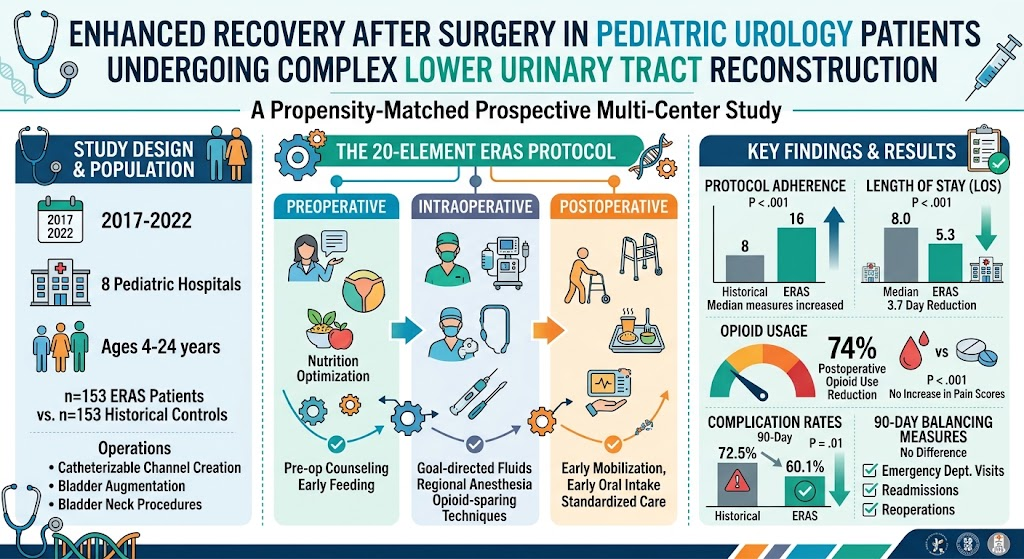
This multicenter prospective study evaluated the implementation of Enhanced Recovery After Surgery (ERAS) protocols in children undergoing complex lower urinary tract reconstruction. Key findings included a doubling of protocol adherence, a 33% reduction in length of hospital stay, a 74% reduction in postoperative opioid use without increased pain, and a significant decrease in postoperative complications. Crucially, these improvements did not increase emergency department visits, readmissions, or reoperations within 90 days.
Study Background
Complex lower urinary tract reconstruction in pediatric patients—often involving catheterizable channel creation, bladder augmentation, and bladder neck procedures—are extensive surgeries associated with prolonged hospitalization, significant postoperative pain, and high complication rates. Traditionally, these children face challenges related to recovery, including opioid exposure, lengthy hospital stays, and variable perioperative care. Enhanced Recovery After Surgery (ERAS) is a multidisciplinary, evidence-based approach designed to standardize perioperative management, minimizing surgical stress and enhancing recovery. While ERAS programs have demonstrated improved outcomes in adult surgical populations, their adoption remains limited in pediatric urology, with sparse data on efficacy and safety.
Study Design
The Pediatric Urology Recovery After Surgery Endeavor (PURSUE) study was a multicenter prospective cohort study involving 8 pediatric hospitals across the United States, conducted from 2017 to 2022. It enrolled patients aged 4 to 24 years undergoing complex lower urinary tract reconstruction procedures including catheterizable channel creation, bladder augmentation, and bladder neck surgeries. Patients with unmanaged neurogenic bowel conditions were excluded to minimize confounding from bowel-related complications.
The intervention comprised implementation of a 20-element ERAS protocol spanning preoperative, intraoperative, and postoperative phases. These components included standardized analgesia with multimodal opioid-sparing regimens, optimized fluid management, early mobilization, nutritional support, and patient/family education. ERAS adherence was tracked, with a goal adherence rate of ≥70%. Prospectively enrolled patients were propensity matched with historical controls who underwent similar surgeries in the 5 years preceding ERAS protocol adoption at each center. Patients were followed longitudinally for at least 1 year postoperatively.
Primary endpoints were ERAS protocol compliance rates. Secondary clinical outcomes included length of hospital stay, opioid consumption quantified postoperatively, pain scores, rates of complications within 90 days, and balancing metrics such as emergency department visits, readmissions, and reoperations.
Key Findings
The study analyzed outcomes for 153 ERAS-implemented patients matched 1:1 with 153 historical controls. The median age was comparable between groups (10.2 vs 10.4 years; P=0.47), ensuring demographic balance.
Protocol Adherence: Median adherence to ERAS measures doubled from a baseline of 8 (historical controls) to 16 (ERAS group) out of 20 elements (P<.001), reflecting successful implementation and clinical integration of the protocol.
Length of Stay (LOS): Median postoperative LOS decreased significantly from 8.0 days in the control cohort to 5.3 days in the ERAS group (P<.001), indicating accelerated recovery and discharge readiness without compromising safety.
Opioid Usage and Pain Control: Postoperative opioid consumption was reduced by 74% following ERAS implementation. Importantly, this substantial decrease in opioid administration did not correspond with an increase in maximum recorded pain scores, demonstrating effective analgesia with opioid-sparing strategies.
Complications and Safety Measures: The overall complication rate declined from 72.5% in controls to 60.1% with ERAS (P=0.01). Crucially, no statistically significant differences were observed in 90-day emergency department visits, hospital readmissions, or reoperations, supporting the safety and balance of the ERAS approach.
Expert Commentary
The PURSUE study represents a landmark effort in applying ERAS principles to complex pediatric urology surgeries, a domain historically characterized by heterogeneous perioperative management. The impressive adherence rates reveal institutional commitment and feasibility even across multiple centers. Reduced LOS and opioid use align with adult ERAS literature, highlighting pediatric applicability. Lower complication rates may relate to standardized care pathways minimizing variation.
Nevertheless, some limitations merit discussion. Propensity matching to historical controls, while pragmatic, may not fully capture evolving surgical or institutional practices over time. Exclusion of patients with unmanaged neurogenic bowel improves homogeneity but limits generalizability to all children undergoing these reconstructions. Longer-term functional outcomes beyond 1 year were not reported.
Current guidelines from pediatric urology societies increasingly advocate for multimodal analgesia and standardized protocols; PURSUE provides critical prospective data supporting such recommendations. Future studies should explore mechanistic underpinnings of improved outcomes, patient-reported quality of life measures, and cost-effectiveness analyses to enable broader implementation.
Conclusion
The PURSUE multicenter study conclusively demonstrates that Enhanced Recovery After Surgery protocols can be successfully implemented in pediatric urology patients undergoing complex lower urinary tract reconstruction. The ERAS approach led to marked improvements in adherence to perioperative best practices, significantly reduced length of hospital stay, safely lowered opioid exposure, and decreased postoperative complications without increasing adverse events. These findings underscore the transformative potential of ERAS protocols to improve surgical recovery and patient outcomes in pediatric urology.
The study sets a precedent for future research and guideline development, emphasizing evidence-based, multidisciplinary perioperative care tailored to pediatric surgical populations.
Funding and Registration
The PURSUE study was supported by collaborative pediatric urology research networks. Detailed funding sources were not specified in the source article. The clinical trial was prospectively registered, with analyses reported from July 2022 to April 2025.
References
1. Rove KO, Strine AC, Chu DI, et al. Enhanced Recovery After Surgery in Pediatric Urology Patients Undergoing Complex Lower Urinary Tract Reconstruction. JAMA Surgery. 2026 Aug 26. PMID: 42647038.
2. Ljungqvist O, Scott M, Fearon KC. Enhanced Recovery After Surgery: A Review. JAMA Surg. 2017;152(3):292-298.
3. McCormick F, Eskicioglu C, Brudvik KW, et al. Consensus Review of Optimal Perioperative Care in Pediatric Surgery: A Report from the Pediatric ERAS Society. World J Surg. 2020;44(3):918-932.
4. Welch M, Vogt KN, Wexner SD. Multimodal analgesia in pediatric surgery: Current strategies and future directions. Paediatr Anaesth. 2019;29(6):527-536.