Highlight
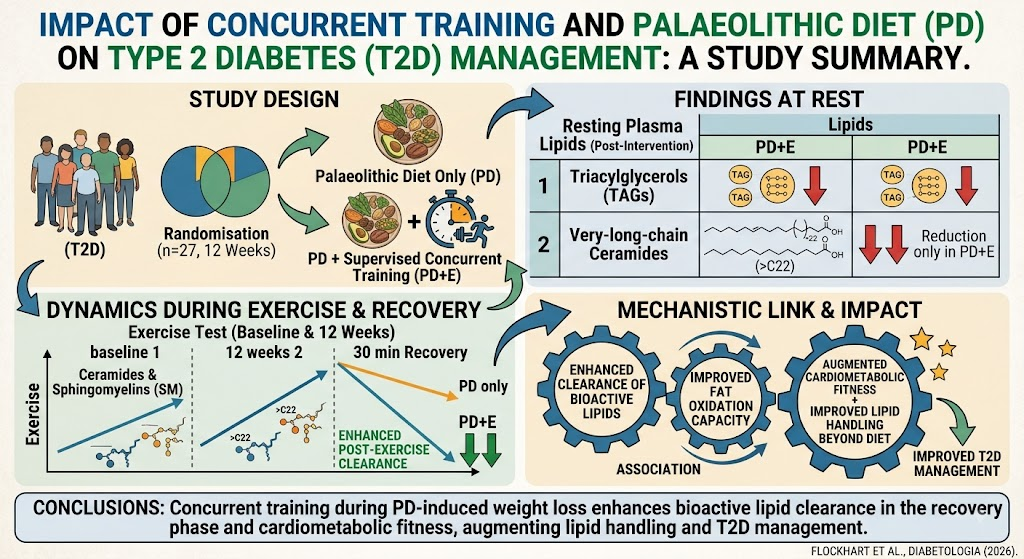
- Concurrent training combined with a palaeolithic-type diet improves cardiometabolic fitness in type 2 diabetes beyond diet alone.
- Exercise training enhances post-exercise clearance of bioactive lipids, especially very-long-chain ceramides, from circulation.
- Improved ceramide clearance during recovery correlates with greater fat oxidation capacity during exercise.
- These findings suggest augmented lipid handling mechanisms by concurrent training that may benefit metabolic health in type 2 diabetes.

Study Background
Type 2 diabetes (T2D) is a chronic metabolic disease characterized by insulin resistance, chronic hyperglycemia, and associated cardiometabolic complications. Lifestyle interventions, including dietary modification and exercise, are foundational to diabetes management and have been shown to improve glycemic control, body weight, and cardiovascular fitness. However, the mechanistic interplay of diet and exercise on lipid metabolism—particularly the handling of bioactive sphingolipids like ceramides and sphingomyelins, which are implicated in insulin resistance and cardiometabolic risk—is not fully understood.
Ceramides are bioactive lipids that can impair insulin signaling and promote inflammation. Elevated ceramide levels are associated with metabolic dysfunction in T2D. Enhancing ceramide clearance could theoretically ameliorate these negative effects and improve metabolic health. Concurrent training (combining resistance and aerobic exercise) has shown promise for improving cardiometabolic fitness, yet its impact on circulating lipid dynamics during and after exercise in individuals with T2D remains underexplored.
Study Design
This secondary analysis derived from a previously reported randomized clinical trial assessed the effects of adding supervised concurrent exercise training to a palaeolithic-type diet (PD) intervention in adults with overweight or obesity and T2D (n=27). Participants were randomized to either 12 weeks of PD alone or PD plus exercise training three times weekly (PD+E).
Physiological responses, including glycemic control and cardiometabolic fitness, were evaluated at baseline and post-intervention during an exercise test. A subset of participants (n=21) underwent detailed plasma lipidomics profiling using mass spectrometry. Plasma samples were collected at rest, immediately post-exercise, and after a 30-minute recovery period to quantify lipid species including triacylglycerols, sphingomyelins, and ceramides stratified by acyl chain length.
Key Findings
Glycemic Control and Fitness: Both groups showed improved glycemic management during and after exercise tests following the intervention, demonstrating the metabolic benefits of the PD approach. However, only the PD+E group exhibited significant improvements in cardiometabolic fitness, suggesting additive benefits of concurrent training on exercise capacity and cardiovascular health.
Lipid Profile Changes at Rest: Triacylglycerol levels decreased significantly in both intervention arms, consistent with weight loss and improved lipid metabolism. Notably, very-long-chain ceramides (acyl chains >22 carbons) were selectively reduced only in the PD+E group at rest, an observation implicating concurrent training in modifying potentially pathogenic sphingolipid species.
Exercise-Induced Lipid Dynamics: During exercise, ceramides and sphingomyelins increased transiently in plasma in both groups, reflecting mobilization of these lipids during physical exertion. Importantly, the PD+E group demonstrated enhanced clearance of these bioactive lipids from circulation during the recovery phase, highlighting improved lipid turnover or metabolism post-exercise.
Relationship with Fat Oxidation: The enhanced ceramide clearance observed in PD+E participants during recovery correlated with increased fat oxidation capacity during exercise testing. This link indicates that improved bioactive lipid handling may support more efficient substrate utilization, contributing to better metabolic flexibility in T2D patients undergoing combined diet and exercise interventions.
Expert Commentary
This study underscores the nuanced interplay between diet and exercise on metabolic health in type 2 diabetes beyond glycemic indices alone. The use of advanced lipidomics offers valuable mechanistic insights, revealing that concurrent training may uniquely favor reductions in detrimental very-long-chain ceramides and accelerate their clearance after exercise. These changes align with enhanced fat oxidation capacity, a key component of metabolic flexibility and insulin sensitivity.
Nonetheless, causality cannot be definitively established from this secondary analysis. The sample size was limited, and only a specific lipid subset was analyzed. Future trials with larger cohorts and mechanistic endpoints are needed to unravel the pathways involved and confirm if these lipid dynamics translate to improved clinical outcomes.
Clinically, the findings support current guidelines promoting combined aerobic and resistance exercise alongside dietary modification to optimize cardiometabolic health in T2D. Monitoring lipidomic profiles might emerge as a promising tool to assess intervention efficacy and personalize treatment in this population.
Conclusion
Adding concurrent training to a palaeolithic-type diet in individuals with type 2 diabetes improves cardiometabolic fitness and significantly enhances post-exercise clearance of bioactive sphingolipids, particularly very-long-chain ceramides. This improved lipid handling is associated with an increased capacity for fat oxidation during exercise, suggesting that exercise training confers metabolic benefits beyond those achievable with diet alone. Such integrative lifestyle strategies could optimize lipid metabolism and support better long-term outcomes in T2D management. Further studies are warranted to elucidate underlying mechanisms and clinical translation.
Funding and Clinical Trials Registration
The original clinical trial details and funding sources were not specified in this secondary analysis. Further retrieval from primary study records is recommended for complete disclosure.
References
- Flockhart M, Svensson M, Ehtesham E, et al. Concurrent training is associated with enhanced post-exercise ceramide clearance and fat oxidation capacity in individuals with type 2 diabetes following lifestyle intervention. Diabetologia. 2026 Aug 5. PMID: 42557446.
- Holland WL, Summers SA. Sphingolipids, insulin resistance, and metabolic disease: new insights from in vivo manipulation of sphingolipid metabolism. Endocr Rev. 2008;29(4):381-402.
- Bergman BC, Hunerdosse D, et al. Increased fat oxidation and improved insulin sensitivity after exercise training in type 2 diabetes. Diabetes. 2010;59(7):1647-1654.
- American Diabetes Association. 5. Lifestyle Management: Standards of Medical Care in Diabetes—2023. Diabetes Care. 2023;46(Suppl 1):S53-S67.