Introduction
Metabolic dysfunction-associated steatotic liver disease (MASLD) is shifting the epidemiology of cirrhosis globally, with diabetes and metabolic syndrome emerging as critical upstream contributors to chronic liver injury progression. Concurrently, diabetes frequently coexists with cirrhosis of diverse etiologies, including viral hepatitis, underscoring overlapping risk factors and bidirectional metabolic perturbations. The coexistence of diabetes and cirrhosis synergistically worsens morbidity and mortality, complicating management strategies rooted in traditional diabetes paradigms. This article reviews evidence and outlines a pragmatic, stage-specific approach to managing diabetes in the setting of cirrhosis.
Background and Clinical Context
Cirrhosis, characterized by progressive hepatic fibrosis and architectural distortion, culminates in impaired liver function and portal hypertension. Its shifting etiologic landscape—now heavily influenced by MASLD—coincides with a concurrent obesity and diabetes epidemic. Hepatic insulin resistance, systemic inflammation, and altered glucose metabolism underpin this complex interplay. Notably, “hepatogenous diabetes”—a phenotype of impaired glucose control arising secondary to liver dysfunction—complicates clinical detection and management, distinct from primary type 2 diabetes mellitus (T2DM).
Diabetes independently escalates risks of hepatic decompensation, hepatocellular carcinoma, and death in cirrhosis. Meanwhile, cirrhosis disrupts glucose homeostasis mechanisms, challenging routine monitoring techniques. Thus, a nuanced understanding is imperative for optimizing outcomes.
Diagnostic Considerations in Cirrhosis-Associated Diabetes
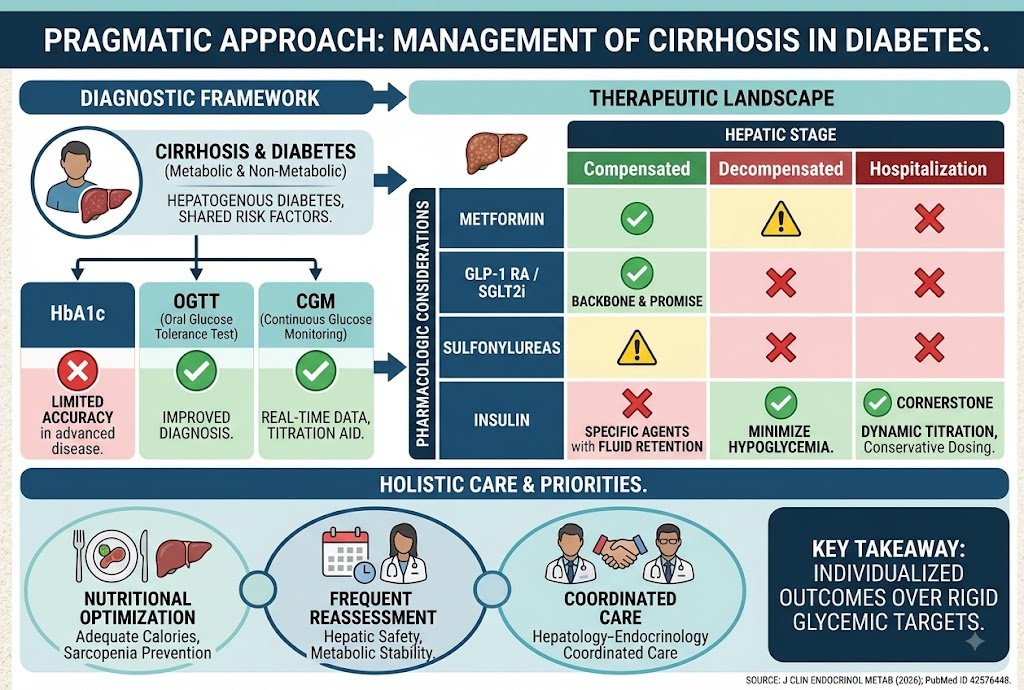
Conventional markers like glycated hemoglobin (HbA1c) lose reliability in advanced liver disease due to altered hemoglobin turnover and anemia prevalence. Complementary diagnostic tools include oral glucose tolerance testing (OGTT), which better reveals postprandial dysglycemia characteristic of hepatogenous diabetes. Continuous glucose monitoring (CGM) also provides dynamic glycemic profiling, improving detection of hypoglycemic episodes and glycemic variability, which are common in cirrhosis.
Integrating multiple modalities enables improved diagnostic accuracy, essential for individualized treatment planning.
Pharmacologic Management: Integrating Diabetes and Liver Disease Perspectives
Therapeutic decisions must balance glycemic control efficacy with hepatic safety and altered drug metabolism.
Compensated Cirrhosis
Metformin remains first-line, conferring benefits including insulin sensitization and potential reduction in hepatocellular carcinoma risk. It is generally safe in compensated cirrhosis with preserved renal function. Newer agents such as glucagon-like peptide-1 receptor agonists (GLP-1 RAs) and sodium-glucose cotransporter-2 (SGLT2) inhibitors demonstrate promise owing to favorable cardiovascular-renal profiles, weight reduction, and possible benefits on liver steatosis and fibrosis in MASLD contexts.
Sulfonylureas and insulin secretagogues require caution due to hypoglycemia risk exacerbated by diminished hepatic gluconeogenesis. Agents inducing fluid retention (e.g., thiazolidinediones) should also be used judiciously.
Decompensated Cirrhosis and Hospitalized Patients
Insulin therapy predominates given its titratable nature and minimal reliance on hepatic metabolism. Conservative dosing with frequent monitoring is crucial to mitigate hypoglycemia risks, heightened by impaired gluconeogenesis and malnutrition. Oral agents often lose efficacy or safety in this stage.
Nutritional and Multidisciplinary Care
Nutritional optimization is fundamental, addressing sarcopenia, malnutrition, and metabolic demands unique to cirrhosis. Frequent reassessment of glycemic status and liver function guides therapeutic adjustments.
An integrated hepatology-endocrinology approach improves care coordination, enabling tailored strategies responsive to dynamic clinical trajectories.
Expert Commentary
Emerging evidence underscores the need to transcend rigid glycemic targets—prioritizing hepatic safety, avoidance of hypoglycemia, and overall metabolic stability. Hepatogenous diabetes challenges traditional diabetes classification and calls for revised algorithms incorporating liver disease severity.
Ongoing clinical trials will clarify the role and safety of novel antidiabetic agents in advanced liver disease, with a growing emphasis on cardiovascular and renal endpoints within this population.
Conclusion
Cirrhosis intertwined with diabetes mandates a pragmatic, individualized management approach harmonizing hepatic and metabolic considerations. Employing complementary diagnostic tools and stage-specific pharmacotherapy optimizes outcomes. Multidisciplinary collaborations and dynamic reassessment underpin successful care. As the epidemiology of liver disease evolves, clinicians must adapt diabetes paradigms to the complexities of cirrhosis, prioritizing safety and patient-centered goals over rigid glycemic metrics.
References
1. Kumar A, Basu R. Management of Cirrhosis in Diabetes: A Pragmatic Approach to the Patient. J Clin Endocrinol Metab. 2026 Aug 11. PMID: 42576448.
2. Byrne CD, Targher G. NAFLD: a multisystem disease. J Hepatol. 2015 Apr;62(1 Suppl):S47-64.
3. Marzuillo P, Di Sessa A, Rossi F, et al. Hepatogenous diabetes: The liver disease-induced diabetes. World J Gastroenterol. 2021 Feb 28;27(8):677-687.
4. Nkontchou G, et al. Prognostic value of diabetes in patients with cirrhosis. Liver Int. 2014 Aug;34(7):979-87.
5. EASL Clinical Practice Guidelines on the management of patients with decompensated cirrhosis. J Hepatol. 2018 Aug;69(2):406-460.
6. American Diabetes Association. Standards of Medical Care in Diabetes—2024. Diabetes Care. 2024 Jan;47(Suppl 1):S1-S151.