Highlights
- Multicomponent interventions guided by implementation frameworks like RE-AIM can significantly increase outpatient management adoption for low-risk PE.
- Validated risk stratification tools such as the Pulmonary Embolism Severity Index (PESI), simplified PESI (sPESI), and Hestia criteria effectively identify patients suitable for safe outpatient treatment.
- Outpatient management of low-risk PE patients results in low rates of adverse events, including recurrent venous thromboembolism and mortality, supporting guideline recommendations.
- Barriers to adoption include clinician inertia, patient comorbidities, and logistical constraints; structured pathways and education improve adherence and safety.
Background
Pulmonary embolism (PE) is a common cardiovascular emergency with variable prognosis ranging from rapid symptom resolution to fatal cardiovascular collapse. Traditionally, PE patients often require hospitalization mainly due to concerns about risk of early deterioration. However, numerous studies over the past two decades have highlighted that a significant subset classified as “low-risk” by validated clinical tools can be safely managed as outpatients, leading to reduced healthcare costs, improved patient satisfaction, and optimized resource utilization. Despite guideline endorsements by American and European societies recommending outpatient care for low-risk PE when robust follow-up is feasible, actual implementation remains suboptimal in many healthcare settings, with most patients still hospitalized unnecessarily. This gap is primarily due to barriers such as risk assessment uncertainties, physician comfort, and lack of standardized protocols.Key Content
Development and Validation of Risk Stratification Tools
The Pulmonary Embolism Severity Index (PESI) and its simplified version (sPESI) remain the cornerstone risk assessment instruments. These scores incorporate clinical variables such as age, comorbidities, vital signs, and oxygenation, stratifying patients into risk classes correlating with 30-day mortality. The PESI has demonstrated high negative predictive value (>98%) for identifying low-risk patients eligible for outpatient management. Recent work has refined these tools by integrating biomarkers (e.g., troponin) and echocardiographic parameters to improve prognostic precision. The Hestia criteria represent an alternative clinical decision rule combining exclusion criteria aimed at safe discharge planning, often augmenting PESI utility.Evidence Supporting Outpatient Management Safety and Efficacy
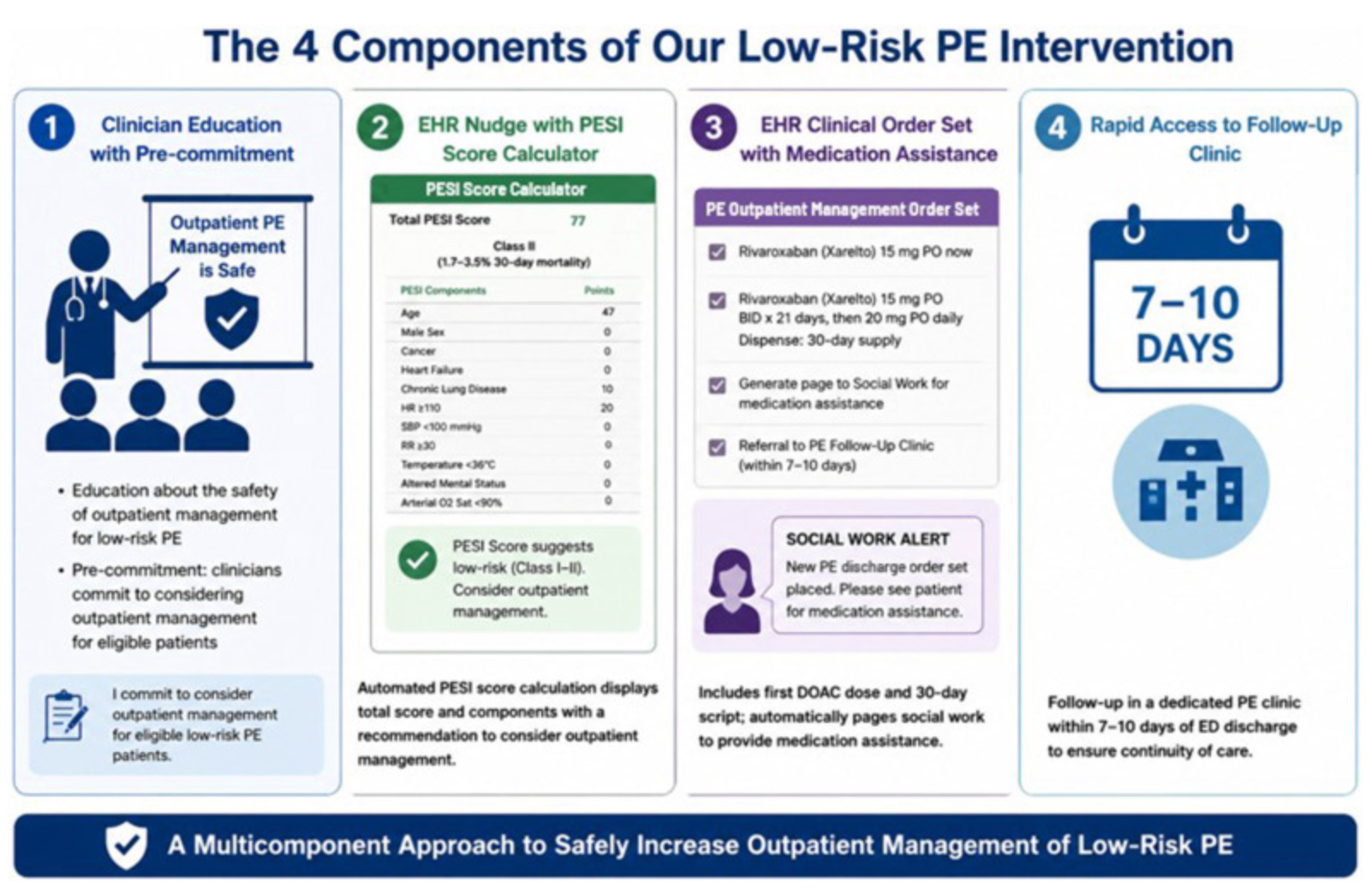
Multiple prospective cohort studies and randomized controlled trials over recent years have demonstrated that low-risk PE patients selected via PESI/sPESI and Hestia criteria can be safely treated at home with direct oral anticoagulants (DOACs). Key findings include minimal short-term mortality (near 0%), low recurrent thromboembolism rates, and scarce major bleeding events. For example, real-world data from a large quaternary center evaluating a multicomponent intervention reported a rise in outpatient discharges for low-PESI patients from 5.1% before to over 33% after implementation without adverse safety signals. Similarly, studies within U.S. Veterans Affairs facilities confirmed very low 30-day mortality in low-risk patients managed either inpatient or outpatient, supporting expanding outpatient care.Implementation Strategies to Enhance Adoption
Despite strong evidence, adoption of outpatient pathways remains low nationally. Implementation science approaches, including behavioral economics-informed, multicomponent interventions, have been tested to overcome clinician and system barriers. An exemplar single-center study applying the RE-AIM framework showed sustained increases in outpatient management rates up to 75% when combining PESI and Hestia criteria for patient selection, alongside clinician education, electronic health record integration, and establishing rapid outpatient follow-up clinics. Other studies highlight the role of clinical pharmacists, streamlined anticoagulation prescribing, point-of-care risk calculators, and patient education in facilitating safe discharge.Barriers and Patient Selection Considerations
Hospital admission decisions often incorporate factors beyond risk scores, such as tachycardia, hypoxia, or comorbid medical needs. Studies have shown that patients with elevated heart rates or oxygen saturations below normal thresholds are more likely hospitalized despite low PESI, reflecting clinical caution. Moreover, follow-up pathways and patient social factors influence decisions. Adherence to anticoagulation, patient understanding, and ability to access outpatient services are critical considerations. Negative D-dimer testing does not always exclude PE, especially in high-risk or previous thromboembolism patients, underscoring the need for thorough clinical assessment.Expert Commentary
The movement towards outpatient management for low-risk PE aligns with precision medicine and value-based care paradigms. Risk stratification tools such as PESI and Hestia provide validated frameworks but should be integrated with clinical judgment. The use of DOACs has simplified anticoagulation management and improved patient convenience, reinforcing outpatient feasibility. However, real-world translation requires dedicated institutional support, robust follow-up pathways, and interdisciplinary collaboration. The use of implementation science frameworks like RE-AIM enables systematic evaluation of adoption, sustainability, and patient outcomes. Barriers including clinician comfort, patient comorbidities, and logistical challenges must be addressed to optimize care. Furthermore, the evolving understanding of early clinical deterioration risk—highlighted by tools like PE-SCORE—emphasizes the importance of tailoring outpatient selection carefully to avoid over-triage or unsafe discharges. Continuing to validate risk prediction scores and refining criteria to balance sensitivity and specificity remains necessary. Emerging evidence challenges the necessity of intensive follow-up for all low-risk PE patients, suggesting some may be safely managed with minimal post-discharge monitoring. Nonetheless, patient education on anticoagulation adherence and symptom vigilance remains essential.Conclusion
Outpatient management of acute low-risk pulmonary embolism offers a safe, effective, and cost-saving approach endorsed by clinical guidelines and supported by robust evidence. The adoption has been historically limited but can substantially improve with tailored implementation strategies addressing multi-level barriers and utilizing validated risk stratification tools such as PESI and Hestia criteria. Future directions include broad multicenter implementation trials, integration of digital decision support tools, and refinement of risk prediction models to personalize patient care further. Optimizing outpatient pathways promises to reduce unnecessary hospitalizations, enhance patient quality of life, and improve healthcare system efficiency.References
- Greineder CF, Mefford V, O’Hare C, et al. Adoption of Outpatient Management of Acute Low-Risk Pulmonary Embolism. Ann Emerg Med. 2026 Oct 14;S0196-0644(26)01293-X. doi:10.1016/j.annemergmed.2026.08.738. PMID: 42878715.
- Jimenez D, et al. 20 years of Pulmonary Embolism Severity Index: derivation, validation, and impact on patient care. J Epidemiol Popul Health. 2026 Feb;74(1):203153. doi:10.1016/j.jeph.2025.203153. PMID: 41570453.
- Greinacher A, et al. The safety of outpatient management for low-risk pulmonary embolism: A narrative review. Respir Med Res. 2026 Sep 11;90:101322. doi:10.1016/j.resmer.2026.101322. PMID: 42849322.
- Berry SD, et al. Outcomes of Acute PE Treated With DOACs in the Veterans Affairs Health System: A Retrospective Cohort Study. Acad Emerg Med. 2026 Jun;33(6):e70360. doi:10.1111/acem.70360. PMID: 42313763.
- Rodriguez-Capote K, et al. Safety of outpatient management of pulmonary embolism diagnosed in the emergency department. CJEM. 2026 Jul 25. doi:10.1007/s43678-026-01231-1. PMID: 42501275.
- van der Hulle T, et al. Initiation of an emergency department discharge pathway for low-risk patients with venous thromboembolism: Factors impact real-world practice. Vasc Med. 2026 Oct;31(5):707-717. doi:10.1177/1358863X261434829. PMID: 42405533.
- Woller SC, et al. A stepped wedge cluster randomized implementation trial to increase outpatient management of low-risk pulmonary embolism from the emergency department – the MEDIC ALERT PE study. Implement Sci Commun. 2025 Apr 2;6(1):33. doi:10.1186/s43058-025-00720-1. PMID: 40176133.