Regulators in the United States and abroad have increasingly cited ophthalmology clinics and ambulatory surgical centers for what they consider inadequate disinfection of reusable instruments that contact the ocular surface — notably Goldmann applanation tonometry (GAT) tips, gonioscopy lenses, and laser lenses. These agencies often mandate routine high-level disinfection (HLD) of such devices, driven in part by a long-standing infection-control framework called the Spaulding classification that groups mucous membranes as higher-risk surfaces.
On October 9, 2026, a multisociety task force published a position paper assessing whether routine HLD is necessary for reusable ophthalmic devices used in routine clinical care (Kuo et al., Ophthalmology, 2026). The task force included representatives from multiple subspecialty societies and surveyed more than 1,000 practicing ophthalmologists. Their conclusions challenge regulatory mandates requiring universal HLD and offer pragmatic, evidence-based alternatives.
This article summarizes the task force consensus, the evidence behind it, key recommendations, and practical implications for clinicians and healthcare organizations.
Why this Position Paper Was Issued
– Regulatory pressure: Inspections and citations have risen based on expectations that reusable ocular-surface devices undergo routine HLD. Some inspectors apply the Spaulding classification too broadly, equating the ocular surface with heavily contaminated mucous membranes.
– Evidence gap: The task force found no published evidence that reusable ophthalmic devices cause sight-threatening bacterial or fungal infections in routine outpatient settings, nor evidence that routine HLD reduces infection transmission compared with lower-level methods.
– Harms and costs: Chemical HLD adds time and cost to clinic workflows, generates additional hazardous waste, and has documented adverse effects including device damage and patient ocular surface chemical toxicity. These harms can reduce clinic efficiency and potentially compromise patient care.
The position paper was created to synthesize the best available evidence, survey clinician practice and experience, and provide a practical, safer, and evidence-aligned approach to reprocessing reusable ophthalmic devices in routine care.
New Guideline Highlights — Key Takeaways
– Routine HLD for reusable devices that contact the ocular surface (e.g., GAT tips, gonioscopy lenses, laser lenses) is not required for routine clinical care.
– Lower-level disinfection methods (alcohol wiping, soap and water cleaning with appropriate drying) are reasonable for most situations and are consistent with observed very low infection rates.
– HLD should be discretionary and reserved for specified higher-risk situations, such as when a device is used on a patient with suspected contagious ocular infection (for example, adenoviral conjunctivitis) or other clear risk factors.
– Implement policies that are evidence-based, documentable, and practical—include staff training, device manufacturer instructions, and contingency plans for suspected infections.
Updated Recommendations and Key Changes from Prior Practice
Major shifts compared with stricter interpretations by some regulators and prior blanket approaches:
– From universal routine HLD to targeted, discretionary HLD applied in higher-risk circumstances.
– From viewing the ocular surface as equivalent to heavily contaminated mucous membranes (Spaulding) to recognizing the eye as a distinct anatomical site with considerably lower microbial contamination risk in routine outpatient contacts.
Evidence driving the change:
– Literature reviewed by the task force and their survey data indicate that reported transmission events linked to reusable ophthalmic devices are exceedingly rare and predominantly associated with transient viral conjunctivitis (adenovirus), not sight-threatening bacterial or fungal infections.
– Reports of device damage and patient/staff adverse effects attributable to routine chemical HLD (e.g., persistent ocular irritation, device deterioration) weighed against unproven infection-prevention benefit.
Topic-by-Topic Recommendations
The task force framed practical recommendations for common devices. Where possible, recommendations reference the level of evidence or consensus strength based on the task force deliberations.
1) Goldmann applanation tonometry (GAT) tips
– Routine care (most patients): Clean with a sterile or low-lint wipe and a single-use 70% isopropyl alcohol wipe between patients OR use disposable single-use tonometer tips. Allow the alcohol to evaporate fully before patient contact. (Consensus, moderate evidence of safety in clinical practice.)
– After suspected infectious conjunctivitis (e.g., adenovirus) or known infectious ocular surface disease: Consider HLD (see HLD methods below) or use disposable tips. Document the event and the method used. (Consensus)
2) Gonioscopy/diagnostic lenses and laser lenses
– Routine care: Clean gross organic material with soap and water or an enzymatic cleaner according to manufacturer instructions, rinse, dry, and apply an alcohol wipe before use. Inspect lenses for surface damage. (Consensus)
– After suspected contagious infection or if heavy soiling is present: Consider HLD or quarantine of the lens until HLD can be performed. Disposable single-use lenses or protective covers may be alternatives in some practices.
3) Non-contact devices that intermittently touch eyelashes/periocular skin
– Clean according to manufacturer instructions; routine HLD is not indicated unless there is patient-specific concern for contagious disease. (Consensus)
4) High-Level Disinfection (HLD) — when to use and how
– Use HLD selectively — not routinely — e.g., following known or suspected infectious conjunctivitis in the patient examined with the device. (Consensus)
– HLD methods include liquid chemical sterilants/ high-level disinfectants such as glutaraldehyde, ortho-phthalaldehyde (OPA), or accelerated hydrogen peroxide formulations used at validated concentrations and exposure times. Follow device manufacturer compatibility guidance and institutional occupational safety procedures. (Operational guidance)
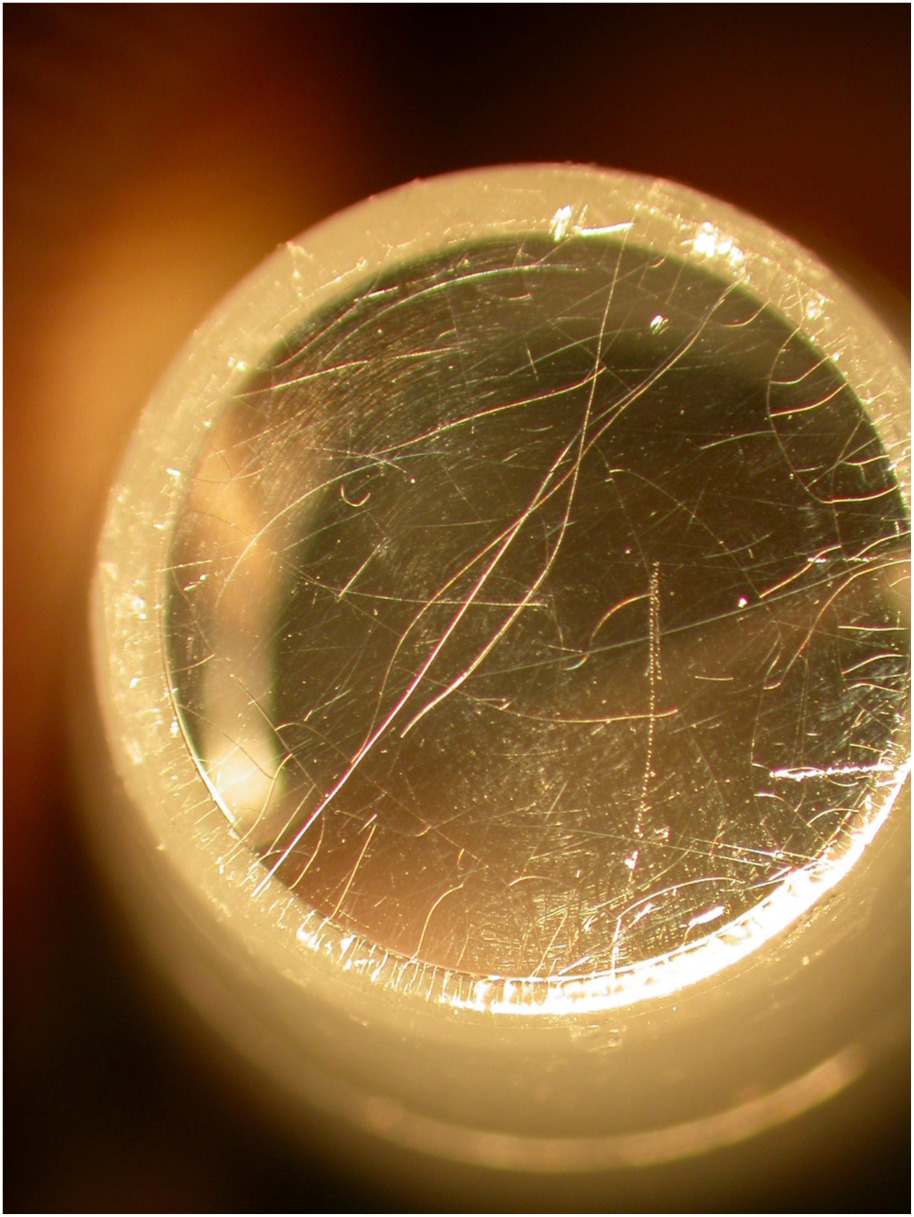
– Be aware of adverse effects: chemical exposure risk to staff and patients, potential device corrosion or optical surface damage, and disposal requirements for hazardous chemical waste. (Consensus)
5) Documentation, training, and policy
– Each facility should adopt a written, evidence-aligned reprocessing policy reflecting these recommendations, local regulations, and device manufacturer instructions. Policies should be periodically reviewed and staff trained/documented. (Consensus)
Survey Findings That Informed These Recommendations
– Respondents: >1,000 ophthalmologists across practice types.
– Most common routine methods reported:
– GAT tips: alcohol wiping between patients.
– Diagnostic and laser lenses: alcohol wiping or soap-and-water cleaning.
– Use of chemical HLD was uncommon. Among those who did use chemical HLD, many reported adverse effects including ocular surface chemical toxicity and visible device damage.
– Reported infection transmission associated with reusable devices was exceedingly rare and typically limited to self-limited adenoviral conjunctivitis.
– 88% of surveyed ophthalmologists agreed that routine HLD should not be required for these devices in routine clinical care.
Expert Commentary and Perspectives
– Broad consensus: The task force concluded that current evidence does not justify universal HLD for routine outpatient reprocessing of ophthalmic devices that contact the ocular surface.
– Regulatory tension: Several task force members highlighted a disconnect between regulatory expectations and published evidence. Regulators often rely on the Spaulding classification, which does not account for the unique microbiologic milieu of the ocular surface and outpatient device use.
– Patient safety vs. practical harm: Experts emphasized that while patient safety is paramount, policies must weigh real risks against harms such as chemical toxicity, device damage, increased costs, and clinic inefficiency.
– Areas of controversy: Some panelists advocated for more conservative approaches (e.g., broader HLD use) when local outbreaks of viral conjunctivitis occur or for instruments used in high-acuity surgical settings. The paper retains clinician discretion for such contexts.
– Research needs: The task force called for better surveillance to detect any rare but consequential transmissions, standardized reporting of device-associated infections, and studies on the comparative effectiveness and harms of reprocessing methods.
Practical Implications for Clinics and Health Systems
– Policy alignment: Clinics should adopt reprocessing policies consistent with the multisociety position paper, local regulations, device manufacturers’ instructions, and occupational safety rules.
– Efficiency and cost: Shifting from routine HLD to alcohol wiping/soap-and-water in routine care can reduce time burdens, chemical costs, and hazardous-waste disposal needs without increasing infection risk.
– Staff training: Educate staff on proper cleaning technique (remove gross debris first, then disinfect/dry), correct contact times for agents, personal protective equipment, and what to do when encountering suspected infectious cases.
– Documentation: Keep records of reprocessing policies, staff training, and any episodes requiring HLD (patient identifier, device, method used). These records are important for quality assurance and regulatory reviews.
– Consider disposables in selected circumstances: Single-use disposable tonometer tips or protective covers may be the best option when immediate turnover is necessary, in outbreak settings, or when HLD cannot be performed safely.
Case Vignette
Maria, a 68-year-old woman with glaucoma, presents for routine IOP measurement. Your clinic uses reusable GAT tips cleaned with 70% isopropyl alcohol between patients per current clinic policy. During triage, Maria reports red, watery eyes the week prior. The clinician inspects and suspects early viral conjunctivitis. What to do?
– Recommendation: Defer measuring with the reusable GAT tip and instead use a disposable tonometer tip or perform HLD on the reusable tip before reuse. Document the suspected infection and the reprocessing method used. Notify staff to follow enhanced precautions until the patient’s infection status is clarified.
Limitations and Future Directions
– The multisociety position paper notes limitations in available evidence: most data are observational, case reports are uncommon, and true transmission events are rare by nature. Hence, prospective surveillance studies are needed.
– Regulators and accreditation bodies should consider this evolving evidence in updating inspection criteria to avoid forcing practices that increase harm without proven benefit.
Conclusions
The multisociety task force’s position paper represents an evidence-aligned, pragmatic approach to reprocessing reusable ophthalmic devices. It advises against routine HLD for most outpatient clinical encounters, recommends lower-level cleaning/disinfection methods as standard practice, and reserves HLD for higher-risk circumstances. The recommendations aim to protect patients while avoiding unnecessary harms, costs, and device damage.
Clinicians and health systems should update policies, train staff, and document practices accordingly. Regulators are encouraged to align inspection expectations with the available evidence and expert consensus to avoid unintended consequences.
References
1) Kuo IC, Chang DF, Schein OD, Repka MX, Schehlein EM, Mah FS, DeParis SW; HLD Task Force. Assessment of the Necessity for High-Level Disinfection (HLD) of Reusable Ophthalmic Devices: A Multisociety Position Paper. Ophthalmology. 2026 Oct 9. PMID: 42854853. https://pubmed.ncbi.nlm.nih.gov/42854853/
2) Rutala WA, Weber DJ; Healthcare Infection Control Practices Advisory Committee. Guideline for Disinfection and Sterilization in Healthcare Facilities, 2008. Centers for Disease Control and Prevention. (Widely cited foundational guidance on disinfection and sterilization practices.)
3) Spaulding EH. Chemical disinfection and antisepsis in the hospital. J Hosp Res. 1968;9:5–31. (Original description of the Spaulding classification used in infection control frameworks.)
4) Weber DJ, Rutala WA. Role of environmental surfaces in the transmission of nosocomial pathogens and current issues in disinfection. Curr Opin Infect Dis. 2013;26(4):338–344. (Context on transmission via surfaces and the evidence base for disinfection practices.)
(Note: The primary source for the recommendations summarized here is the multisociety position paper by Kuo et al., 2026.)

 By
No Comments
By
No Comments